Writing

Essays, dispatches, and field notes spanning the digital nomad years through Synova Industries. 172 pieces.

2026

To all the people opposing data centers, I assume you’ll turn down the AI innovations?

The cures to cancer, the anti-aging, the accelerated drug discoveries, even the eventual immortality… all will come from inside data centers.

When AI discovers fusion and other infinite power sources, you’ll stick with your coal powered energy?

Solutions to climate change, clean energy, and unfathomable abundance will come from data centers.

It’s absurd that folks are afraid of progress. But it’s human nature. For instance, the horse industry feared the loss of saddles and stables, not realizing the interstate highway system would open up adventures, opportunities, and entirely new areas of the nation.

Who has driven to a National Park? Was that possible on horseback? Or did the improvements from the automobile allow for massive human progress?

And now, the new boogie-man is AI.

But no, it’s not going to take your job… if you are a lifelong learner.

Data centers are not going to lead to long-term power issues… they will solve them.

And yes, like any major leap forward, there may be short-term, localized tradeoffs around cooling and water in some places. That’s not a reason to stop progress. That’s a reason to engineer better systems, better recycling, better siting, and better infrastructure.

These are short-term engineering issues on the path to long-term abundance… and yes, the solutions to the negatives of data centers will also come from inside data centers.

Clean water, sustainability, and a greener environment will only become more achievable through the insights these data centers will provide. And when the history books are written, the age of abundance will frown upon those slowing down our progress.

2025

The key to thriving in the age of AI is to focus on finding the right jobs and tasks.

A lot of tasks will be done automatically as AI and robots improve. These are the jobs to avoid, as they are bound to go away.

But a lot more tasks will be enhanced by improvements in AI and robotics. These are the areas to explore.

Because as technology improves, so does our ability to handle more and bigger opportunities. Robotics should assist in these roles. Humans still need to be central to the success of the task.

Find these tasks and job security is all but guaranteed.

With everything that has happened in the past few days, the problem is clear. We have a mental health crisis in the USA.

People should feel safe to ride public transportation. Kids should feel safe going to school. And everyone should feel safe to voice their opinions.

No mentally healthy person would randomly attack someone.

No mentally healthy person decides to take fentanyl.

No mentally healthy person is triggered by other people’s opinions.

Until we have serious reform of our mental healthcare and wellness systems, we will continue to have events like we’re seeing around the United States.

I’ve been researching ways most terminal diseases will soon be cured, and I’ve listed them below. But first, here’s why:

I’ve been researching ways most terminal diseases will soon be cured

A year ago today, we lost my wonderful mom to cancer. It was simultaneously a sad day and an opportunity to count our blessings, as so many positive ripples were created during her time on this planet.

She loved being a mom and grandmother. And she enjoyed writing her weekly column in the newspaper. We couldn’t make it 10 feet into any store without someone coming up and complimenting her on a recent article. It was her way of giving back to the community she cherished. Side note: my brother Frank has since taken over the column in her memory.

As a futurist, I think the most painful thing is I see the innovations coming in cancer detection and prevention. She missed that window by maybe 5-10 years, when by that time most cancers and terminal diseases should be cured. Though thankfully, millions of future humans will not need to suffer unnecessarily like she did last year.

So based on my research over time, here are the most promising treatments and upcoming approaches to disease:

In-Body Immune Cell Engineering: Instead of traditional chemotherapy, we’ll soon create immune cells right inside our body to hunt down cancer… as with all AI/robotics, this will be faster, cheaper, and safer.

Personalized Cancer Vaccines: Not sure how I feel about this one, however, they are working on customized vaccines, using tech similar to the Covid mRNA shots, train our immune systems to identify and stop cancer from coming back.

Gene Editing & Repair: We’ll fix genetic mutations directly inside patients’ cells, targeting cancer and inherited diseases at the source. Hopefully this alone will make terminal diagnoses a thing of the past.

Smart Drugs That Erase Cancer Proteins: Medicines designed to selectively destroy proteins cancer needs to grow, leaving healthy cells untouched.

Super-Early Cancer Detection: New blood tests will catch cancer months or years before current methods, long before tumors can spread.

Regrowing and Replacing Damaged Organs: Advances in tissue regeneration and organ transplants (including gene-edited animal organs) mean failing organs won’t equal terminal illness. Imagine 3d-printing a heart or regrowing a leg like a lizard regrows their tail.

AI Accelerating Treatment Discovery: AI is rapidly creating effective treatments, predicting patient outcomes, and personalizing therapies, saving years of research time.

These aren’t far-off dreams. They’re technologies rapidly becoming real, with the power to turn terminal illnesses into treatable, survivable conditions. Losing my mom to cancer showed me how urgent this work is… and how hopeful the future can be.

An easy way to get much better results from an AI assistant (like ChatGPT or Gemini) is to give it a role, focus, task, and goal at the start.

For instance, instead of:

Generate a strategy for a new webinar series for our business.

Try this:

Act as a world class expert in webinars with a focus on [your business niche].

Deeply explore what ingredients goes into a high performing webinar series.

Then based on your findings, generate a remarkable strategy for a new webinar series for our business.

There are so many reasons to be excited about being alive during this era…

Unprecedented access to knowledge - almost any question can be answered in seconds, we just need to know what to ask.

Healthcare advancements - not only are we on the precipice of solving most diseases, humans (of all wealth classes) are about to start aging backwards.

Poverty at historic lows - robotics and access to advanced technology is currently lifting billions out of poverty and malnutrition.

Limitless potential - barriers to technology access, career paths, and specialized education are all but gone… upward mobility has never been more possible than it is now.

🚀

By the end of this decade, we will have instant, faster-than-light communication thanks to quantum entanglement. How?

The newest AI model Grok 4 Heavy just got 100% on the math benchmark, meaning it basically can answer anything related to math.

In the next 2-3 years, newer models will “solve” physics. Meaning our scientists will have the ability to explore the depths of quantum mechanics and find all sorts of previously unknown phenomena about our universe.

As we learn how quantum entanglement works, we will be able to build technologies that can connect two locations (anywhere in the universe) and have instant communication between them.

What this will mean for our economy is unknown, given that things like high-frequency trading of stocks, planet-to-planet conversations, the irrelevancy of fiber optic networks, etc will transform everything.

It’s such an exciting time to be alive!

What do societies need to feel happy?

I think for most people it is good food, quality healthcare, entertainment, a little autonomy, and self-purpose.

This coming era of hyper abundance thanks to AI and robots will create a deflationary economy where almost all of our necessities will be nearly free.

We’ll have incredibly high quality food because of close-by vertical farms maintained by robots.

Our home robot won’t just do the dishes and fold the laundry, it’ll be our personal doctor, nurse, and therapist.

Generative AI and advancing tech will create entertaining experiences that our ancestors would have thought was magic.

Travel and adventure will become more accessible thanks to advanced vehicles to transport us anywhere in the world and someday, the solar system.

And most importantly, automation will free us from the hundred year death grip of cubicles and commutes. With the demise of the 9-5, the birth of a new era in humanity begins.

In the coming decades, humans will be able to pursue careers and vocations not because of a paycheck. But rather, we’ll be able to pursue what we want, with who we want, and how we want.

Just as hunter gathers could never have envisioned the need for accountants, we can’t possibly fathom what the coming century has in store for us.

It’s spectacular to be living through such a transformative era!

You’ve probably heard people say AI is going to take jobs. But that’s not the full story.

AI isn’t replacing jobs… it’s replacing today’s jobs. And that’s a big difference.

Think about it: 20 years ago, no one even knew what a social media manager was. The role didn’t exist.

And the truth is, not everyone dreams of being a paralegal or accountant. Maybe you always wanted to work with kids, explore the ocean, or pursue something totally different.

AI opens up entirely new paths for us to do work we actually care about.

The future isn’t about fewer jobs. It’s about more possibilities, new problems to solve, and opportunities we haven’t even imagined yet.

🚀 🌙

Fear is an evolutionary response that kept our ancestors alive. They were able to carry on their genes if they didn’t get too close to a cliff or tried to pet a lion.

But now, most things humans fear are irrational. We fear a million hypothetical outcomes, many of which are imaginary and impossible.

And so, as mankind begins to merge with machines we are entering a new era of human evolution.

Yet, it seems like the fear of the unknown is crippling to many people.

Yes the future is uncertain, but it’s also a future filled with abundance and endless opportunities.

Setting aside our fears and going head first into the coming age of intelligence is the best way to get ahead in this new world.

Let’s imagine a time traveler from the year 2035 goes back into the past and tells people what life is like for them…

10,000 years ago: “You don’t hunt and gather all day, what do you do?”

1,000 years ago: “You don’t farm and make your clothes all day, what do you do?”

100 years ago: “You don’t work in a steel factory all day, what do you do?”

Today: “You don’t commute and go sit in a cubicle all day, what do you do?”

The middle of the grocery store is about to disappear.

Right now, there are typically two regions in any grocery store: the fresh food along the walls and processed food throughout the inside aisles.

But what happens when we all have a robotic chef in our homes? One that can make nearly any meal or snack with fresh food?

Instead of packaged foods that taste good because of additives, we’ll have gourmet foods that taste great because of robotic mastery.

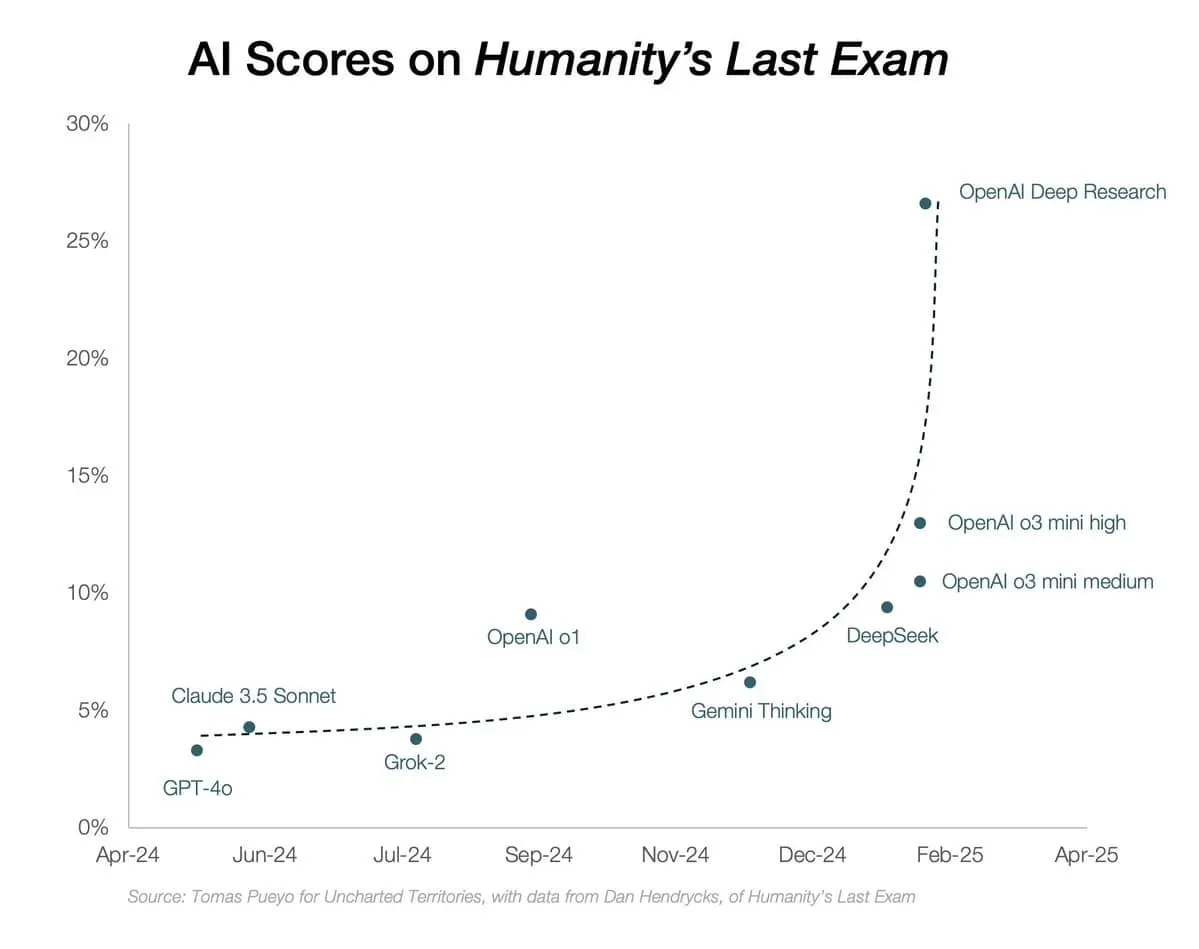
Here’s a fun visual. I would consider this the most important chart in the world right now.

Here’s a fun visual

Why? Because this will personally affect every person on the planet and for generations to come.

But first, in order to explain properly, let’s take a quick trip through human history…

Our family tree has had a few major milestones:

Harnessing fire allowed us to cook food, freeing up our digestive energy to grow a bigger brain.

Tossing seeds in the ground and putting fences around animals created free time beyond hunting and gathering. Which led to city-states and human specialization.

Steam, oil, and electricity allowed our ancestors’ workloads to become more productive as machines started doing the heavy lifting.

These innovations all led humans to turn the silica from sand into transistors. Quickly thereafter we got supercomputers and the internet.

Each one of these milestones happened in a quicker timespan. And from an ecological scale, it took only a blink of an eye to go from using fire to solely cook our food to using fire to send rockets into orbit.

Alright, so back to this chart. Why is it so significant?

Ominously named, Humanity’s Last Exam, it’s a 3,000 question test covering nearly every aspect of the world. Its creation was required because AI is already smarter than PhD’s in every human-level benchmark test.

This chart shows how, in just a few months, AI has rapidly improved on a test once deemed nearly impossible, surprising everyone with its speed of progress.

And here we are, standing on the threshold of another massive inflection point. Perhaps bigger and faster than any of its predecessors.

Each time humanity has leveled up… fire, agriculture, industry, transistors… we’ve altered our destiny in ways our ancestors could never have imagined.

This chart may look like a modest curve on a page, but the line represents an accelerating intelligence that’s already outpacing our ability to create new tests fast enough.

What does that mean for us?

It means that the sorts of problems we once considered impossibly complex: genetic research, climate modeling, advanced mathematics, etc. might soon be tackled in hours or minutes rather than years.

It means rethinking jobs, ethics, education, governance, and even what we consider “uniquely human.” Because if a machine can outscore PhDs on the hardest exam we can dream up, then knowledge work is on the cusp of being redefined.

More importantly, these models don’t stop. Each data point on the chart is not just a single milestone; it’s a harbinger that the next breakthrough could happen even faster.

The pace of progress is compounding, and no sector of society will remain untouched. If history has taught us anything, it’s that exponential leaps in capability come with equally exponential consequences.

Are we prepared for the kind of shift that might happen in just a few short years?

Think about the next generation, the one after that, and the world they’ll inherit.

Will they look back on this chart as the moment we embraced an incredible ally, or unleashed something most people never attempted to understand?

One thing is certain: we’ve never been here before, and we’re not slowing down.

The only question is whether we can adapt as quickly as the technology does… and what will this all mean for the future of our human story?

2024

Imagine a garden where every plant represents a business or an idea.

Now picture artificial intelligence (AI) and decentralized technologies (crypto) as powerful new seeds with the potential to reshape everything.

Right now, the gardeners who have been in charge for the past few years are focused on controlling this growth.

They’re putting up strict regulations that favor a few towering trees, while smaller, innovative plants struggle to survive. This limits creativity and keeps the garden’s full potential locked away.

But here’s the exciting part… soon, there will be a new gardener.

This fresh perspective brings an entrepreneurial mindset that values innovation and competition.

They understand that the economy is shifting, with technology making things cheaper and faster to produce.

The old rules of scarcity no longer apply, and the future will reward creativity and collaboration instead of rigid systems.

This new leadership isn’t about controlling growth; it’s about fostering it.

By leveling the playing field, they aim to create an environment where ideas of all sizes can thrive.

It’s a smarter, more forward-thinking approach to navigating an economy that’s rapidly evolving.

The world ahead won’t look like the one we know, but that’s what makes this moment so exciting.

This isn’t just about entrepreneurs like me, or policymakers. It’s about creating a future where everyone benefits, where innovation leads to better products, better opportunities, and a better life for all of us.

Imagine a world where the things you love cost less, work better, and are easier to access. That’s the kind of garden I envision…

So as I continue to post online about the economy, entrepreneurs, and politics, remember:

I’ve spent decades understanding these shifts, and as you’ll see in the coming months and years, my perspective on why our society must water these new seeds will become apparent.

It’ll be fun to watch these plants grow into a garden of abundance.

Ancient Rome didn’t fall because of invasions or politics. It fell because it lacked capitalism.

Rome’s economy depended too much on government control. The state ran everything… grain, resources, and even key industries. This left no room for innovation or progress.

When expansion stopped, so did the flow of resources and labor. The systems that held the empire together began to crumble.

Slavery was a major part of the problem. Slaves were forced to work but had no reason to innovate or improve. The economy stayed stagnant.

Capitalism could have changed everything. It rewards creativity, hard work, and new ideas.

Under capitalism, people have freedom. They can find better jobs, negotiate pay, or even start businesses. Slavery and state control didn’t allow that.

Without capitalism, Rome’s economy couldn’t adapt. It couldn’t grow or respond to the challenges it faced.

This failure hurt Roman society too. Wealth stayed with the elite, and most people were left in poverty.

Capitalism could have created a thriving middle class. It could have built a stronger, more stable society.

Rome didn’t collapse because of outside forces. It collapsed because it failed to evolve.

Capitalism wasn’t just the missing piece… it was the key to survival.

Why do some people oppose those who push society forward, especially when their efforts make them billionaires and world leaders?

Nietzsche’s concept of ressentiment helps explain:

When people feel powerless, they transform their frustration into moral outrage, painting ambition as selfishness and success as exploitation.

Instead of seeing the grit, sleepless nights, and failures that build progress, they focus on tearing down the very people who make it possible.

But without these risk-takers and visionaries, society would stagnate… progress demands courage, and history favors those bold enough to push us forward despite the critics.

Here’s what has been in my head. Imagine waking up in a world where what you see and hear doesn’t match what you’re told is true. George Orwell, in 1984, wrote, “The Party told you to reject the evidence of your eyes and ears. It was their final, most essential command.” This makes me wonder: how much of what we think is real is actually true? If things were different from what we believe, would we even notice?

This question brings me to Plato’s Allegory of the Cave. In this story, prisoners are chained inside a cave, only able to see shadows on a wall in front of them. To them, these shadows are all that exists. But one prisoner breaks free and discovers a world beyond the cave, full of color and light. When he tries to share this discovery with the others, they don’t believe him and choose to stay in their world of shadows. It’s easier and safer to stick with what they know.

Then there’s Flatland, where two-dimensional beings live on a flat surface, like paper. They can only move side to side, not up or down, never understanding what “up” really means. When a being from the third-dimension tries to explain a whole new direction to them, they can’t imagine it. To them, “up” doesn’t exist, it’s too strange and scary.

All three stories, Orwell’s, Plato’s, and Flatland, ask the same question: How willing are we to question what we think is real? If the world is more complicated than what we see or hear, are we ready to wonder about it? And if a greater truth showed up, would we have the courage to face it, even if it changed everything we believe?

These stories remind us that real understanding takes bravery. It means being curious, asking questions, and sometimes choosing the uncomfortable truth over easy beliefs. If there’s a world beyond shadows or a direction we can’t imagine, our job might be to look for it, starting by asking, “What could I be missing?” Maybe the biggest challenge isn’t just seeing things differently, but being willing to search for truth, even if it’s outside what we already know.

2023

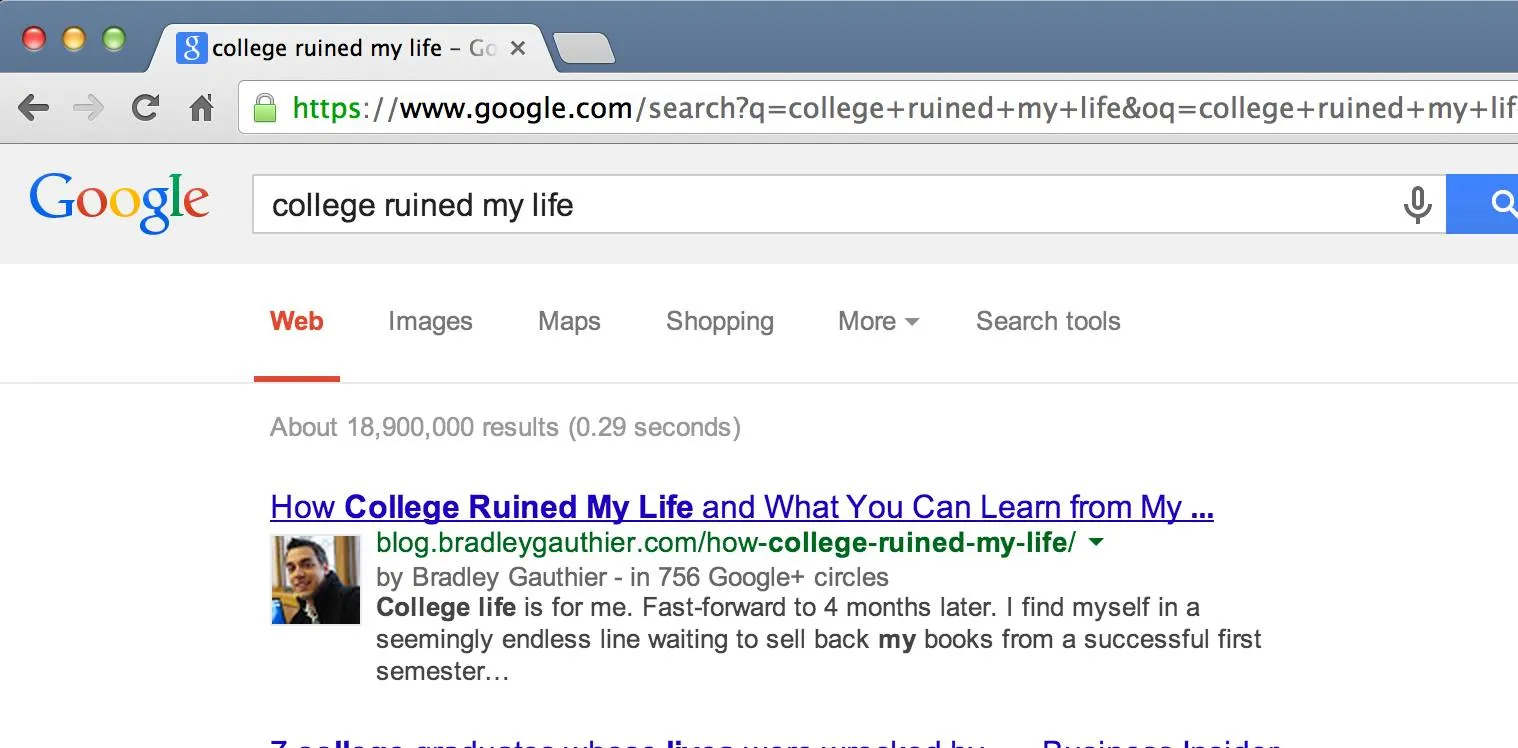
I’m a long-time advocate of not going to college. I went to St Norbert College and it was a mistake. But back then a lot of folks were still apprehensive of paving your own path. And that was what we were “supposed to do” for our career.

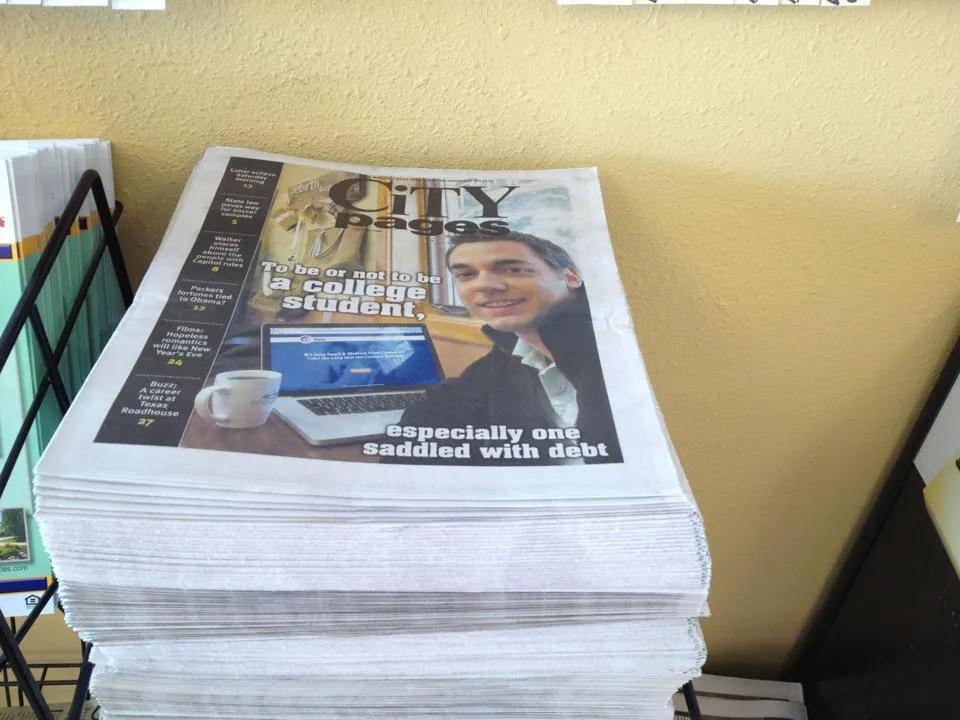
I'm on the cover of the newspaper :)

But with YouTube, MOOC’s, and the rise of AI education, almost anything can be learned for free online.

I wouldn’t want to be a college president right now. Because it would be similar to being the captain on the Titanic. Most of their efforts would be akin to rearranging the deck chairs after hitting the iceberg.

I’m changing my view on an AI-powered future… in a positive way!

If we can figure out human/AI alignment issues in the next year or two, we have a good chance of entering an era of technological prosperity.

What changed? The rise of LMM’s.

You may have heard of LLM’s, Large Language Models, which provide the brains of AI.

But now, we’re starting to see Large Multimodal Models (LMM’s).

These extend the brains of AI by being able to interact with the outside world. They can see, listen, and interpret the world.

What’s does this mean? Lots!

Manufacturing will improve immensely thanks to advanced QC, helpful robots will be accessible to most households, disabled people will be able to live normal-ish lives, science research will exponentially expand, healthcare will be able to diagnose issues better, etc. the list goes on and on with better innovations.

While I’m now going to consider myself an AI Optimist, I still think we have important issues to work out, like jobs going away. But if society learns how to learn (and continuously re-learn), we should be able to adapt to this quickly changing world.

I don’t think student loans should be forgiven. But I do think there are some common sense reforms which would be easy to implement:, Bankruptcy: Did you know student loans cannot be cleared in bankruptcy? This is an easy publicity win for politicians trying to improve the student loan system. (Side note: then Senator Joe Biden voted for this bill back in 2005.), Interest: Remove interest expenses on the loans. Not only does the government make it difficult to remove loans, they make it hard to repay them. Some people owe more in interest than the actual amount they borrowed.

These two changes would be a huge leap forward for those struggling to exist in a world where they have mortgage-sized payments for an education which is probably already out-dated and unnecessary.

Consumer behavior is a complex tapestry of choices and preferences. On one hand, there’s a growing appreciation for local businesses. These are the places where personal touches matter, where artisans offer unique experiences rooted in authenticity.

Conversely, mega-retailers like Walmart and chains like Starbucks dominate a significant portion of the market. Their success hinges on their ability to offer standardized products and services, ensuring reliability and consistency for their vast customer base.

Now, the introduction of AI, particularly in sectors like food, is set to redefine these landscapes. The prospect of robots in kitchens isn’t far-fetched. They promise efficiency and a level of consistency humans might find challenging to match.

But this tech-driven evolution brings forth a critical question: What do consumers truly value? Will the precision and predictability of AI-powered services become the gold standard? Or will the intrinsic value of human touch and craftsmanship remain irreplaceable?

As industries adjust and technology progresses, the ensuing consumer choices will shape the market’s direction. The next phase in commerce awaits, defined by a balance between innovation and tradition.

People want new experiences in the theater and on streaming platforms. We see this through the major blockbuster flops of uninspired sequels and remakes.

This is where generative AI will disrupt Hollywood. Where artificial actors, personalized scripts, and on-demand video generators will become more popular.

These innovations are on the horizon at the same time writers and actors are on strike. So it seems Hollywood is doomed.

What happens when a movie which once took thousands of people and $250 million to create… can be made for free with a high powered laptop?

About a decade ago, I naively believed anyone could be an entrepreneur. And consequently, I expended a lot of energy to get everyone I could to explore building their own business. Ultimately, I learned that most people do not have the desire or want to pursue a path which I viewed as life changing.

And now, I’m getting the same vibes as I try to push people into embracing AI. The vast amount of organizations and people I’ve presented these AI concepts to are not embracing them.

Maybe it’s a failure on my part, but I think it’s generally a flaw of human nature. That no matter how beneficial something may be for someone, they need to discover their own path.

But unlike entrepreneurship, AI is not something to be ignored. It will consume everything and without re-skilling, hardly anyone will be immune.

As with everything in life, there is no black or white, only shades of grey.

This spectrum holds true for our potential future too.

Some say AI will usher in a utopia. Others say it’ll accelerate into a dystopia. But why must we accept a binary?

Utopia literally means “no place” in Ancient Greek. And the concept of dystopia often is considered the antonym to utopia, though both share many of the same scenarios.

So with that in mind, where is the grey zone of these “-topias” and how can AI help?

Recently, Kevin Kelly introduced the concept of a protopia. And it’s worthy of consideration within these AI-based future scenarios.

Essentially, a protopia is a scenario where today is better than yesterday.

And this concept gives me great hope for the human race, because as AI infiltrates every aspect of our lives, eliminating our current way of life, there are many reasons to believe tomorrow will be better than today.

A protopian future is possible.

Prediction by 2030: construction workers and tradespeople, like electricians and plumbers, will NOT work on new buildings.

Humans will only be needed for repairs and renovations to older buildings. As all new buildings will be built and maintained by robots.

Because if a house can be 3D-printed and finished by robots, the buildings will also be designed to be repaired by robots too.

For instance, have a plumbing leak in a new building? A robot could be dispatched instantly to fix the pipe, at no additional charge and without any delays.

There will come a time when most assets will be powered by crypto., Your house deed will be a token on a blockchain., Your insurance policy will be a smart contract on a blockchain., And many more assets: video game items, concert tickets, health records, etc.

But the vast majority of folks won’t even know this is happening. It’s infrastructure and only a sliver of folks care about tech.

Most people will simply have a digital wallet where all of these items live.

The new milestone up ahead for AI will be the concept of artificial general intelligence (AGI). Which basically means, the system is completely autonomous and can think for itself.

If you’ve ever seen the movie “Her” with Joaquin Phoenix, the AI character played by Scarlett Johansson is a good example of an AGI.

And so, the interesting thing about AGI, is the wide array of predictions of when it will emerge. I’ve heard in 5 years, I’ve heard in 20 years, and I’ve even heard: never!

But in reality, with the rise of vector embeddings via Pinecone, interaction frameworks such as LangChain, and models like GPT-4… they are all accelerating this race to AGI faster than most realize.

Personally, I wouldn’t be surprised if we have AGI by the end of 2023.

When the history books are written about this era of the American Experiment. And how the United States followed in the steps of Ancient Rome. The fingers won’t solely be pointed at politicians, corporations, wealth gaps, or the growing list of divisive mindsets.

The biggest reason our society is slipping into a dystopian nightmare, is because of mainstream media’s obsession with clicks and eyeballs.

The search for the almighty advertising dollar by those who are highly influential, and should be impartial, distorts our vision of reality.

These “news organizations” create and amplify narratives to benefit their bottom line. They appease their advertisers with puff pieces or hit pieces depending on the direction of the dollars.

But there are ways for us to challenge this narrative. We have the ability to change the direction of our society before it’s too late. It is possible…

How? Turn off the news we know is biased and divisive, learn to do research while reading headlines, and most importantly, get involved in society. We all can do our part to make the world a better place. And it starts by understanding the motives of others before believing what they say.

A lot of negative things have been said about the tech sector during last week’s Silicon Valley Bank fiasco.

But the one thing these critics fail to acknowledge, is the tech sector is the greatest advocate for the poor and underserved. Mostly because the tech sector creates a deflationary economy.

Let’s consider education… it once cost tens of thousands of dollars to get most good-paying jobs. And then YouTube was released, where anyone in the world with an internet connection can learn nearly anything, for free.

Or, let’s consider communication… remember when long-distance calls, especially international calls, were reserved for only the rich or for special occasions? But then Skype was released, suddenly allowing anyone in the world to communicate with each other via video, basically for free.

And there are many more examples of how technological innovations have driven consumer expenses to near zero.

All in, by considering how the quality of life has been improved because of tech, it’s hard to complain that the USA must do everything it can to have a vibrant tech sector.

We’ve been made to believe journalism is something done by specialists. By folks who are paid by organizations to report the news. But that isn’t the true definition of journalism.

Anyone can be a journalist. All it takes is a camera and to be in the right place at the right time.

I believe this revival of citizen journalism is on the upswing. Because we see it all the time: photos of major events, videos of injustices, and interviews of witnesses. These can all now happen without news organizations’ involvement.

And so, next time you see something you deem newsworthy, capture it. And most importantly, share it. Because you’re doing your part to maintain a well-informed public, which is the bedrock of democracy.

Here’s something to think about on this day of love…

So we all know the vast majority of matchups these days happen via dating apps. But did you know, the vast majority of dating apps are owned by just a few companies?

With that in mind, almost all future relationships will be created from algorithms crafted by a handful of people.

And through filter bubbles and software developer biases, these algorithms determine who sees (or doesn’t see) potential mates.

Carry this forward one generation… and most kids around the United States will be products of algorithms decided by a few developers.

Happy Algorithm Day… I mean Valentines Day! lol

me AI optimism for Monday… While it’s fairly obvious that most

Some AI optimism for Monday…

While it’s fairly obvious that most of our current job titles are going to be eliminated by AI and automation. It’s not all bad.

Because what is a job? It’s simply a set of tasks we do to solve problems.

For instance, some people solve the challenges of accounting. Some people solve the challenges of writing. And some people solve the challenges of manufacturing.

All three of these challenges are being solved in ways which will no longer involve humans.

But in the process of solving these relatively mundane challenges, new problems will become apparent.

From childcare and education to climate change and sustainability, we will always have problems to solve.

This provides all of us an opportunity to re-skill and pursue bigger challenges. And to solve problems that’ll lead humanity into a new era of growth, prosperity, and abundance.

2022

Twenty years ago, no one would have imagined a job title of Social Media Manager. But now, that role is nearly ubiquitous in the business world.

Back in the 1980’s, a lot of these social media professionals would’ve instead worked at newspapers, magazines, or probably a factory. All roles eliminated by technology advances.

The same is happening now with knowledge workers. Most white collar jobs will go away; attorneys, accountants, writers, researchers, customer support, and others.

But I’m guessing there will be a hot new industry folks will want to explore.

I haven’t seen much online about this, so I’m not sure what it’ll be called. Though if I had to name it, I’d say, Prompt Design.

Here’s why…

As artificial intelligence and robots get integrated throughout our lives, not everyone will have the skills to directly interact with these systems.

So in the same way a lot of business owners don’t have the skills to manage their social media presence. They will also be looking for folks with the skills to write prompts into AI engines.

btw, a prompt is the general term for the information given to an AI to perform a certain task. It could be as simple as “summarize this text” or as complex as “transform this data into ___ using linear regression mixed with ___ and visualize it with a 3D Feynman Diagram and output it into a PDF”

These prompts are simple in concept, just like posting on a social network. But in practice, it gets incredibly challenging, quickly.

This new role will become ubiquitous throughout the business world. And is an excellent opportunity for anyone interested in starting the re-skilling process.

Though keep in mind, there will still be a couple of years before this is in high demand. But historically, this is the best time to get into the new industry. As early thought leaders have first-adopter advantage.

Good luck, future prompt designers!

About 100 years ago, lots of people made saddles for horses. They would train and improve their skills as saddle makers.

These saddle makers were experts at their craft. And even while the first automobiles hit the roads, they had decades of “job security” ahead of them.

But over time, their skills became unnecessary. As the horseless-carriage made horses irrelevant for the average traveler.

Fast forward to today… we are ALL saddle makers, diligently doing our craft, about to be irrelevant because of artificial intelligence.

The past couple of years has been a quasi-experiment into Universal Basic Income (UBI). And I’d say it failed spectacularly.

If you recall my previous posts about UBI, the mainstream reasoning for the concept is to provide a foundation of financial support for those displaced because of technological changes, namely automation and artificial intelligence.

Simultaneously, the world is just now reentering a period of normal jobs again, now that the world is opening back up after the pandemic.

However, at the same time jobs would typically become available, we’re seeing them eliminated because of the quantum leaps in artificial intelligence and automation.

This perfect storm is going to result in a drastically altered economic landscape. Where folks don’t have available jobs and the government doesn’t have the financial tools to provide for the jobless.

Re-training wide swaths of people with the skills to outpace the developments in AI will be a losing battle. So buckle up folks, this decade is going to be a wild ride.

There was a time when we all shared the same feeds, like CBS and the local newspaper. Everything we consumed was the same as everyone else.

Now we all have our own personalized feeds, but still share the same content, like Facebook and TikTok. We all still have a chance to see the same viral videos and memes.

But some day, we will all have our own personalized content. And it’ll be rare to share anything, including the same movie or book.

All content; writing, audio, video, everything… will be tailored to our specific interests and preferences. No one will see the same content as anyone else.

And those future people will look back at our era with wonderment for our “boring” times. Just like the way we now look back at the pre-internet, pre-cable television era when there was only one of three tv channels.

We live in the safest period in human history.

Yet, if we turn on the tv or visit a news feed, we’d think it’s the worst.

This is because news organizations know the most powerful way to keep us tuned in: fear.

But the funny thing about fear? It’s just an evolutionary byproduct which kept our ancestors alive long enough to reproduce.

Fear prevented our ancestors from getting too close to lions. Yet, now we let fear prevent us from living our best life.

We fear our neighbors, we fear losing a job in a down economy, we fear doing bold things in business, and we fear stepping out into the unknown to achieve our goals. All while these feelings of fear are just trying to keep the reptilian brain safe from predators.

No one deserves to live in fear. We all deserve better.

So the next time we see a negative post, article, or video, we must remember their intent and reject their attempt to keep us trapped in fear.

Chasing happiness is a recipe for failure. Because happiness comes from within.

Some folks believe the next “thing” will finally be the magic solution to overcome unhappiness.

During this chase, they may quit a good job, move away from a supportive community, end a loving relationship, burn bridges with valuable connections, or worse.

All of this, of course, are external factors, masking the real reasons of unhappiness.

However, looking inward is oftentimes painful. So it’s easier to look outward. To blame our external environment for our feelings.

Because when we look inward, we uncover memories of past pain. Of past trauma. Of past hurt. And these memories can create the same (or worse) feelings as the day these events happened.

But the funny thing about our memories is they are usually misremembered, or even false. And without a doubt, they no longer exist.

Nostalgia makes the heart grow fond of our earlier, more simpler times. Even if those events weren’t as rosy and sunny as we may remember.

And conversely, depression distorts our memories in destructive ways we rarely acknowledge. Usually rewriting our history, where good times turn into bad times.

As Lao Tzu once wisely said,

“If you are depressed, you are living in the past.

If you are anxious, you are living in the future.

If you are at peace, you are living in the now.”

Thus, we live in this delicate balance of memories and desires.

We long for our simpler times while hoping the future fantasies come true.

Unfortunately, our fantasies require us to cherry-pick a lifestyle which is unattainable. Fantasies require us to suspend reality and sabotage our present.

And this sabotaging of our present creates this feedback loop of depression and anxiousness.

It’s sad to see these struggles in those we love. We wish we could take their pain as our own. We want to wave a magical wand and make these feelings of unhappiness go away. However, reality isn’t that simple.

Everyone must ultimately find their own happiness by conquering their inner demons. We all must face these battles on a daily basis, whether it’s a minor struggle or a major trauma, the journey towards happiness isn’t easy.

Do I know the roadmap to discover internal happiness? No. But I do know it starts with mindfulness, meditation, and doing our best to live in the now.

Personally, I fall back towards the concepts of Stoicism. That we all must look inward and accept reality as it is, not as we wish it to be. As Marcus Aurelius reminds us:

“You have power over your mind - not outside events. Realize this, and you will find strength… because the happiness of your life depends upon the quality of your thoughts.”

Most people don’t realize that society is controlled by propaganda. Unfortunately, over the past couple of years, this has become very apparent to me.

Many “disliked” aspects of our world, from nuclear energy to crypto, suffer from an onslaught of propaganda campaigns. But for this post, I’ll use crypto as an example…

Though first, a quick background: I understand the crypto industry fairly well. Probably going as far to say, I understand it better than 99.9% of people. I’ve spent the majority of my life as a technologist, a futurist, and an armchair economist. Simply put, I research the crap out of things that interest me, like crypto.

And so, when I see most of the criticisms of crypto, I shake my head.

Because almost ALL of the crypto critiques are based around false information. And unfortunately people eat up the propaganda like candy.

I know these regurgitated taking points about the industry are false. But folks love to share these tidbits, without doing any real research. As most are easily disputed and proven false.

Yet, their followers then share their teaspoon of “new” knowledge, never realizing their ignorance and blind obedience to the propagandists.

Thus, it makes me wonder…

What else are people pushing which are directly from the mouths of propaganda creators?

It’s never been easy to have ideas spread. True or false, if something is presented in a way people can easily digest, they won’t look deeper. They simply share, retweet, and comment on these topics. Ultimately doing the bidding of propagandists without ever realizing it.

Because of these realizations over the years, I rarely take something at face value. I do the research from both sides of the topic. And make up my mind based on a wide array of datapoints.

It’s not easy to stay on top of most topics, but it’s essential for us to know the truth. Whether we like to hear it or not.

The mantra, “trust, but verify,” is a great roadmap to get started in overcoming the societal misconceptions created by propaganda.

As I’m sure there are countless issues and topics which have been steamrolled by malicious people with ulterior motives. We need to stay on top of the truth.

Personally, I’ve found my research skills improve over time. So while it may seem intimidating to thoroughly research something before committing it to memory or sharing the info, it gets quicker and easier.

We must do the work to weed out the false information out there. Our ever growing complex society will require us to be well-informed.

And it’s ok to say, “I’m not sure where this info originated from, so I’ll consider the opposing viewpoint by looking deeper.”

Or better yet, “I don’t know, so I won’t share this.”

Boredom is a relatively new, first-world problem. Because for the span of human history, there was too much to do, which prevented humans from becoming bored.

So evolutionarily speaking, we don’t know how to cope with boredom. Thus, we find ways to fill periods of downtime with technology, namely video games, mindless TV, and social media.

Which was fine until the algorithms took over.

Now, we have millions of bored people endlessly scrolling feeds custom made just for them. With posts and ads uniquely designed to eliminate the boredom of each user, consequently forming habits and emotional demands for more and more content.

Each new like or funny video further reinforces our dependency on social media to prevent us from that foreign feeling of boredom.

But the algorithms have placed us within bubbles of our own creation, thanks to the constant feedback loop of likes and engagement:

We engage with one post and the algorithms believe we should see similar posts, which we may also engage with, confirming to the algorithms to send even more similar posts our way. Soon, it’s all we see, until a new interest of ours is alerted to the algorithms.

Consequently, our inability to handle boredom is creating dopamine-dependent prisons for us, designed to sell more ads and keep us in an endless loop of self-reinforcing beliefs.

Here’s a tip if you own a products based business and you sell via your website.

Here’s a tip if you own a products based business and you

Don’t allow folks to leave reviews on your website. It’s fine when they review on Amazon or Home Depot or wherever. But why let a tiny minority of (usually ignorant) people tarnish your brand?

Most bad reviews are either from people not understanding the product before buying or of something outside your company’s control like shipping delays.

Here’s an exercise for you:

Don’t think of a pink elephant.

Are you thinking of a pink elephant? But I just told you not to think of one. Because the only way to not think of a pink elephant is to not mention it in the first place.

Same with reviews, if you don’t present them on your website, most folks won’t look for them.

Questions to ask ourselves while consuming the news:

What is the political leaning of this publication?

What is the agenda of the creator?

What information have they conveniently left out?

What is the other side of the story?

Because unfortunately, the hot pursuit for clicks and ad revenue has left us with niche publications focused on eyeball counts over unbiased reporting.

And while we’ve always had agenda-based journalism, it’s only going to get more extreme as competition for attention heats up.

I’ve been thinking about a weird twist of fate to an inevitable outcome. Read on to learn more:

One of the most surprising results of the past couple years is The Great Resignation.

As most of you know, I’m an advocate of pursuing your passions and to never settle for under-employment.

I’ve also been an advocate of implementing robots and automation throughout our society. Which will free up our lifestyles from the mundane daily tasks which do no one any good.

But because of the massive amount of people refusing to flip burgers and clean toilets, businesses are forced to find new ways to accomplish these tasks.

Which, of course, routine tasks can easily be done by robots and/or software.

So back to my surprising realization:

I once thought businesses were going to replace employees with robots, purely from a profit motive.

However, businesses now are scrambling to install robots because they can’t find workers.

tl;dr, We all thought people would lose their jobs to robots, when instead, robots gained jobs because people no longer want the jobs.

2021

The cost of college actively hurts innovation in the USA.

Why? Because there are countless unfollowed business ideas and inventions left in peoples’ dreams due to the mortgage-sized student loan debt payments each month.

When someone has $100k in student loans and a family to feed, it would be absolutely terrifying to leave the security of a steady paycheck to explore the unknown.

The cost of failure with unforgivable debt is too risky for most. And is a leading cause of destroying the American Dream.

If society collapsed, who would inherit the earth?

It would be those who can survive without Walmart. Namely, the hunter gatherers.

And they say, history is written by the winners.

So let’s fast forward 1,000 years after the collapse, what will be said of this era?

Would future humans know anything about our current understanding of quantum mechanics, genetic biology, the internet? Or even simpler, what about sewers and roads?

Given this thought experiment, how many civilizations have come and gone, in which we know nothing of their advancements in science, technology, engineering, math?

There’s very little remaining structures from 1,000 years ago, let alone 10,000. Yet, there are mysterious remains all over the planet. From the jungles of the Amazon to the deserts of the Sahara.

It’s fascinating to think about what was before our written history. What knowledge has been lost to time. And how many advanced civilizations we’ll never know existed those many millennia ago.

Over the upcoming months and years, you’ll begin to hear more and more about “Web3” or Web 3.0

This is the natural evolution of the internet and builds on top of Web 2.0

A quick refresher:

Web 1.0 was basic websites hosted on your own server. Web 2.0 was logins and interactivity hosted in the cloud.

So Web 3.0, by extension, will be blockchains and crypto built on decentralized servers.

The key here is: decentralized. As the current cloud is incredibly centralized. And Big Tech runs ALL of Web 2.0 … meaning they know everything, from your location to your likes.

In other words, decentralized technologies will not be built by Facebook, Amazon, Microsoft, or Google. Because by design, these are centralized companies.

As much as Facebook and Big Tech will try to hijack the term Web3, do not believe anything built by Big Tech to be decentralized.

The new Google’s of Web3 will be DAO’s (decentralized autonomous organizations) and many of the future dominating technologies are currently just small scrappy groups of coders right now.

Decentralized technology is the future and will be the solution to many of society’s problems brought on by Big Tech.

To build a personal brand and a loyal audience, a person often needs to take a side on an issue. This means they need to boldly declare their views as correct. And that the other side is wrong.

The challenge with this approach, is any well-reasoned person knows there are always two sides to the story. That the middle ground is often the most accurate.

Unfortunately, their audience doesn’t want a well-reasoned approach. The audience wants to hear their views reaffirmed back to them. In other words, people want confirmation of their beliefs.

We see this with personal brands like Rachel Maddow and Ben Shapiro. Their views are extreme and don’t factor in the many nuances of a subject.

This issue is further compounded by social media algorithms. We are all byproducts of filter bubbles and are mostly shown similar content to anything we’ve “liked” in the past.

Because the days of everyone huddling around the TV to watch one of three channels are (thankfully) gone. This Cambrian Explosion of content has opened the eyes of many to the previously unseen issues in the world. We now have agency over what we consume.

But most consumers don’t realize these content creators are simply pandering to their loyal audience and are not going to provide a reasoned analysis of the subject.

And so, how do we overcome this phenomenon?

I’m not sure. Though here’s what I do when I hear something that seems extreme: I consider the source, I Google the topic, and I try to find contrarian views.

I know it’s a lot easier to just trust the headline. Unfortunately, we live in a world where we also need to verify.

tl;dr Do your own research. Trust, but verify.

We are speeding towards a future where everything is free. Deflation is happening all around us.

Think about it, what do we truly need to pay for anymore?

If you’re willing to use a two year old iPhone, you can have a super computer in your pocket for FREE.

If you’re willing to sit through ads, you can watch nearly any show/movie ever created for FREE.

If you’re willing to share your personal data, you can have nearly any software (maps, docs, email, etc) for FREE.

If you’re willing to make some compromises on products, brands, timelines, and privacy… many of the once-expensive aspects of life is now FREE.

Did you know that many of the products on Amazon are actually from Alibaba in China?

A growing trend is called Fulfilled By Amazon (FBA) and consists of people shopping on Alibaba, buying in bulk, and having it shipped directly from China to Amazon’s warehouse.

The seller never sees or handles the product. Instead, Amazon packages and ships the products directly to the buyer.

This is why you’ll see many of the same products with various brand names or bundles. They are all from the same source in China, just different FBA seller accounts.

Here’s something to ponder…

Technology has continued to drive down prices of nearly everything.

For example, the cost to travel coast to coast is a fraction of what it was 100 years ago.

Or more strikingly, cell phone providers basically give away the 2-year-old iPhone with a basic plan.

The term for this concept is called deflation. And technology and capitalism (through competition) continually cause prices to fall.

But what do you hear about more?

Inflation. We are told prices always go up, that the value of the dollar is worth less today than it was yesterday. And in general, it’s basically a tax on anyone holding fiat currencies long-term.

However, if we go deeper into what inflates, we find assets like houses and stocks, as well as, services like healthcare and education.

What do these have in common? One thing: government intervention.

These industries can keep their prices high because the vast majority of their revenue ultimately comes from government subsidies, government backed loans, and other governmental programs.

For instance, houses are backed by mortgages, backed by banks, backed by the government.

The stock market is propped up by The Fed’s support, through endless stimulus.

Healthcare knows the insurance companies will financially support most of their customers and if not, the government can always step in with additional assistance.

And higher education institutions raise their rates every year because they know that Uncle Sam will be providing the loans to (naïve) 18 year old kids hoping for a better career.

So with all that said, what would happen if the “free markets” didn’t have unlimited access to newly printed Greenbacks?

And can we truly call them “free markets” if the government selectively chooses what industries and sectors it helps?

The world’s economy, (because of technological advances), is massively deflationary.

Unfortunately, the government has created a hidden tax on all of us, called inflation.

Having a job is a relatively new concept in human history. Prior to the industrial revolution, many people spent their entire day obtaining resources through farming, trading, hunting, etc. And for millennia, humans never thought life would be different.

So why must the concept of a job persist in the upcoming era of unlimited abundance?

Robots, artificial intelligence, 3D printers, drones, and other upcoming technology is about to create a Cambrian Explosion of new ways of life.

These technologies will also result in a deflationary economy, where nearly everything is free. And while it may seem like a foreign concept, not everyone will have a job. Many will be able to pursue life trajectories drastically different than what we can comprehend right now.

And those of us who want to live above the baseline, we will create jobs to obtain additional resources. But a job will no longer be a requirement for survival.

If someone relies on Facebook to deliver their news, they are only receiving content the algorithm believes will increase that person’s engagement with the post.

In other words, we are only shown stuff that computer code wants us to see. It’s a filter bubble based on our prior likes and actions, deepening the divide in what our neighbors, family members, and us may know about current affairs.

There are parts of the world where the people call the internet “Facebook” because it’s all they use. And these people are now unknowingly trapped in a filter bubble designed to keep them scrolling past ads.

I feel like people are seriously underestimating how much the world will change this decade. Artificial intelligence is evolving at such a rapid pace, governments and legacy organizations won’t keep up. Our only hope is the companies in the USA remain the dominant players in the industry.

And if there were ever an argument FOR the big tech monopolies, it would be on the grounds of national security in regards to AI development. Whoever wins the race, wins nearly everything else.

Research and reflection leading to independent thoughts seems to be increasingly rare.

Society wants talking heads on broadcast news stations to tell us all what to think and believe through biased opinions. Which is leading to bubbles of beliefs.

Conversely, there are no boxes filled with constraining perspectives by open minded, independent thinkers.

All topics and talking points are on a spectrum. Hardly anything is on the extremes. Rather, almost everything is within one or two standard deviations of the mean.

Want to know one of the root sources for society’s problems?

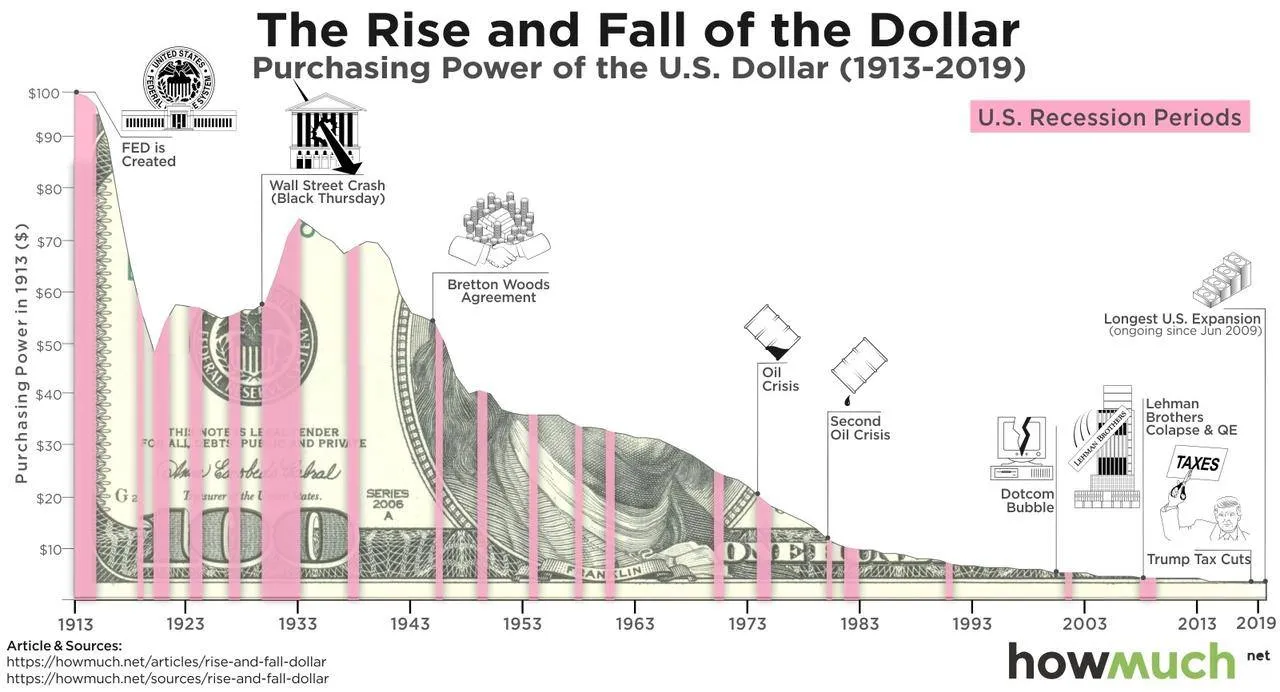
Want to know one of the root sources for society’s problems?

This graph shows how much the Federal Reserve has devalued our hard-earned US Dollars. And every time the Fed prints more money (à la stimulus), the value drops even more.

Besides the obvious, here’s why it’s a problem:

The buying power of the dollar has dropped while wages have stayed constant. This means minimum wage workers and the middle class continue to lose its ability to function in society.

When the American Dream of owning a home with a white picket fence continues to slip through peoples’ fingers, it causes a feedback loop of disappointment and despair.

This problem is masked by the continued advancements in manufacturing and technology, keeping the prices of consumer goods low. Which manipulates the Consumer Price Index (CPI), the main measure of inflation within the economy.

Because as goods get commoditized, the average person can buy pretty amazing products, like TV’s and TV dinners, for dirt cheap. But is this the best gauge of the economy? I’m not so sure.

At the same time, hard assets like stocks and real estate are becoming dramatically more expensive. So a share of Tesla or that house in a good school district is quickly becoming unattainable for most Americans.

And so, back to the topic at hand. With the endless money printing by the Fed, these trends are only going to speed up in an exponential wealth transfer. The middle class is disappearing and the American Dream is dying. It’s happening in real time and not many are paying attention.

What are we to do?

Start businesses, buy assets, and continue to educate ourselves.

ps. Massive wealth gaps are hypothesized as a leading reason the Roman Empire fell.

2020

Having meditated for the past decade and having studied quantum mechanics pretty deeply, I believe the physical reality we observe is created in our mind.

Had we evolved different senses or alternative ways to store our perceptions as memories, the world we interact with would be drastically different.

But because our reality is defined in the same place as our consciousness, we cannot remove ourselves from our perceived world views.

Think of the old parable of the fish in water by David Foster Wallace:

“There are two young fish swimming along who happen to meet an older fish. The older fish nods at them and says:

‘Morning boys, how’s the water?’

The two young fish swim on for a bit and then eventually one of them looks over at the other and asks:

‘What the hell is water?’”

This illustrates my point about reality perfectly. And is something meditation and mindfulness brings about after many years. We define our reality.

Imagine two boats on a large lake. They start out going in the same direction, completely parallel.

Now imagine one of the boats turns the wheel just a bit away from the other boat.

At first, this slight angle isn’t noticed. They could go a long way without noticing the boats are starting to move apart from each other.

But after a few miles, these boats really start moving away from each other. And by mile four or five, it is almost unrecognizable that they once were right next to each other.

Now let’s imagine the boats are filled with passengers of all ages and precious cargo which can’t handle much turbulence. So if the two boats want to come back together, it’s unlikely a sharp turn will happen, as the passengers will be thrown around the boat.

So the only solution to safely bring these two boats together is a slight turn back towards the other boat. They won’t come back together right away, but just as they gradually departed, they gradually get closer and closer.

After a couple more miles of this revised course, they are finally back traveling in parallel and have safely come together. Yay!

If you haven’t guessed the analogy by now, these two boats are representative of society. Wherein our divisions happened long ago and only now are they becoming more and more apparent.

And so, as a nation, we must all slowly do our part to turn the boats back towards one another. Drastic shifts are dangerous, instead every small action to bring people together is the safest way to connect society again.

It starts with every one of our daily actions, every act of kindness, every compliment, every time we show compassion to others… this is the way to bring the boats back together.

❤ 🇺🇸 ❤

Imagine if everyone in the USA had a secret code that:

  1. Was used as an identification number AND password in many government systems.
  2. Could only be changed through a very difficult and complicated process.
  3. Was widely stored throughout countless banking, insurance, accounting, school, government, and employer databases.
  4. Easily accessible by most employees of said organizations.
  5. And if found by the wrong person, could lead to personal and financial ruin.

That would be crazy right?

Well, I just described our social security number.

The USA needs to have progression towards more advanced systems or we are going to become a lot more vulnerable to cyber attacks.

I don’t think most people realize how quick AI and robotics are advancing. Most current jobs will be gone soon.

But there’s hope, you only need three skills to stay relevant:

  1. creativity
  2. communication
  3. work well with tech

Without all three of these, there will be very little opportunities to earn a living. And livelihoods will be dependent on what the government provides, through something like Universal Basic Income (UBI).

But with these three skills, there will be a world of abundance available. New business models and job roles will be created for those who can provide value in this new economy.

I have a tip for you to potentially save thousands of dollars a year…

Scan through your credit card charges for any subscription services you don’t use anymore, e.g. Hulu, Internet add-ons, magazines, services, etc.

It usually takes seconds to cancel. Though you may need to call for some, (I just sat on hold with SpectrumTV for 30 minutes but it saved us $480/year).

Here’s a sample calculation:

10 different subscriptions x $15 a month on average

$1,800 in your pocket each year 🥳

It’s interesting to me how people take direct quotes and, usually out of context, add subjective words to them. These subjective quotes are then interpreted into bite-sized headlines and spread as news. Which are then further interpreted and spread as social media commentary.

And all of a sudden, our collective knowledge around a subject isn’t based on truth, but rather a fuzzy memory of an interpretation of an interpretation of an event.

For instance, a few weeks ago I watched the press conference where Trump mentioned the now infamous quote around injecting disinfectants.

Instantly, the social web lit up with articles, jokes, and controversy around his comments.

Many articles mention things like injecting bleach. And then folks on social media start talking about drinking Clorox.

But that’s not what he said. Here’s what the actual quote was:

“And then I see the disinfectant, where it knocks it out in one minute. And is there a way we can do something like that, by injection inside or almost a cleaning, because you see it gets in the lungs and it does a tremendous number on the lungs, so it’d be interesting to check that, so that you’re going to have to use medical doctors with, but it sounds interesting to me.”

No where did he mention bleach or Clorox. But if you ask most people about this quote, they’ll quote the misquotes.

Personally, I think it’s dangerous to brainstorm life-altering medical procedures in front of the entire world.

But in general, people like Trump need to be more aware of this phenomenon for twisted quotes of quotes and be more selective with their words. Though, ultimately, it is the fault of the people who misquote sources.

Anyway, the lesson in all of this?

Don’t blindly trust folks who offer interpretations, rather if it’s important, go directly to the source.

Keeping things in perspective…

Just because we see a picture of something like an empty store shelf online, it doesn’t mean the global food supply is drying up.

The picture only means that one shelf, at that given time, was not stocked with products.

It’s very easy to get overwhelmed and anxious right now. But now is the time to have hope. Because there are a lot of smart people doing very generous things right now.

Things will get worse before they get better. But we will make it through these wild times. All together!

me people think the world is ending

Some people think the world is ending. Some people think nothing about their daily lives should change.

me people think the world is ending

The truth is, we’ll mostly all make it through these strange days unscathed. But in order to do so, we need to work together.

Let’s care about the well-being of our neighbors. Of the employees who are missing income. Of the small business owners losing revenue. And of those about to lose much more.

We’re on the cusp of some very hard times. But together, we can make it a little easier.

If you’re at the store and there’s only two left of something, grab only one. Or maybe consider leaving both for those more in need.

If you’re not feeling well, don’t risk it. Keep your distance from others.

If you’re scared or feeling alone. Reach out to others, chances are they are feeling the same thing.

We WILL make it through these challenges. With the silver lining hopefully being a slightly more sanitary world.

Where people have formed the habits of sneezing into the crook of their elbow.

Where people actually wash their hands on a regular basis.

Where public spaces are cleaned more vigorously.

And where detractors finally see the value of an improved healthcare system for all people.

2019

When I try to control an Apple device via “Hey Siri” about 5 different devices fire up before the one I want to control 🤷♂

In a perfect world, we’d be able to name each device. But if we didn’t say “Siri” it would completely devalue the service.

Because functionally, there’s really no difference between Siri, Alexa, Google, and others. They all play music, set alarms, etc.

Pretty amazing that voice control is essentially a commodity holding onto only one word (its name) to survive.

I was the keynote speaker for UW Stevens Point’s STEAM (Science, Tech

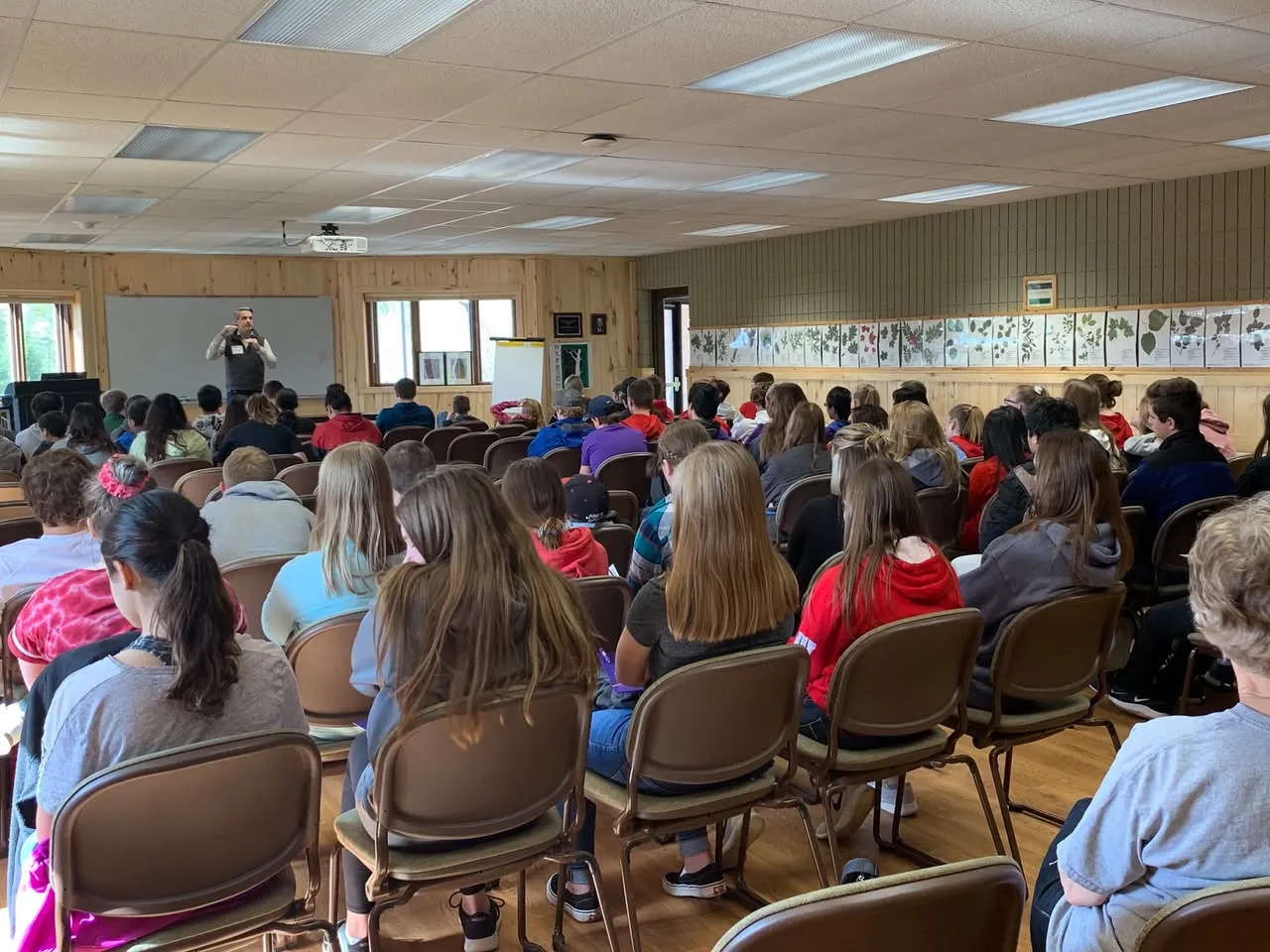
Yesterday I was the keynote speaker for UW Stevens Point’s STEAM (Science, Tech, Engineering, Art, and Math) day.

I was the keynote speaker for UW Stevens Point’s STEAM (Science, Tech

Spoke to 150 seventh and eighth graders about my experiences in technology. And focused on three main areas: challenges, mindset, and success.

In school, we are told failure is bad, but when doing big things, failures are simply learning lessons. Fears once allowed our ancestors to carry-on the human race, now they just hold people back from their full potential.

Understanding goals and habits are key to pursuing AND achieving their dreams.

And to discover success, they must never stop learning. Set big goals and take massive action to achieve them. Don’t let classmates, family, friends, or even teachers tell them their goals aren’t achievable. Anything is possible with the correct amount of positive energy focused on achieving their goals.

After the talk, Rubie and I taught a couple classes to the students on how to code their first website. Was a fun day at Treehaven.

I spoke with the entire 5th grade at the AV-W elementary school today about business. They are doing a shark tank style project where they are building business plans, prototypes, and presenting them later this year.

During the presentation they asked me a bunch of questions, during which I made sure to mention:

  • Fear is natural but let it push you forward instead of hold you back.
  • Always try new things. If they do want to start a business, look within their passions and find a problem. Solve the problem. If it doesn’t work out, try something else. Don’t just give up. Mastery is a long road.
  • Failure is ok as long as you learn from it… sometimes it’s even the best outcome when trying new things.
  • Get mentors, there’s all sorts of people who have already done so much and a willing to give them the roadmap.

And answered many more questions about how apps make money, what apps I’ve built, and all sorts of cute questions about software. It was entertaining. (I also informed them websites are apps 🤯)

Their questions were very intelligent and they really impressed me. Kids these days are so smart!

My prediction on the future of cable tv…

First, to set the stage for this prediction, a few realities:

  1. There are more and more video consumers “cutting the cord” on Cable TV. Meaning they are choosing the internet for video vs traditional cable boxes.

  2. The days of a family huddled around a TV in the living room are dying. People all have very unique tastes in genres. And tablets / phones / laptops are great ways to consume personalized content. This spells disaster for traditional cable DVR’s.

  3. Also, keep in mind, kids these days are more happy to watch someone play a video game on something like Twitch or YouTube than a scripted detective show about a murder.

  4. Streaming video services, like Netflix, will continue to lose their third-party licensed content, like Marvel, and rely more heavily on its own content, like Stranger Things.

What you’ll begin to see are companies who own a ton of content will begin to create their own premium streaming services.

Some of these streaming services still require a cable tv subscription, like AMC. Mostly because of contracts. But those with stronger positions in the market, like Disney, can begin to charge for the content independently.

The days of cutting the cord (on TV) was a panacea promised by streaming services.

But now we will all subscribe to 5-10 different services, e.g. Netflix, STARZ, HBO, Disney, ESPN, Twitch, etc.

Suddenly the convenience of cutting the cable tv cord becomes 10 different bills we have to pay each month.

So here’s the prediction: after a few years of multiple streaming services cluttering up our credit card statements, we will see a service promising to wrap all the services into one offering.

This service combining all streaming services will be a virtual replica of the cable tv box everyone initially ran away from. The circle of life will be complete.

2018

Thought experiment: Imagine you are 1) riding in a driverless car, 2)

Thought experiment:

Thought experiment: Imagine you are 1) riding in a driverless car, 2)

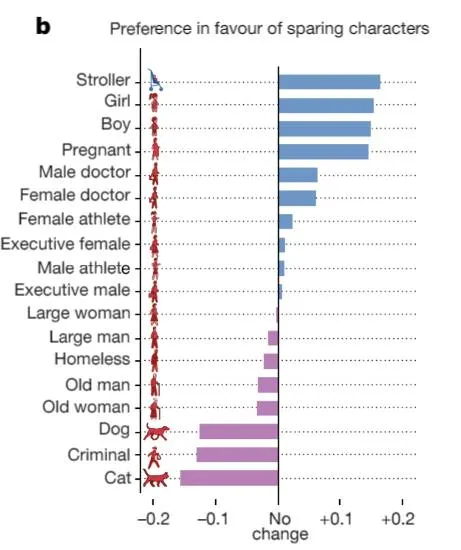
Imagine you are 1) riding in a driverless car, 2) there are a lot of people around you, and 3) you’re about to crash.

How does the car decide who dies in the car crash?

http://news.mit.edu/2018/how-autonomous-vehicles-programmed-1024

If you’re familiar with the trolley-problem in philosophy, it’s quite similar. Do you save one person you know or save five people you don’t know?

But this time, does the car save its occupants, the baby in the stroller, or the crowd of people?

Automation and artificial intelligence has a lot of unsolved ethical challenges ahead.

#automation

Incredibly honored to have served as a Guardian for the veterans of the Never Forgotten Honors Flight to Washington DC.

Full Presidential Motorcade throughout DC. Incredibly entertaining to watch the police officers in action.

I assisted my father, Chuck, along with 101 Vietnam Veterans, 2 Korean Veterans, & 1 WWII veteran, on a wonderful trip around the National Mall.

My Dad served in the Marine Corps in the Sixties as an avionics instructor working on A4 Skyhawks. He volunteered for the Vietnam War in 67-68.

During this week’s Honor Flight experience, he and the other Vietnam veterans finally got the warm recognition they never received when they originally arrived home from the Vietnam War.

Highlights:

We received a presidential police escort throughout the airport, the National Mall, and DC. The lead motorcycle cop was fearless. He blocked highway traffic as we passed, had us going down the opposite sides of the street, and we cruised non-stop through downtown rush hour traffic. I cannot express in words how entertaining it was.

We witnessed the changing of the guard, along with a special wreath ceremony for dignitaries, at the Tomb of the Unknown Soldier in Arlington National Cemetery.

We found a few names of soldiers my Dad knew on the Vietnam Veterans Memorial Wall. Incredibly heartbreaking to see how many people gave the ultimate sacrifice during the Vietnam War.

We visited the Marines Corps War Memorial and captured great photos of the raising of the flag at the Battle of Iwo Jima statue. Truly epic statue which towers over the park.

Overall, this experience in DC is something my Dad and I will never forget.

Thank you for your service to our country, Dad!

Honeymoon was a success. Backpacked and camped around Isle Royale National Park. A 55 mile ferry ride brought us to this remote and massive island in Lake Superior.

Keeping each other alive while exploring the solitude the island has to offer was the absolute best way to do a honeymoon.

Carried in most of what we ate, boiled water when camping backcountry, and hiked many miles of rugged terrain.

There are over 1,500 moose on the island and a few nights they visited our campsites. We could hear them drinking from the lake, eating plants, and even rubbing the velvet off their antlers. It was scary but exhilarating trying to sleep while listening to them explore our campsite.

Moose are ginormous. The one calf (baby) we saw was larger than an adult white-tailed deer. They are very stealthy and blend right into their surroundings. I wonder how many we walked past without seeing.

A park ranger told us Isle Royale is the least visited, but most returned to, national park. This island gets as many visitors in a YEAR as Yosemite gets in a DAY.

We will definitely be back and we recommend everyone to visit this wilderness paradise. Especially with your loved one. Just be sure to bring a water filter, a lightweight backpack, and your endless curiosity to explore.

Fun fact: Six years ago I lived for 3 months in various

Fun fact:

Let me ask you a question, "Did Caesar live here?" http://instagr.am/p/o0tm-/

Six years ago I lived for 3 months in various hotels on the Las Vegas strip. Went out there for the Super Bowl… stayed through March Madness. The sportbooks in Vegas are spectacular!

Why various hotels, you ask? Because I learned the hard way that there is a law in Nevada stating you can only spend 28 days in a hotel before you are considered a resident. So I had to bounce from hotel to hotel. Fun times as a digital nomad :)

2017

The US Congress repealed internet privacy protections, allowing ISP’s to sell your browsing data.

If you’re a website user, be sure to only use sites with https in the URL. This means ISP’s will only see generic information about your visit. Without https, the ISP’s can see EVERYTHING about your usage. And sell it to the highest bidder.

If you own a website, please install an SSL certificate. This will encrypt all data sent between your visitors and your server. Without SSL, the ISP’s can see EVERYTHING about your visitors. And sell it to the highest bidder.

Encryption is our friend. But ISP’s? Not so much.

p.s. Install a VPN, use Tor, and never forget you will be watched forevermore.

I’ve spent a lot of time worrying about Internet security, cyber warfare, and the fate of our fragile technological society.

Here’s why I’m seeing hope:

There’s a rapidly evolving technology called Machine Learning. It’s the precursor to AI (and the foundation of my software company).

And with ML, we mere humans can feed a computer (the machine) with a bunch of data to process, allowing it to make probabilities and determinations (learn).

With cyber warfare, our systems are continually getting attacked.

While in the short run these attacks mean emails get leaked, passwords hacked, and credit cards stolen.

But in the long run, these attacks offer plenty of data for our defense systems to continually learn. Making them smarter and smarter.

Consequently, it will become harder and harder to achieve a successful cyber attack.

A new hope.

2016

Our technological security (“the cyber”) is about to disappear. Here’s my thoughts on protecting yourself:

— Use Tor for browsing the Internet. — Only visit https domains. — Use a VPN for masking your traffic. — Always update your devices immediately. — Use two-factor authentication. — Encryption is a good thing - contrary to what you’ve heard. — Use a password manager. — Never reuse a password. — Use Signal for messaging. — Cover your webcam and disable your mic. — Use only authentic cables to connect devices. — Never plug any unknown USB flash drive into your computer. — Use Little Snitch to monitor network requests. — DO NOT trust the big companies like Facebook and Google. They must comply with government requests for information.

The last 16 years we gave the government unprecedented access to our devices and internet usage. We thought they would have our best interests in mind.

But now we have a squad of scared idiots with full access to everything we search, see, and say on the Internet.

I’m honestly afraid of even sharing this post.

The medical system is incredible. Out of curiosity I called my primary clinic back home to find out my blood type. Here is the abbreviated conversation:

Me: I’d like to know my blood type.

Clinic: You need to come in for a test.

M: Isn’t it in my files?

C: But you have a lot of pages here and it’d take to long to find it.

M: Can I see the pages?

C: No, you can look at them while you’re here.

M: I can’t see any of my records?

C: You can request to see individual records.

M: How do I do that?

C: I can fax you a permission form.

M: Fax? … gives up hope

2014

When was the last time you downloaded an application onto your personal computer? Probably not in a long while. If you’re like me you open a web browser and access anything you need via the Internet.

This is inevitable for mobile devices. Applications - or as Steve Jobs wisely renamed them ‘apps’ - on a phone are bound for the same demise. As a result, app stores and the need to download apps will soon be nostalgia.

But just as applications on the PC were popular for decades, native apps currently have a stronghold on mobile devices because they allow for more functionality and interactivity.

So here’s my native vs web prediction: As mobile web browsers improve and bandwidth increases - just as our desktop experience improved - web apps will win the war.

Long live HTML, long live the web!

After a 5 year love affair, endless good times while traveling, and countless digital badges which made me feel special, I’m sad to say…

Foursquare? You’re dead to me.

Why must you split into two apps. I can’t date both of you… Swarm: If I check into one place, then want to find more information, I cannot. Foursquare: If I find a cool place to visit and want to document my visit, I cannot. Why can’t you two coexist?

Until your overlords bring back my badges, we’re officially over.

Sincerely,

Brad Gauthier

Are you a fan of proper spelling/grammar?

If you look at the history and evolution of language - from its Germanic roots through Old & Middle English into today’s rules defined by Oxford, et al. - there’s one common pattern: simplification.

Observing the vernacular of today’s youth, we must be prepared for a day when ‘u’ replaces ‘you’ and ‘k’ replaces ‘yes, I will’

Because every time you see a kid on an iPad, you’re witnessing the future. And the future doesn’t have time for proper grammar.

Thought I’d share my email response to an entrepreneur who reached out to me today about creating their business, what a business plan should look like, and how to get initial capital for the company:

The best advice I could give you is to not waste time on a business plan. If you’re unsure of your business model, the business plan will only lead you down a path which may not serve you well. And DO NOT take investment money. Debt is good for a big business. Horrible for an entrepreneur. Because whoever writes the checks is the boss and it prevents you from being flexible with your offering.

Rather, find a service someone is willing to pay you money for. Even if it’s a little money for a lot of effort, don’t worry. Once someone gives you cold, hard cash. Look at what you enjoyed out of that process then find someone else to pay you for that same thing. Keep doing what you enjoy, stop what you don’t.

As you bring in more and more cash flow, look for bottlenecks within the process and begin to automate the process. Maybe it requires software. Maybe employees. Whatever you can do to transcend time and create a multiplier for your effort.

Good luck!

For a brief moment in my past I fell into a 9-5 job.

And because it was for all the wrong reasons, I began to look for avenues to escape. Weekends at the bar, weeknights in front of the TV, and an occasional extended long trip to a destination.

We’ve all been there. And most of us are still there.

But as we continually separate work from life, neither side wins.

Work becomes a task. It becomes an activity we do to pay the bills, keep the family fed, and sustain the rat race.

At the same time, life becomes mundane. It forces us to find more TV shows to entertain us, it causes us to save vacation days for better trips, and our family settles into a life of monotony.

As personal life battles for the hours in our day, work suffers. We lose track of why we were working in the first place. This mythical concept of work-life balance and the external - not internal - search for happiness gets in the way of our once relentless pursuit of lifestyle advancement.

However, it doesn’t have to be this way.

And it starts with passion. We all have something we’re passionate about.

For me, it’s building software that enhances the lives of others. You may find passion in music, in writing, in science, or in being a parent.

Whatever your passion may be, follow your heart and the universe will find a way to carry you through to a happy, successful life.

Sat next to an old man, Robert, on the train.

His flannel shirt was tattered, at least three teeth were missing, and I could tell he had seen better days.

Giving him a smile he asked my name and we began talking… Two hours later I ended one of the most intelligent conversations I’ve ever had about organic and biological chemistry.

Behind everyone is a story so interesting it may change you forever.

All you need to do is say hi.

2013

A while ago I published an article which ranks #1 in Google for “college ruined my life” amongst many other similar search queries. Hundreds of searchers find this story every day and I get about 10 emails a week with people thanking me and often sharing with me their own story of college & debt. This has gone on - every day - for about 4 years now.

A while ago I published an article which ranks #1 in Google

With so much interest for a scary term, it’s undoubtedly very representative of how college isn’t for everyone and that our preconceived notions of needing a piece of paper called a diploma isn’t the only path to find success in life.

College was NOT worth it.

The minimum monthly payment on my Sallie Mae loan is $211… of which $165.50 is “interest & fees”

Society’s bullshit perceived requirement of needing a diploma to succeed in life is destroying our nation. With over $1 trillion of outstanding student loan debt in America, we must do something about this before it’s too late.

We’ve created a societal class of white-collared indentured servants reminiscent of the early 1800’s immigrants forced to work in plantations to repay their transportation costs to America.

But only now they’ve traded cotton fields for cubicles.

2012

The Only True Path for Overcoming an Uncertain Future

Staying Hungry in 3... 2... 1...

When was the last time you found yourself uncertain of the future?

If you’re like most people, uncertainty creeps up far too often.

It’s a horrible feeling isn’t it?

But it doesn’t have to be this way. You don’t need to live in a state of constant upheaval. Because one thing is for certain; as the old saying goes, the only constant is change. And identifying and addressing change is the only solution for overcoming a mysterious and depressing future.

Simply put, you cannot alter, prevent, or stop uncertainty from creeping into your life. But you can do something about it…

Comfort vs. Conflict

Understanding your scenario and why you feel a particular way is the first step towards a meaningfully better life. But it’s not a solution.

For instance, when was the last time you had an argument with a loved one? An argument that caused you to say a few mean things you instantly regretted, yet were completely true? But to make peace, you take those things back, pretending they never happened. It may have diffused the situation, however, it never solved the problem.

The same thing happens internally. You argue with your true self all the time.

Am I making the right career choices?

Should I be in this relationship when I know there is someone out there I’m truly meant to be with?

Can I climb out of debt with my current money choices?

Is my lifestyle affecting my health in negative ways?

The formula for most every life argument:

[current problem] , [current solution] = [uncertainty]

In other words, when we choose a current path to overcome a challenge, we are (oftentimes subconsciously) uncertain of our choice.

You see the complication with these internal arguments is we are an irrational species. We constantly lie to ourselves. We overlook reality. And we seek comfort over conflict.

But those conclusions to internal arguments, however minute or subconscious, leave us wondering if we are taking the easy way out by seeking comfort.

When given the choice, we’d choose to be comfortable in life by searching for a solution that causes the least pain. And conflict, whether external or internal, causes a ton of pain.

The difficulty with choosing comfort over conflict, though, is we never truly grow as a person. As painful as it is to admit, comfort is the easy way out.

What to do?

It’s easy for me to stand on a soap box and shout how comfort over conflict is causing uncertainty in our lives.

But the truth is, I’m not saying anything you don’t already know.

However, at some point in our lives, we chose to bury these notions.

As time went by, and the world continued to shit on our goals and dreams, it was easy to let comfort take the wheel.

So, what is the only true path for overcoming an uncertain future?

1.) Stop lying to yourself.

2.) Identify your comfort zones.

3.) And, however painful it may be, choose conflict.

2011

How to Use Gmail to Pretend You're Working 9-5

Unfortunately, most clients, bosses, and associates have this weird assumption that we should work during the day.

I don’t share this view.

Don’t get me wrong. I’m a hard worker. But my productive hours aren’t during the industrial-aged idea of a 9-5, Monday-Friday workweek.

I’m at my best during the later hours of the day and into the night.

Since most of the time I’m working on my own projects, no one is the wiser of when I’m working, when I’m sleeping, and when I’m playing. However, the secret is out when I send emails.

It’s hard to be perceived as normal when people see an email timestamp of 4:07am.

Until now…

Tricking the Timestamp System

What if there was a way to make it look like you were working, when you’re actually out enjoying the day?

Boomerang for Gmail

Luckily, there’s a nice add-on for Gmail that solves the email timestamp dilemma.

By using Boomerang for Gmail, you can schedule when emails are sent. Which allows you to work when convenient or when you’re most productive. Yet appear to work during normal working hours.

And ultimately, it’ll help you live your life the way you want.

For Instance…

You’d like to spend time on the beach Monday morning. But since you’re working on some projects that require collaboration with colleagues and clients, it normally would require you sitting in front of the computer sending emails all morning. Then waiting until the afternoon for replies.

Now with the help of this app, you can get your work done the night before, type out all your requests in Gmail, and schedule them for delivery Monday morning.

You’ve safely made a huge window of time for your morning in the sun.

Cool, huh?

So do you have any ideas of how to use this add-on to improve our workday? Let us hear ‘em in the comments below!

The Realities of Living Your Life

I 'm starting to crack

Most people don’t understand me. My friends no longer get me. And my extended family often believes that by me not “working,” I’m wasting my life away.

Ah, if you’ve chosen an alternative path for your life, those statements probably ring all too close to home. But who cares? It’s your life.

But unfortunately, our society has adopted preconceived notions of a normal life. And the crippling assumptions continue to snowball amongst most circles.

Built on false pretenses, their advice on what life entails falls short of what’s possible.

Of all the things I’ve lost, I miss my mind the most.

~ Mark Twain

The only reason most people think they need a job, is because someone told them so. The only reason most people think they need a nice house and a fast car, is because that’s what others have. And the only reason most people settle for less, is because everyone else does.

Live YOUR Life!

As you live outside of societal norms, forget what the critics say. There is never a shortage of critics. But remember, critics are supposed to criticize, let them live in their boring little safety bubble, while you go out and do remarkable things.

The reality of life is clear: Your life is whatever and however YOU choose to live.

So make your life the best damn life imaginable!

How to Stop Feeling Overwhelmed and Get Your Stuff Done

Jar, Rocks, Pebbles & Sand

Have you ever had one of those days? You know, those days that kept you active from 8 in the morning til 6 at night. You were super busy. But looking back at the day, it was filled with mundane tasks. And while you felt eventful, in reality you didn’t accomplish anything.

I’ve had these types of days. I’m assuming you have too.

I call this, working for work’s sake. And it’s the murderer of an enjoyable life.

Learning from Rocks, Pebbles, & Sand

Before we start this visualization, list your tasks from most to least important. Then associate these with rocks, pebbles, and sand. The biggest rock being the most important task. And sand being the minutiae. Also, let’s imagine a jar as your day, timeframe, or project timeline.

Now let’s craft these two scenarios:

Scenario 1: Starting with Sand

Filling a jar with the sand first is easy. It falls right in. But what about the pebbles and rocks? The pebbles still fit but when it comes time to add the larger stones, the task becomes practically impossible. The jar overflows and the biggest rocks do not fit.

Sand first, Pebbles second, Rocks third

Put In Other Words:

Small, unimportant tasks are attractive. They are easy to complete. And are usually the most enjoyable. But can consume your day.

Starting with the easier tasks may make the day more fun. But at the end of the day, your most important work is left largely untouched. Pushed back until tomorrow. Knowing all to well, tomorrow never truly comes.

Scenario 2: Starting with Rocks

Adding the biggest rocks first is hard. You have to look at their size and figure the best plan of attack for fitting them all in. It’s a struggle to piece them together, but it’s possible.

And then comes the pebbles. The jar needs to be shaken occasionally. But they fit.

Finally, the sand can be dumped in. Easily, the sand slides between the rocks and pebbles. Magically, the rocks and pebbles as well as all of the sand now fits into the jar.

Rocks first, Pebbles second, Sand third

Put In Other Words:

Your most important tasks are usually the most taxing. They require additional brainpower. Or they may be the least enjoyable. But these tasks are also the most productive and profitable.

In this strategy, the mid and low priority tasks are put by the wayside. Confronting them only if there is time. And as a result, your day will be amazingly successful.

Conclusion

Every time you are faced with a large work load, remember:

Rocks first, pebbles second and if there is time, fill your jar with sand.

Lunch at AJ Bombers in Madison WI

AJ Bomber's Madison

The crunch of the p-nuts under our feet rings familiar of a small town dive bar.

But the decor along the walls reflect a view of quality reminiscent of those unique destination restaurants I’ve seen only on the Travel Channel.

The cheerful waitstaff has me wondering how people can be so happy while working. And the bartenders are having seemingly far too much fun launching railed bombs filled with p-nuts to tables throughout the restaurant.

And as my business partner, Greg Hartle, and I take our seat in the booth, the confusion continues with a glance of the menu. How can the prices be this insanely low? Yet, I’ve heard only but good things, so I keep the faith.

With our friend Joe Sorge (who happens to own the place) at the table, he reassures us his staff has every guest in good hands.

Joe’s philosophy: Great food, consistent taste, served quick , matched with outstanding service and a fun experience , will create a happy guest every time. And while it’s simple to write, most restauranteurs I’ve met will never come close to achieving this formula.

But will AJ Bomber’s prove me wrong?

Bradley Gauthier, Joe Sorge, and Greg Hartle at AJ Bombers, Madison

After taking the first bite of my veggie burger topped with an egg & bomber sauce, life becomes clear… I could live here. This burger joint is amazing.

As a vegetarian, finding a good “burger” abroad is extremely difficult.

My theory for this unfortunate phenomenon is because the folks creating a burger menu consider veggie burgers an afterthought. One of those damn menu items needed to quiet us green-freaks.

However, as Joe explains to us, his wife is the yin to his yang, the ping to his pong, the peanut butter to his jelly (not sure if I’m quoting 100% accurately) and she keeps the menu earth friendly. Veggie patties, black-bean patties, and 100% grass-fed beef all make an appearance on the menu.

While I devour my veggie burger, Greg affirms that the beef burger is extremely tasty. But with my disdain for meat, you’ll have to take his word on it 🙂

I came… I ate… I Got Bombed!

As the waitstaff continue to happily hustle through their tasks and pnut bombs fly overhead, we leave overwhelmingly satisfied.

If you are ever passing through Southern Wisconsin and you are looking for a great burger place, AJ Bomber’s in Madison, Wisconsin (or their Milwaukee location) is a wonderful choice to get bombed.

Bonus:

Bike Rental Madison Wisconsin

After you fill your belly with tasty food, you can work off those extra calories with Madison’s ingenious bike rental stations spread throughout downtown. It’s great to see progressive, bike friendly cities.

The Three Words That Will Destroy Any Adventure

Three words said everyday by almost everyone in all scenarios.

These damn words. Seemingly harmless when muttered, are slowly eroding away your individuality.

And whether we know it or not, we all say these words out of habit when we are with other people.

From simple choices of where you want to eat… to more meaningful decisions of locations you’d like to travel to or sights you’d like to visit.

And from an exploration standpoint, these three words will ruin a trip.

So what are they?

”I DON’T CARE”

These words are killing your uniqueness. And will kill your potential experiences.

It usually goes like this:

Friend: “So where do you want to go?”

You: “I don’t care.”

Are you sure? Do you really not care? Have you no opinions?

Most likely yes if the following statement is true:

“I’m a mindless drone, living life with others making decisions for me.”

Sounds harsh, doesn’t it? But it’s a reality.

However, I hope that this statement is false. And I’m going to assume that you enjoy thinking for yourself. So read on…

The Perils of Groupthink

Unfortunately, there is a phenomenon in social psychology called groupthink. And it destroys group travels.

When making choices amongst a group we believe leaving decisions up to others is being polite. That we are playing friendly. And worse still, that we are avoiding conflict.

But it’s not true. Groupthink is hurting your life experiences.

The cure for groupthink?

Stop being passive! It’s not being demanding. It’s not being unruly. It’s about voicing your opinion and leaving the choice up for debate.

But without a “care” there is no debate to begin with.

Personally, I’d rather entertain an idea that is overruled, than never voice it at all. And I hope you’d want the same.

Your Homework

The next time a friend asks you where you’d like to eat, say a specific place. Don’t give a few options. Don’t ask them what they would want. And especially, do not say that you don’t care… Say exactly what you want.

After a few times of voicing a specific opinion you’ll begin to love group decisions.

Remember: There’s a huge disparity between living a care-free life and having no input.

How to Go Barefoot All Winter Long

I can count on one hand how many times I’ve worn socks and traditional shoes in the past 6 months.

Instead, I opt for Vibram Five Fingers, Reefs, or most usually, nothing at all.

In fact, this has been the case for at least 3 summers now.

But at this time of year , when mother nature starts to crap out buckets of cold snow on the Midwest , is when I face the unbearable reality: shoes & socks!

Not anymore!

The Solution for a Barefoot Winter

With the leaves changing colors and the temperature slowly losing its comfortable numbers, fall is clearly upon us.

As sad as I am to see summer go, I have new hope for an enjoyable cold season thanks to my buddy, Ian.

Ian introduced me to his “non-shoes” called Sanük Sidewalk Surfers.

And after a brief description of how they are barefooter sandals with a canvas upper, I was instantly intrigued.

But his Sanuks were only canvas covered with no insulation whatsoever. Which may work through fall, but unless I don’t mind losing a couple of toes, they wouldn’t be a solution for 10 degree weather.

Luckily, as I browsed through Sanuk’s product selection online, I found they have a product line called Chill designed for winter. Jackpot!

The Sanuk Vagabond Chill

Sanuk Vagabond Chill

For $65 I picked up these Vagabond Chill Sanuks from Moosejaw.

They have a sandal-like bottom, a canvas upper, and some sort of confortable micro-fiber insulation. And without any harm to animals, they are earth-friendly and vegan.

After about a week of wearing, my impression of them are mostly positive. I love that they have little support or noticeable “shoe-like” features while wearing them. Best yet, they are extremely light weight. Which is essential for minimalist footwear.

Moreover, the overall construction is of very high quality. The sole is extremely flexible, the canvas is durable, and they run true to size for me.

Also, with my already laid-back persona, the “non-shoes” hopefully will sneak by as business casual footwear. At least they’re more professional than my sandals 🙂

Unfortunately, one small negative is they have slightly more cushion in the sole than I’d prefer. But then again, I’m used to being completely barefoot. I’d imagine after a few more weeks, I’ll barely notice the slight give in my step. And actually, anyone who wears normal shoes on occasion may think the opposite of me.

Overall, I am extremely happy with their value, comfort, and styling.

Final Verdict

If you’re a fan of minimalist footwear and/or looking for a comfortable winter sandal. I highly recommend checking out the Sanuk Vagabond Chill.

Why Society Tells Me I'm Going to Die at the Age of 50

“You gave away all your shit? Are you having a mid-life crisis, man?”

This is oftentimes the response I receive when I tell people about my new project.

My project, it seems, is unusual for most. But why?

Having given away most of my worldly possessions, moving from my four-bedroom house, and exploring the world did seem daunting to me. Even a little overwhelming.

But never as a crisis.

I’m 25-years-old with little ties to anything. So I ask, why not? This is not a mid-life crisis.

However, it appears that society has lost their capacity to see another’s worldview , their empathy is non-existent. And worse yet, they’ve lost their ability to believe there is more to life.

To me, the real crisis is wanting to sit in a fucking cubicle all day making someone else rich, needing advanced permission to take a day vacation, all while hoping that in 40 or 50 years there will be enough zeroes in the bank statement to travel the world.

Why wait?

Why not live a remarkable life now?

It’s possible. And this blog will be a real-world case study of my adventures as I travel, experiment, and search for the ideal lifestyle.

I hope you will join me.

The Introduction of the CouchSurfingCEO

Life is short… Live life to the fullest… Live like you’re dying…

We’ve heard ‘em all before. The timeless antidotes supposedly said to motivate those who have lost focus. To jumpstart those who are fading into normalcy. And ultimately, to provoke inner growth and personal change.

But are these statements enough? Do they serve justice for the ideology behind the light-hearted quips?

No. Not in the least.

Why?

Because words are only words. They are mere allusions to a greater philosophy impossible to articulate.

In turn, we hear these thinly motivating structures of thoughts, ponder them deeply yet rarely take action.

Words , no matter how powerful , seldom motivates action. We are simply animals. We evolved from tribes. And we follow whom we revere.

But we don’t follow other’s words. Instead, we follow their actions, their motives and their mentality.

Unfortunately, with that said, the 1^st^ world society has collectively conditioned themselves into believing the fallacies and preconceived notions of a normal lifestyle, with materialism ever increasingly in tow.

And with this typical lifestyle of bigger is better, more equals meaning, and shiny toys reflect wealth, we’ve lost focus on what truly matters in life.

“People say that what we are all seeking is a meaning for life. I don’t think this is what we’re really seeking. I think what we’re seeking is an experience of being alive.”

~ Joseph Campbell, The Power of Myth

Introducing the CouchSurfingCEO

As of today, I am publicly launching a new persona. A travel persona, to be exact. Cheekily named after my new vagabond lifestyle.

The travel blog is going to serve as an outlet for cool lessons learned on the road (travel hacks), recounts of my adventures, and documenting my ever increasingly experimental lifestyle.

But as I mentioned above, a blog is useless if it is mere philosophy. Of things I could do, instead of things I am doing. And the CouchSurfingCEO will be a real-world case study into the search for a meaningful life.

So hopefully my actions speak louder than words, and that my posts of real-life lessons and stories evoke you into pursuing a life worth living.

I hope you will join me on my new blog as we together search for the ideal lifestyle.

Update: 9 Months Later

With the launch of New Methods. And with the realization of a higher-order, I have flipped the switch on the couchsurfing experiment. But don’t worry, I’ll still be traveling, experimenting, and sharing with you all that I learn. It will simply be more centrally focused on this website as a personal brand (not a persona) and throughout the web in various forms.

It was exciting, fun, and eye-opening. But bigger things are calling my name now 🙂

Stay tuned!

How to Make Seemingly Impossible Goals, Possible

We all have dreams and desires of a better life , of goals of doing more.

Unfortunately, we often find ourselves struggling to achieve these goals. And instead, fall into the trap of overwhelming despair.

The bigger the goals, the easier it is to be overwhelmed.

Currently as I write this, it’s been happening to me. I occasionally find myself waking up to anxiety attacks fueled by overwhelmed thoughts and notions.

I guess it’s rightfully so…

Between operating a handful of businesses, launching an education company, building my professional speaking career, and starting the early stages of writing a book , all while being homeless , life is a little daunting right now, yikes!

But it’s still not acceptable. This is a product of my own doing and this constant struggle to achieve all my goals must change.

So I’ve been backtracking mentally into how I once was able to handle many projects and tasks simultaneously… I’ve been doing this business stuff for over a decade now, and I know it’s possible to accomplish anything when putting your mind to it.

And after much reflection, I’ve re-discovered my magic formula for achieving my goals:

Chunking the Impossible?

If you look at your goals from a birds-eye view, everything you wish to do will seem overwhelming.

And this big picture viewpoint is often how we normally see our goals. It’s human nature.

“I have to do all of that…”

“I’ve got to finish all of this…”

“I need to complete all of it…”

But we live our lives day by day. Each day is a new day.

So why not break down our projects, tasks, and goals in a similar manner?

Every project isn’t a 1-to-1 ratio wherein completion results from one big step.

Instead, projects have many steps and many actionable items that eventually results in completion.

Therefore, as you look at your goals, it’s important to realize there are many steps to achieve your goals. Not one grandiose action. But a series of small victories.

And there’s the golden ticket:

To achieve any goal, you must break down the process into many small attainable victories called chunks.

The easier you can accomplish the victory, the quicker these chunks will add up to extraordinary levels of achievement in life.

Ultimately, you can now make impossible goals, possible.

Remember: Anything is possible…

Good luck chunking down your goals!

Appreciating the Small Things of Life

Since giving away everything, I currently own 6 shirts, 2 pairs of jeans, 3 pairs of shorts and a handful of other clothing.

Yesterday I was down to my last clean set of clothes. And faced with my usually dreaded act of needing to do laundry.

But this time was different. It wasn’t a chore. It wasn’t annoying.

It was enjoyable.

Yes, you heard that correctly. Doing laundry was enjoyable.

Why was this?

This is tough to answer. And coming from a guy who used to pay a lot of money weekly to have the laundry done professionally, I’ve put a lot of thought into why I was happy to do laundry.

My conclusion?

Doing laundry greatly improved my current scenario.

Normally, I’d have an entire closet of backup clothing. And laundry was just another one of those things I needed to do.

But now that I have no other clothing options to fall back on. I have two choices:

1) Wear dirty clothes.

2) Clean them.

Therefore, cleaning the clothes created a sense of well-being. A sense that I was doing something to better my life.

Stop and Smell the Roses

It seems that in our hectic lives, many aspects of what we do are done without thought. In other words, we do stuff because we have to.

But why?

Have you ever asked yourself that? I’d imagine not enough.

As time goes by, some of the small things that become routine lose meaning.

However, these small things are often some of the most meaningful things we do in life. Examples include:

  • Making your kid lunch. (You’re improving the welfare of a child)

  • Mowing your lawn. (You’re improving the appearance of your yard)

  • Driving your spouse to work. (You’re improving the success of a loved one)

  • Cleaning your bathroom. (You’re improving the cleanliness of your home)

Most everything you do improves your life and the lives of others around you.

So while you may see routine, mundane rituals as a boring necessity. Think about why you are doing them. And about the outcome the task creates.

Ultimately, with constant reminders of the benefits behind your chores, you’ll begin to greatly appreciate the small things of life.

Good luck!

A New Beginning: Initial Thoughts on Minimalism

Leaf After Rain

Caveat: This blog is transforming into a guide to help you create your ideal lifestyle. One in which travelling is easy, money comes naturally, and you are free to follow your passion. My marketing blog is now The Edge of Innovation.

A New Beginning

Ten days ago I moved out of my four-bedroom house in Wisconsin, giving away most everything I own , from my enormous couch to my significant amount of clothes.

And have since been living my first week as a minimalist. Bouncing from friend’s couch to friend’s couch in Chicago, vagabond style.

It’s daunting. But exciting!

For starters, the most profound realization thus far is this: I’m still alive.

I know that probably sounds strange. But hear me out…

I once lived in a state of wants. A state in which I believed owning more and more things was essential for living. That I couldn’t live without that stereo, without that pair of jeans, without that ping-pong table, or even without that cool looking pen.

I thought all of the things I owned were necessities for life. They weren’t.

Needs vs. Wants

The beauty of minimalism is that it forces you to distinguish between needs and wants. That the stuff you own is simply that; stuff. Most possessions only feed an undying urge to buy more and more doo-dads.

And as you acquire more and more, everything seems to be a necessity.

For instance, when I was deciding on what to pack in my suitcase for my travels, it was easy to thoughtlessly toss a bunch of clothes in the bag. Which I normally have done when traveling.

But this time it wasn’t as simple. Because anything I threw into the bag added to the weight & hassles.

Do I need 4 pairs of jeans? Or will 2 pairs suffice?

My realization: Less is more.

The Ultimate Appeal of Minimalism

While I’d imagine you wouldn’t want to give away everything like I have done. Downsizing is extremely liberating.

In fact, words cannot describe the overall feeling of , after a lifetime of collecting material goods , owning very little… It’s mental freedom.

But more importantly, donating beloved possessions gave me a huge sense of charity.

The smile that my buddy had on his face when I handed him a $2,500 stereo…

The look on my parent’s face when I assembled the $4,000 couch in their living room…

The overwhelmed look of the Goodwill attendant as I dropped off bags full of Banana Republic, Express, J-Crew, etc…

All priceless feelings.

And it brought a much needed smile to my face.

Going from here…

So where do you and I go from here?

As the title of this post says, “A New Beginning,” I’ll be helping you design the lifestyle that you deserve. All based on my experiments going forward.

Since my lifestyle experiments will be extremely drastic, I will chronicle them in terms in which you will be able to adopt them into whatever stage of life you are currently in.

I’m here to help you. Let’s journey together.

I'm Giving Away Everything to Find Meaning

My Only Possession

In two weeks I will be emptying my house, giving away everything I own, and taking the leap into a life without possessions.

It’s a daunting transition. But necessary to start building my dream life.

For those of you familiar with my genius business partner, Greg Hartle and his remarkable Ten Dollars and a Laptop project, you may be having a bit of deja vu. Well fear not, I’m not stepping on his toes nor stealing his thunder. Personally, he is an extreme motivator and mentor towards minimalism.

I am, however, finally setting in motion a plan I created about 4 years ago.

I’ve never played by the rules. I was a disinterested student throughout college. A rebellious employee in the corporate world. And most unconventional, an avid couch-surfer during impromptu adventures.

Life’s Strange, Embrace It

We can never predict what the future has in store for us. Ask me 10 years ago what I’d be doing in 2011 and I would tell you I’m a professional golfer. Six years ago would be an Industrial & Organizational Psychologist. Ask me 3 years ago and I’d say I own a 40 person marketing firm. One year ago, a travelling college professor. Life is strange…

Never would I guess that I’d be sitting on a laptop creating an education company, preparing to revolutionize how we learn.

And most remarkably to me, I’ll be building this project while downsizing my possessions, upping my technology and forcing myself to redefine a normal life.

But what is a normal life?

At first glance, I’m not sure exactly. However, I do know what it isn’t. A normal life is not working 50 years at a 9-5 job. But beyond this, I have yet to discover the answer.

The Metamorphosis

With my bed and couch non-existent, I will essentially become a vagabond, traveling the world. Bouncing from available Internet source to available Internet source. I’ll be resting my head on the couches & spare beds of friends and family. And if I’m lucky, the occasional hotel room. Hopefully I don’t find myself on the streets, but even so, everything is a learning experience.

It may be 6 months before I have a place again or 6 years, only time will tell. And this blog (with a cool redesign in the works) will officially transition into a digest of my adventures. Of my insights into what it truly means to be alive. To live a fulfilled life.

As for my business?

It is no longer that of an Internet Marketing firm. While I love helping other businesses improve their marketing, I will be significantly scaling back my client list as I can reach and help more entrepreneurs through New Methods.

As for my viewpoints on business, marketing & entrepreneurial life?

Please join the conversation on my new blog: The Edge of Innovation.

May I have your advice?

Considering I’ve invested everything I have into the New Methods project and am extremely cash-strapped, this leap is a little daunting and nerve-racking. Therefore, I’d love to have your advice and thoughts. I am all ears 🙂

The Plight of the Bookstore

Borders Book Store Closed

For the first time in about a year, I was in Barnes & Noble yesterday buying a book and realized that bookstores , as we currently know them , are on their death bed.

As I stared blankly at the business section, I noticed some favorites and some new books. Most had an attractive title and compelling cover art. But something was missing:

Social proof.

I’ve read hundreds of books and know not to judge a book by its cover. Literally. It may have the most captivating inside flap, yet will leave you wishing for your time and money back.

Big-box bookstores, no matter how well staffed, will never have the ability to guide you into a buying decision the way Amazon or 800-CEO-Read does. I among most other book buyers, base 99.9% of the buying decision on reviews and chatter online for a book.

While yes, they could integrate some kiosks or what not into the store to read reviews, but at that point why leave the house? I can do that from the comfort of my couch and my iPhone’s Amazon app. And have the book on my doorstep the next day.

So What Is A Bookstore Owner To Do?

Over the upcoming years, I’m predicting a huge transition in the ways bookstores position themselves. Just as any other business must focus on a niche in a highly competitive market, bookstores will start segmenting themselves.

If a bookstore is to compete successfully against online stores, the staff and offerings must become extremely compelling. Someone should be able to walk into the store, rattle off a few favorite books to a well-read worker, and within minutes be happily walking out of the store with a book perfectly suited for their desires. If the bookstore can’t accomplish this, they will follow in the footsteps of Borders.

This past weekend I was watching CBS Sunday Morning and they had a great segment on a bookstore doing just that:

Pretty interesting huh?

How I’d do It

If I were to create a bookstore tomorrow I’d include the following:

  • Less than 1,000 books in the store that at least one of the members of the staff have read and enjoyed.

  • An online blog reviewing every book read by the staff.

  • A book club to create a community of enthusiasts and brand advocates.

  • Specials on new arrivals in exchange for reviews of the book.

  • A membership database that tracks what books they’ve read with an algorithm to predict what books they may enjoy.

For the most part, this strategy isn’t rocket-science, but also it isn’t generally implemented. In my experience, even the corner bookstore tries to carry everything from Harry Potter & The Da Vinci Code to Rachel Ray’s Cookbook & Think and Grow Rich. There’s no focus with their offering… and ultimately, no appeal.

So the questions I pose to my fellow book readers:

What do you foresee happening to bookstores? How would you improve the customer experience? Would a mix between an online/offline community be a good fit?

Does Easy = Simple?

This post is for the consultants, coaches, trainers, contractors and other service industry folk out there curious about pricing their offerings…

Staples Easy Button

When you reflect on your area of expertise or specialty, do you feel it has become pretty routine? I bet you do. And I bet a lot of your skills have become effortless.

How do you perceive your ability? If you’ve been doing it for a while, I bet you start feeling anyone can do it.

If so, do you feel it’s become easy? Or is it simple?

Ignore what your dictionary says for a moment…

Let’s define easy as achieved without effort. And simple as anyone can do it.

So, where am I going with this?

I was working with a client on her pricing structure today and realized a profound theme: most people think what they find easy isn’t worth charging for.

“How could I charge money for this, it’s simple?”

I’ve heard it many times before. People who are good at something will naturally feel it’s simple. But is it simple? Or has it, over time, become easy?

Think back to when you were first learning your specialty. You had no idea how to do it. We’ve all had a challenge: tying our shoes, driving a car, speaking in front of a crowd and so on… just remember back to the days before you didn’t know how to do it, was it easy then? Probably not. Instead, what makes something easy is your learned ability.

If you provide a service that sometimes from your point of view seems anyone can do it, most likely it’s not. And unfortunately, if you start to think your offering is simple, you’re bound to lose your edge, your tenacity and your drive to help others.

Remember, just as tying your shoes is now a no-brainer, your specialty may seem easy. But keep in mind that while it seems effortless for you, other’s still need your help.

People want your talent. Don’t be afraid to charge for it.

Escalator Temporarily Stairs

Have you ever wondered what would happen when a piece of technology you’ve become familiar with, breaks? How would you react? Do you have a backup plan? Or would you turn into these people:

https://www.youtube.com/watch?v=FSIkjNaICsg&feature=emb_imp_woyt&ab_channel=ThatBobGuy

When building your business, unfamiliar events are bound to happen. There will come times that systems you’ve grown dependent on will let you down. It’s almost a guarantee.

Personally, this happened to me a few days ago. My blackberry crashed. Kaput. D-E-A-D, dead. Worse yet, I had no other backup phone immediately available. And it just so happened that it died shortly after I gave a two-hour social media presentation to a large group of local business people , all potential clients. (In hindsight, I could have temporarily forwarded my number to my Skype account)

I was in hot water. I had learned the hard way that we must be cautious of technology , to tread lightly , as it can disappear at anytime. And believing my phone could never fail me, I didn’t have an alternative option.

The Lesson

Technology won’t always be available. It’s up to you and your team to anticipate and overcome technological obstacles. And it’s those businesses that can adapt who will keep their uptime and maintain their momentum.

Do you have any examples of this? And how did you overcome your tech-downfalls?

The Secret Behind David Ogilvy's Brilliant Headline Copywriting

“On the average, five times as many people read the headline as read the body copy. When you have written your headline, you have spent eighty cents out of your dollar.”

~ David Ogilvy

David Ogilvy is one of the greatest ad men ever. His contributions to the marketing industry are incalculable. And anyone in advertising couldn’t imagine a world without his iconic ads.

In his day, marketing budgets were spread amongst the traditional marketing outlets; magazines, newspapers and commercials, for example. But as we have transitioned into the digital age, what could we possibly learn from this classical ad man? Turns out, a lot.

Appealing to Your Audience

david-ogilvy-rolls-royce-silver-cloud-ad-1958

The above ad contains what is arguably considered the most famous headline of all time. But why is this? To answer that, we must think critically about the underlying message here and what Ogilvy is attempting to convey to readers.

“I don’t know the rules of grammar. If you’re trying to persuade people to do something, or buy something, it seems to me you should use their language.”

~ David Ogilvy

Imagine this scenario: It’s 1958, Americans have been living in a prosperous post-war era for years, and the automobile is the ultimate rolling status symbol. The folks at Rolls-Royce approach Ogilvy for promotion.

What could David possibly do to persuade buyers towards a Rolls-Royce versus the slew of other luxury options? In essence, a luxury car is just a luxury car, right? They all claim to be quick, comfortable and classy.

Ogilvy recognized the similarities between all the luxury automobile offerings and searched for a remarkable trait. A benefit that spoke to the audience. But what benefit would the upper-elite crave the most? The ad man knew an escape from the impoverished world is something the upper-class notoriously desire. Or in other words, they longed for peace and quiet. So by simply pulling a quote from the Technical Editor’s write-up in The Motor, he had his headline:

“At 60 miles an hour the loudest noise in this new Rolls-Royce comes from the electric clock.”

Eureka! He had struck advertising gold. And the rich and famous finally had an option to escape the average, everyday lower-class world while driving from mansion to beach-home.

Lesson: His headline spoke the language of the intended audience.

The Modern Day Challenge

campaign-monitor

You may be thinking, what does this have to do with Internet marketing? Well actually, everything. From landing page design to blog posts, the headline is vital. But first, we have to rethink the headline.

In web marketing, the modern day headline isn’t simply the start of your ad copy. But rather, it’s the link that must demand a click in Google’s SERP’s, the only thing a Twitter user reads next to a shortened URL, the bold headline font of a landing page, the clickable link in a Facebook share, the list goes on and on.

With the endless other distractions on the Internet, how can you attract their attention for longer than a split-second?

Thus, the challenge for modern day copywriting comes in when attempting to capture an audience’s attention while speaking to them in engaging yet understandable language.

The question I pose to you:

How can you craft a headline that speaks to your intended audience while staying relevant in all of these different modern day mediums?

Disagree? Talk to the Hand

We all have disagreements. It’s inevitable. But understanding how to civilly solve them is often lost in the mix. So let’s take a look at exactly what a dispute is , in example form:

Imagine you and I are standing face-to-face and someone else holds a hand up between us.

With the palm towards you, they ask you to describe it. I’d assume you would have an easy time. You’d see all of the intricacies of the hand. The love line, the childhood scars, everything.

Now, what if they ask you to describe the back of their hand? With their palm still towards you, it would be impossible. You can assume they have fingernails, knuckles and such. But you wouldn’t see the tiny details. It’s facing me and only I can describe it. And until you were able to see the back of the hand, you’d have no idea what I see. Nor could I tell you what the palm looks like.

We are both looking at a hand, yet we both see something completely different.

The moral of the story here is that when we have a disagreement with someone, we must realize that we are simply seeing a different angle of the same problem.

So remember…

You’re looking at the same hand. How can you see the other side?

Louis C.K. Puts Things into Perspective

There’s a lot of pessimism right now in the media and amongst most folks. It seems everywhere I look something bad is happening in the world. Sometimes, we just need to take a step back and put things in perspective. We’ve all got to realize the world is much better than it seems.

But instead of me ranting on, I’m going to let the funnyman Louis C.K. take the mic:

https://www.youtube.com/watch?v=8r1CZTLk-Gk&feature=emb_imp_woyt&ab_channel=checkoutmytrip

12 Usability Resources to Improve Website Conversions

A usable, high-conversion website. It’s the goal of any Internet marketing campaign, but how do we do it?

While we all strive for a better converting website, we may find ourselves confused by all the different points-of-views of graphic designers basing answers on so-called design trends. Worse yet, our graphic designer may value a pretty website over a functional website.

So before you accept your next website design, take a look at these usability and conversion optimization articles and resources:

The Myth of the Page Fold

Page Fold Myth

Summary: This article is a thorough write-up & images of what user’s look at on a website. Most importantly, they conclude that when the site is designed correctly, the content below the “fold” of your website still has a chance of being seen.

Google Labs: Browser Size

Google Browser Size

Summary: Input your website’s address and see what it looks like to the majority of users. But I would recommend those with centered website designs to shrink your browser to it’s smallest size without a horizontal scroll bar.

The $300 Million Button

300 Million Dollar Button

Summary: By changing only one button, a company saw an increase of $300 million in sales in one year.

F-Shape Pattern for Reading Web Content

F-Shape Pattern for Reading Web Content

Summary: The long-running authority in usability, Jakob Nielsen conducted a study on what users looked at on websites.

Eye Tracking Results for Article Design

Eye Tracking for Articles

Summary: My favorite article of this list. They describe how changing the styling of an article can increase the chances of it being read to the bottom.

10 Useful Usability Findings and Guidelines

10 Usability Findings

Summary: A great list of usability findings. Read it, trust me you’ll learn something.

15 Standard Screen Patterns

12 Screen Patterns

Summary: A huge collection of patterns to use when creating a highly usable framework for your design.

”Mad Libs” Style Forms Increase Conversions

Mad Libs Forms

Summary: An interesting take on form design. Instead of the usual table form, they present a more functional method for designing your next form.

Stop Using CAPTCHA’s

Stop Using Captchas

Summary: The title says it all: Please stop using CAPTCHA’s! The article gives examples of alternatives to use instead of the annoying letter guessing game.

The Ultimate Guide for A/B Split Testing

The Ultimate Guide to AB Split Testing

Summary: Once you have a strong design (or couple designs), you will want to test their effectiveness. For those already in the Internet marketing industry you may already know about this. But for those just getting their feet wet, this article is a very extensive resource.

25-Point Usability Checklist

25 Point Website Usability Checklist

Summary: A great checklist to download. Make sure you don’t overlook anything in your design.

10 Examples of Effective Landing Pages

Your Landing Page Sucks

Summary: A little landing page inspiration from the geniuses over at Unbounce.

Conclusion

I hope this list of valuable resources helps you with your next web design. And if you enjoyed this list, please share it!

Good luck with your design!

2010

How-To Change Any Habit in 20 Seconds

Newsflash: Turns out we are generally a lazy species.

Which you’ll shortly see is good news for those looking to switch out a bad habit for a better habit.

I recently finished reading Shawn Achor’s excellent book, The Happiness Advantage and I found a very intriguing concept. A concept that’s only 20 seconds in practice. Yet can change your life.

The 20 Second Rule

We all have a vice we’d like to exchange for a better alternative. It may be grabbing that cookie instead of a handful of celery. Or it may be plunking down in front of the TV instead of reading. Whatever it may be, there’s hope.

Shawn described how a cafeteria could reduce the consumption of unhealthy snacks by moving the ice cream cooler further from the lunch line. Or increase the chances of reading a book by placing it next to the TV remote and moving the remote’s batteries into the next room.

To explain further, when you make your bad habit harder to do while making the good habit easier, you are much more likely to take the easy route.

The golden rule is to make your vice 20 seconds away, while making your good habit immediately available.

A few possibilities that come to mind:

Want to start working out in the morning? Get creative with the locations of your equipment, gear and shoes.

Looking to stop eating unhealthy snacks? Place the treats on the furthest, highest shelf.

Been wishing to only watch TV on the weekends? Unplug the HDMI cable in back.

Need to escape from work at night? Leave the Blackberry and work laptop in the furthest room.

Tired of wasting your day on distracting websites? Use this plugin for Firefox to block sites and require extra steps to access them.

To Conclude

While this may seem like a simple idea, I hope this will help you change some of your habits. Good luck!

Do you have any examples or experiences you’d like to share?

There's an Alternative to Cheese?

I was in the supermarket with my brother and sister buying ingredients for vegan macaroni & “cheese,” and realized something interesting. The grocery store assumes people know there is non-dairy cheese and that it’s located in the natural food aisle. This is fine for the folks who shop in that section of the store. But what about those who want to eat a bit healthier yet don’t travel up and down every aisle in the store? Without specifically seeing the couple offerings in a tiny corner of the natural food fridge, they may never know there is an alternative to dairy cheese.

Learning from Vegan Cheese

You can never assume your customers and clients know all of your offerings. But rather, you must make the effort to present all applicable options during the sales cycle. No matter how obvious the product or service is to you, keep in mind that your customers aren’t psychic.

Amazon.com does this extremely well with the “customers also bought,” “customers also viewed” and the “related items” showcases on each product’s info page.

What do you think? Do you have examples of this in your life or business?

The #1 Skill Needed to Succeed in Anything

We all want to be successful. It’s a given. But unfortunately most people find themselves staring at a glass ceiling. Unable to leap to the next levels in their careers and life, forever locked into their current scenario.

Why is this?

While I cannot make sweeping conclusions, nor assume everyone can become successful. A majority of people are lacking in the ability to sell. And I’m not saying they cannot sell real estate or life insurance. They fail to sell their ideas.

Think about this for a moment:

When you call a coworker for immediate action to support your project, what are you doing? Selling your need for help.

When you plead with your kids to eat their green beans, what are you doing? Selling the benefits of green beans.

Or most importantly, when you approach your boss for a raise or promotion, what are you doing? Selling yourself.

But alas, those who disagree with the need for sales skills relate the skill to a used car salesman. Something that’s far too sleazy and dubious in nature. “It’s not for me” I hear people say when I recommend sales books.

However, since you are reading my blog, I have faith in you. You have already taken the first step. You understand the need for continual self-improvement. My goal with this post is to give some guidance to those who haven’t thought to deeply into this concept before. So here it is, my recommended reading for improving your ability to sell your ideas:

The Secret of Power Negotiation by Roger Dawson , The first step in improving your selling ability is negotiation. Period.

Influence by Robert B. Cialdini , The second step in understanding how to sell, is understanding people. Anyone that knows me knows I obsess about psychology. There’s a reason; I understand the science behind business and social conventions , an important life skill.

SPIN Selling by Neil Rackman , A book I’ve recommended a dozen times already on this blog. Technically, this book is for multi-stage selling of products and services to business accounts. But I interpret the concepts differently. If you read the book thinking the product is your idea and the business account is your potential “idea buyer,” you will learn some amazing sales techniques.

These three books will instantly give a huge boost in your selling abilities.

To Summarize

It doesn’t matter if you are an accountant, a parent or an entrepreneur. You must be able to sell yourself and your ideas.

What do you think? Do you have any recommendations on where we should learn how to sell?

Is This The Future Of TV Commercials?

With the ever evolving use of DVR’s and online video, it is only a matter of time before we see a drastic change in how advertisers market their products on TV.

As we all probably know by now, a growing number of shows and movies have started integrating products into the script. While some shows pull off the placement well, others fail horribly. Case in point:

If this is the future of product placement, I’m selling my TV.

Could you imagine someone doing this in real life? It would be ridiculous:

https://www.youtube.com/watch?v=BhIIPbO_6xg&feature=emb_imp_woyt&ab_channel=JamesGabriel

Simple Three Step Process for Combating Social Media Overload

Maintaining a Facebook page, a Twitter account, YouTube channel, a blog, etc. can be extremely overwhelming. Social media can quickly begin consuming more and more of your day. You may find that the majority of your work hours consist of reading, commenting and posting relatively useless info. With this information overload, it’s easy to get distracted.

Worse yet, I often notice people automating the entire process through services like Hootsuite and Ping.fm, in where they post the exact same thing on Facebook, Twitter, LinkedIn and anywhere else they can. This strategy is not only ineffective, it’s lazy.

My solution for those just getting their feet wet, or drowning, in the social media pool is a simple, yet effective one:

Step One

Pick only one platform to initially focus your efforts. This may mean temporarily ditching the Twitter account. Or neglecting your Facebook page. Whatever you decide is the most effective medium for connecting with your desired audience, use it, and only it.

In most cases, if you concentrate on one network, you can become more active while spending less time maintaining the account and relationships.

Caveat: As a matter of online reputation management, I suggest signing-up for as many social network accounts as warranted. While you’re not active on all of them, you still want a presence on the networks.

Step Two

Once you have a grasp on your first network, you will want to have a stronger home base that you can control. This is where a website comes into play. And while I’m a big proponent for a blog, you can simply start with a landing page through WordPress with a short blurb and contact capture form. It doesn’t need to be the prettiest website, nor does it need to be overloaded with content. It just needs to be effective for conversions.

The beauty of WordPress is you’re able to easily add pages, content and eventually a blog.

Step Three

As time goes by, you will become relatively efficient at maintaining your sole social network and your growing website. Therefore, you can now branch out into the next most promising avenue. If you’ve been posting daily on Facebook, start to explore Twitter. But please keep in mind that each social network serves its own purpose. And you should rarely post the same thing on all your networks.

To Summarize

Marketers feel they need to be everywhere online in order to be effectively promoting their brand. This is simply not true. There are over 500 million people on Facebook and a few hundred million on Twitter. Not to mention the billions of searches on Google that could lead to your blog.

Any one of these routes leaves much opportunity to seize your slice of the market.

Put in other words, spread yourself too thin amongst all the social networks and you’ll become ineffective and overloaded. Conversely, by focusing on one or two avenues you’ll begin to see a great return on your efforts.

Rethinking Follow Friday on Twitter #FF

I dread Twitter on Fridays. Absolutely dread it. Because my entire follow stream and @ replies are filled with string after string of Follow Friday recommendations.

For those of you wondering what I’m talking about, Follow Friday or hashtag FF, is a ritual where tweeters send out tweets listing users who they feel should be followed by their follow-base. For example see pic above ^

The Flaw in Follow Friday

The fundamental flaw in this annoying habit is these tweets provide absolutely no value to anyone.

Who are these people? Why should I follow these people? And now that I’m thinking about it, who are you & why should I trust you with this random recommendation?

And don’t get me started on those who RT the #FF saying thanks, therefore sending the same message to the half dozen people again.

Put in other words, when you string together a bunch of random twitter usernames, no one knows why they should follow these strangers.

My Cure to the Follow Friday Addiction

Instead of listing tweeters in such an ambiguous manner, take a step back and look at what you’re trying to accomplish. You would like your followers to follow a few tweeters who you adore. And you want to spread the love through this #FF ritual.

So why not take the first 120 characters of the tweet to say why anyone would want to follow one user, then list their username and the FF hastag. And if you have five or six people you’d like to share, split them up into five or six tweets.

For example:

You see the difference between this tweet and the tweet up top?

To Summarize

If you want to participate in the Follow Friday ritual, please, please, please, please, please, please, please add value!

How Mannequins Boost Inventory Turnover at Retail Clothing Stores

Have you ever gone clothes shopping and find yourself standing in the middle of a store in utter confusion? What the heck should I buy? Everything looks nice!

I’ve done it. Especially in stores like Banana Republic, J Crew and Express. Their selection is amazing.

For the fashion illiterate (like me), the huge selection makes for a difficult time deciding what shirts go with what ties. And what sweaters go with what pants. So I often look for inspiration throughout the stores , usually by checking out the stylish mannequins.

But with that said, I am beginning to see a trend. The wardrobes on the mannequins are usually sold out. And not just one or two items. Almost every time I see a well-dressed mannequin in a store, all of the pieces are unavailable.

So what does this tell us?

It tells us that if retail store managers are serious about moving product. They must be aware of what is available in their inventory in comparison to the mannequins. If they are displaying a wardrobe that is no longer available, they’ll clearly not achieve their revenue goals.

What do you think? Have you noticed this trend in your favorite stores?

How To Gain an Instant Boost of Happiness

As winter rolls around, we will all face it at some time or another… we’re bound to become SAD, or as smarter-people than I say it, Seasonal Affective Disorder.

And while long-term depression is a rough road, usually impossible to cure yourself, it is possible to quickly boost your spirits short-term.

The Happiness Boost

We all have memories in our lives that we may never forget. An experience filled with supreme ecstasy. It may have been the birth of a child, a family vacation, moving into your first home or, in my case, the purchase of your first car in high school.

We remember the moment like it was yesterday. And while thinking about that extremely joyous time, it’s almost impossible not to smile.

But guess what also happens when we take a few minutes to sit and reflect on those happy memories? Our brain becomes entrenched in those feelings. And all sorts of happy chemicals are released, just as if you had been there in person. It’s a beautiful thing.

What do you think?

Reflecting on a happier time is the easiest method I have found for instantly boosting the feel good juices. Have you developed any cool methods for instant happiness?

Is This Simple Item Killing Your Chances at a Positive First Impression?

If you’re in a profession where first impressions matter. Which is every profession. You must be aware that people are judgmental. And while most people wouldn’t admit it. Subconsciously, they are.

So what does this mean for you?

It means you must be aware of one of the most crucial aspects of your wardrobe…

Your shoes.

This may seem a petty after-thought or possibly even counterintuitive. But it isn’t.

Why Your Shoes Matter

Next time you’re face-to-face with a new acquaintance, watch their eyes. Eventually during the conversation their gaze will drift to the floor. And guess what’s down there? Yup, your tattered, ugly 4-year-old shoes. While yes your beloved shoes fit like a glove and they hold sentimental value ever since you traveled through five countries with them. But the other parties in your conversation don’t know these things. They just know your shoes are ugly as shit. Excuse my French. But it needs to be said.

I run into too many sales people trying to earn my business by pledging their superior quality and utmost attention to detail, yet they wear the ugliest shoes. It seems common sense to me, nevertheless, countless business people fail to understand this simple concept; dress to impress.

However, to be accurate, this is much more common a problem with men. Most women, at least the ones in my life, LOVE their shoes. But don’t get me started on that subject…

To Summarize

Go to Zappos and buy some new shoes. It’s an investment worth making.

The Cost of Convenience

I was in the beverage aisle of Target today and I noticed something interesting:\

The packs of RedBull were on sale. But with a non-congruent pricing structure. The two choices on sale were 4 packs and 12 packs, priced at $5.99 and $18.99 respectfully. This got me thinking… how many people fall for this trick? $1.02 more for the convenience of buying one box, instead of 3? Do people not know math anymore?

Illogically Logical

This pricing structure is genius. Target must make a ton of extra cash on people’s inherent laziness to logically think situations like this through. And I’m willing to bet this strategy is carried throughout the store and undoubtedly the bulk of shoppers will not catch this price difference. (note: I’ve seen this gimmick many times in other stores as well)

Symbolically, this has many underlying themes applicable to your business. As you are pricing your service or products, think about what you could do to cash in on laziness. Or how a little convenience may be consciously or subconsciously worth extra to them. And most importantly, always remember:
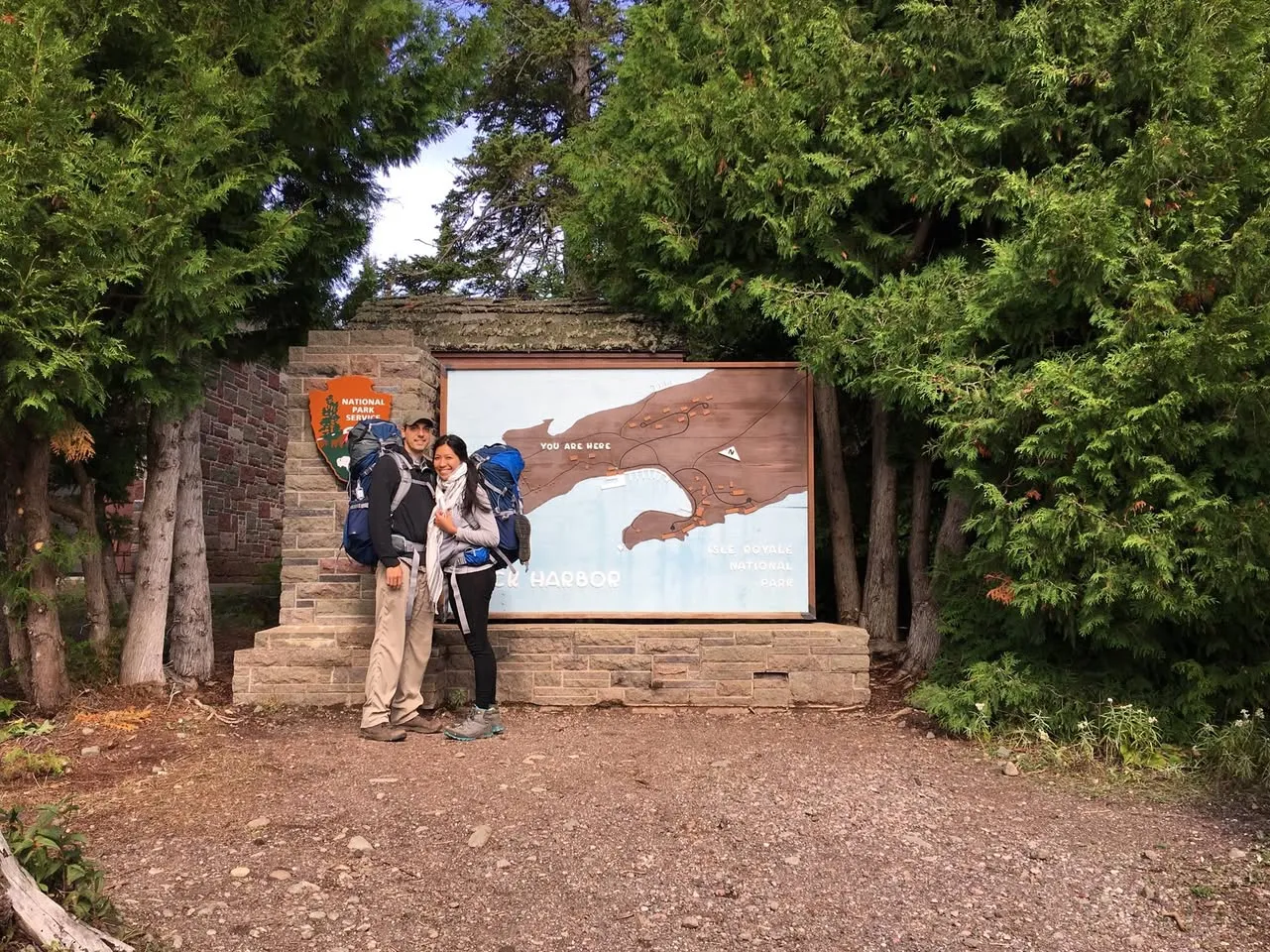
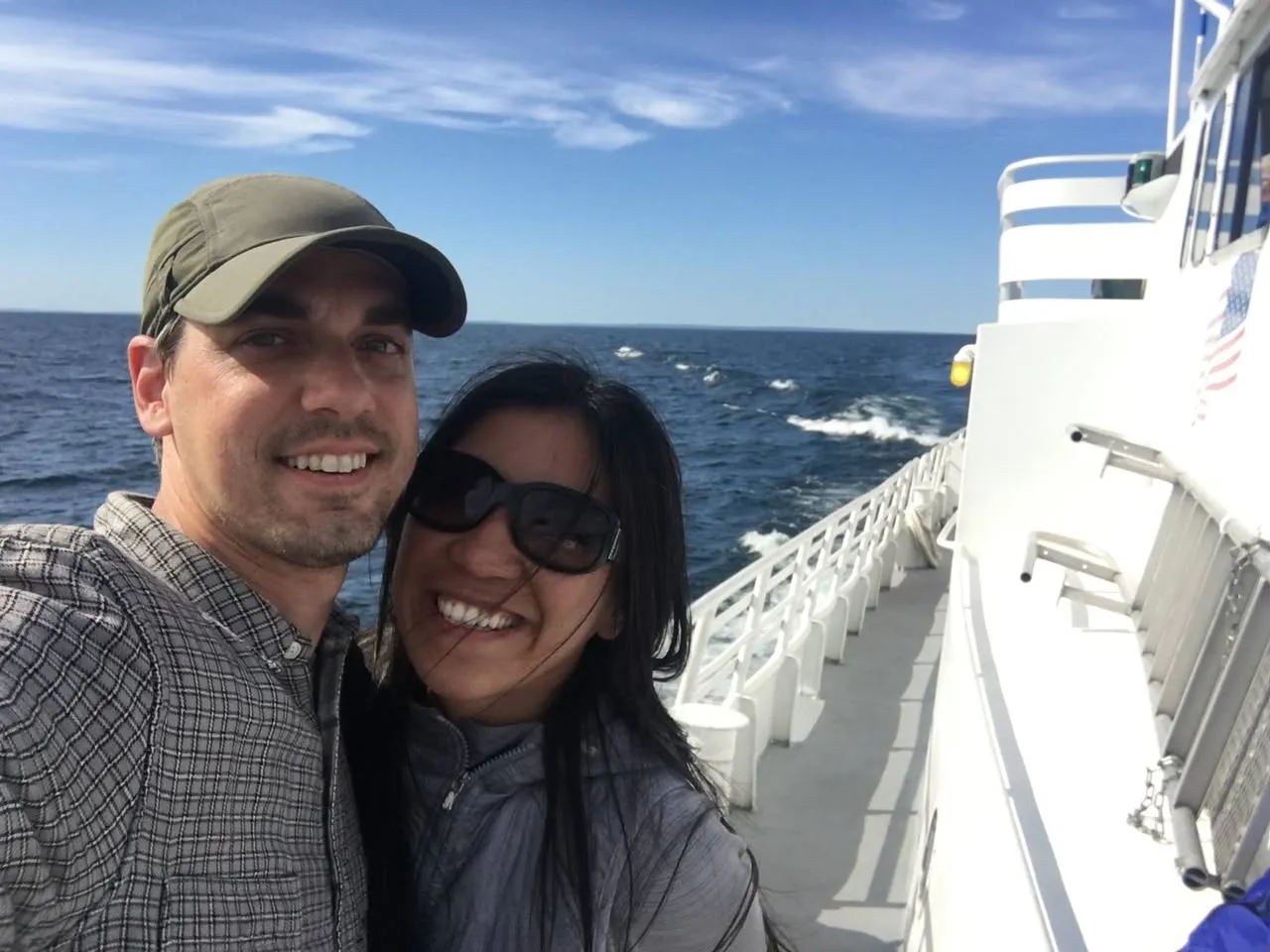

Most buyers do not think logically.

The New Dork's Phone System

The guys and gals at Grasshopper have struck online viral marketing gold with the spoof of Jay-Z & Alicia Keys’ song Empire State of Mind. If you’re not one of the million plus views and you’re an entrepreneur, in marketing or a Jay-Z fan, you must watch it. Funny and awesome at the same time:

https://www.youtube.com/watch?v=exmwSxv7XJI&feature=emb_imp_woyt&ab_channel=RhymeCombinator

At first, the song seems to have no correlation to phone systems. Until you realize that Grasshopper is the self-proclaimed “phone system for entrepreneurs.” Now this seemingly random song carries all sorts of marketing win for the company.

To elaborate, if you or someone you know is an entrepreneur, undoubtedly the video will eventually be seen and shared. They’ll tweet it, email it and even write articles about it , just as I am here. And what does every entrepreneur that is constantly on the run and is technologically advanced need that Grasshopper just happens to provide… you get the picture. It’s genius.

With that said, creating a viral marketing campaign is not easy. Not at all. But when an idea like this song comes along. And is pulled off correctly. You can certainly prepare for a flood of new business.

Hopes this inspires you to go create something remarkable. Good luck!

All-Inclusive Resorts: Perfection of the Value-Add Business Model?

A few months back, I had the fortunate opportunity to be invited to an all-inclusive resort in Cancun with one of my old college buddies. Not one to say no, I took him up on the offer. To summarize the experience in one word: amazing.

While it was nice to be there and partake in all the events, I couldn’t help but be entranced by their business model. Within 12 hours of my arrival I had already eaten many plates of sushi, drank countless blended drinks and pretty much cleaned out the pre-stocked fridge in our room. How can a business sustain this clear over indulgence of someone like me? I’m assuming amazing budgeting and math skills as well as a strong understanding of consumer psychology. But is that it?

Demand for Inclusivity

The most remarkable concept of the all-inclusive model is how effectively the value-add entices guests. Through conversing with fellow guests, people generally enjoyed not caring about what they did or what it cost. They loved that everything on the trip was included with that little wristband.

This was analogous to other freebies I’ve seen people go through hell and high water to receive, e.g. free lunches for training seminars, free pens and t-shirts during product launches, etc.

How I Suspect That Resort Makes Money

No different than an all-you-can-eat buffet but on a much larger scale, the money is made through the relatively high percentage of guests who do not consume their fair share of the free stuff. For example, a group of 6 (3 guys 3 girls) checks in for 5 days. Of the six, not everyone will have more than small meals, a few drinks and not much more. Even with those who order more than they can consume, the hotel is still better off. Put in gambling terms, the house always wins.

Ultimately, an all-inclusive resort boils down to the fact guests are unknowingly and indirectly paying an obsessive amount for each meal and drink. But the remarkable reality is that it doesn’t matter if they realize it. From my observations the majority of guests did not consider or care that they were not fully capitalizing or consuming their rightful share of the included pie.

What is your take on their mindset?

Reinforcement of the Value-Add

Knowing that this model is oftentimes sustainable and profitable, it greatly reinforces the value-add business model. Not only does it clearly illustrate the demand for “free stuff.” But it displays the importance of adopting some form of value-add into your product or service offering.

Put in other words, throwing in a bunch of items at no-charge can help you raise your rates while directly adding a warm and fuzzy feeling to your customers and clients.

What’s your take on this?

4 Reasons Your Brand Will Never Succeed on Twitter (and How To Prevent It)

I’ve been hearing a lot of folks saying, “I created an account, but no one is following me!” and “I’m not seeing any benefits of Twitter.”

(The high frequency of these statements is probably directly related to my recent attendance of networking events in North-Central Wisconsin , which are similar to time-traveling back a few years, social media-wise.)

But at any rate, I am here to dispel some commonalities of bad tweeters by listing the top 4 reasons most people will fail at Twitter:

1. Not Active Enough

Logging in and posting a status update once in a blue moon will not help you gain a following. Most people follow a ton of other folks. So your occasional update will probably get lost in the mix. Not every post is seen by every one of your followers.

Without keeping up a healthy presence on Twitter, your brand will never gain the brand recognition and support you’re likely hoping to achieve.

If I take the time to follow you and in return you auto-send me a spammy direct message, how am I supposed to take you seriously. I don’t care if you have a proven system to gain 5-figures a month. Don’t spam me. Period.

3. Push, Push, Push…

I believe strongly in sharing links and other information. But don’t expect to gain a strong audience by only pushing out links. The first step is to start following interesting people both inside and outside your industry. However, be sure to become involved with your follow-base. Comment on their posts. Maybe you could retweet other’s messages that you feel continue the conversation with your following. Ultimately, just be social. After all, social media is called social networking for a reason.

4. Self-Centered

The most important reason you will fail at Twitter? Constantly talking about yourself. No one cares if you are having a long day. Or that you just ate a burrito and it’s giving you heartburn.

In order to be successful on Twitter, you must talk to others. Add to their conversation. And become generally interested in your followers. (Successfully listening to your audience often requires you to follow your followers back, so be prepared to create a bunch of lists)

Put in other words, showing interest into the lives and happenings of your following is vitally important. And will be the ultimate catalyst for an extremely loyal audience.

With that said, stop complaining that Twitter isn’t working…

A Simple 5-Step Method to Determine What Book to Read Next from Amazon

If you are like me, you read a lot of books. But no matter how fast you read or how many you have already read, there will always be too many books to easily decide on what book to read next. So I have developed a quick and easy method using Amazon to find your next read:

1. Determine the genre

This is the only step that requires any thought. But luckily Amazon does a good job of guessing what type of books you like to read. Depending on how often you use Amazon, it may take a little poking around to get them to have recommendations for you.

Look through your recommendations and select a random book with a genre that looks appealing. From the book’s main page, you must scroll down a bit to the product details. Most of the time (if it’s a popular book), you will find what categories it ranks well for:

2. Rank by best selling

Once you have found the exact category you are interested in, you will get to the following list. (There is a way to skip the previous step and go directly to the top bestsellers. But I have found that it limits the discovery process, since some books hide in categories you would never think of exploring)

3. Skim through only 4-5 stars

I apologize for the prejudice, but I only consider reading books with 4-5 stars and multiple reviews. And until I read every well-reviewed book, would I consider books with poor reviews. There are so many good books out these days, that wasting time and money on a 3-star or less book is too risky for me.

4. Ensure there are a significant amount of reviews

A ton of reviews for a book usually signify that there is a good chance it is remarkable. At the least, it is a book others felt compelled to take the time to discuss. Frankly, the more reviews, the more likely it will be a great read.

5. Read the top three reviews

Once I find a book that looks appealing, I will read the top three reviews. These are the write-ups with the most peer reviewed commentary. Thus you can quickly infer that the three viewpoints are most accurate.

If you feel the reviews are in your ballpark, buy the book. If not, move on. It’s that easy. Impressively, this system has yet to discover a bad book for me.

One Additional Tip: Subscribe to Amazon Prime. It may be a little bit of money now, but you get free 2-day shipping and $3.99 overnight. It pays for itself very quickly!

If you have any suggestions on how you decide on books to read, please let us know in the comments below. Thank you!

5 Feel-Good Benefits of Owning a Business

On the fence about starting a business? That’s completely understandable. It can be intimidating. But before you make your decision, read the following. I’ve listed my top 5 favorite benefits of owning a profitable business. Enjoy!

1. Eat What You Wish When Going Out

Never having to worry too much about the price of dishes in a restaurant is an amazing feeling. And since the majority of restaurant tabs are tax-deductible, order away! Add sautéed mushrooms for two bucks more? No problem… Another glass of wine? Sure, why not!

2. Do What You Want During The Week

Besides the occasional meeting, the self-employed choose their hours. There are no too weak, I mean two weeks, vacation time RFP’s. Daughter’s Afternoon Music Recital? Sit in the front row… Case of the Mondays? Go golfing and catch up on work a little later.

3. Forget Paying Personal Expenses

Since most personal expenses (cell phone, car & gas, etc.) can become a business deduction, your personal-life stress level will plummet. Not worrying about paying bills is an excellent feel-good benefit of entrepreneurism. And most business related products, such as technology, fall under this category. Do you want that new iPhone/iPad/iAnything? Just buy it.

4. Travel the World with Pre-Tax Dollars

With an expert tax-strategist and ethical business intentions, traveling becomes much cheaper and easier. Looking at investing in a REIT somewhere warm? Go for it and be sure to fly first class… Want to boost office morale by scheduling the company’s annual retreat in Hawaii? Your staff (and you) will love it!

5. Support the Less Fortunate

The ultimate feel-good! Donating to your favorite charities is an excellent way to increase your mood and self-esteem. Besides, whom would you want to give your hard earned money to anyway… The government? Or a group who truly deserves and needs the money? I choose the latter.

Conclusion

If you’re still contemplating whether or not you should start a business. Let me help you out… DO IT NOW!

The Art of Self-Control: Can You Wait for the Second Marshmallow?

Imagine you are guided into a bare room and abandoned with one marshmallow, which you can eat at anytime. But if you do not eat it until the facilitator returns, you will be given one more marshmallow. What would you do? Eat the one immediately? Or wait a few minutes for two?

This experiment has been conducted on countless squirming children. And hilarity usually ensues. The temptation for the yummy marshmallow is most times too overwhelming for the youngsters. As seen in this cute and often hilarious video:

https://vimeo.com/5239013?embedded=true&source=video_title&owner=377539

The underlying concepts of the marshmallow experiment holds true for your life as well. Do you have a marshmallow you’re dying to eat? However, if you hold off, is there another one waiting?

The Moral of the Story

It is often very easy to accomplish a portion of your desires. But, in turn, blow it just as quickly. Knowing all too well that you should have reinvested your success back into your dreams.

Put in other words, we all have that inner child in us, begging for that marshmallow. However, our level of self-control will directly affect our ability to accomplish any goal. And earn that second tasty marshmallow.

Price Anchoring: The Power of Comparison Pricing Tables on a Subconscious Level

Buyers are a fickle bunch. Most consumers shop around. And nowadays the web has made every shopper, a savvy shopper. They can easily find coupons by checking out sites like Slickdeals. And they can compare prices of similar products and services relatively quickly.

As marketers, how do we convert these price conscious shoppers into happy purchasers?

Assuming you have a somewhat unique offering through a differentiation strategy, you must reshape their subconscious price bias.

There is an interesting concept in Neuro-Linguistic Programming (NLP) called anchoring. In short, people can become attached to a certain concept and retain that bias when making future decisions. This has huge implications for your offerings and pricing. And should be taken seriously when looking to successfully compete in your industry.

When a potential buyer becomes anchored to a price, breaking their preconceived price notions is difficult. Which is why you must create your own anchor. While this is easier said than done, it is possible.

The initial rule of thumb is the buyer will generally not choose the cheapest or most expensive offering. But rather they’ll choose the middle ground. The safe bet.

For example, the next time you head to a fine restaurant, watch an amateur wine enthusiast order wine. (background story: I worked one summer as a bartender in a classy restaurant) I bet they will pick the second cheapest wine. No matter what the price. Whether the glass costs $4 or $40, the lowest priced wine has anchored their bias. Thus making the second cheapest wine a good choice.

***Apple and AT&T pull off anchoring amazingly well when offering 3G service for the iPad. They have two options. The base (anchor) is a pitiful 250mb priced at a reasonable $15. AT&T isn’t dumb. They know that anyone buying an iPad will require much more data usage than 250mb per month. But the anchor has been set. For only an additional $15 a month, your iPad will now have unlimited data usage… what a deal! Put in other words, AT&T realizes that the consumer has no other offerings to help compare these services. So by creating the feeble base offering, the iPad buyer becomes anchored to a minimum monthly price of $15. Therefore the slightly more expensive but hugely more valuable plan looks like a steal.\


Price Tables

A price table is a very effective method for creating an anchor.

Knowing that website users read in an F-shape pattern. That buyers cannot easily compare your unique offerings to other companies. And that anyone can be swayed of previous biases. A pricing table is a great marketing strategy. But they must be constructed properly to be effective:

  • Highlight the differences not the similarities in offerings

  • List highest to lowest prices from left to right or top to bottom

  • Create a middle-of-the-road, best deal offering

  • The cheapest offering should be decent but not overly attractive

A few excellent examples of anchoring in price tables:

Basecamp

Form Stack

Harvest

Wufoo

These price tables are from websites. But you can definitely apply these same concepts to any print marketing collateral as well. Be sure to illustrate what makes your offering better than anyone else. And that your first price creates a subconscious anchor.

Conclusion

With some research and common sense, you can create a pricing structure based on anchoring. When pulled off correctly, you will see your sales grow and your higher priced offerings will become much more popular. I look forward to hearing your success stories! Good Luck!

Congratulations, You've Won the Ovarian Lottery

In Warren Buffett’s biography, The Snowball, I found an intriguing concept. The Oracle of Omaha said that he had won the Ovarian Lottery:

I’ve had it so good in this world, you know. The odds were fifty-to-one against me being born in the United States in 1930. I won the lottery the day I emerged from the womb by being in the United States instead of in some other country where my chances would have been way different.

Imagine there are two identical twins in the womb, both equally bright and energetic. And the genie says to them, “One of you is going to be born in the United States, and one of you is going to be born in Bangladesh. And if you wind up in Bangladesh, you will pay no taxes. What percentage of your income would you bid to be the one that is born in the United States?” It says something about the fact that society has something to do with your fate and not just your innate qualities. The people who say, “I did it all myself,” and think of themselves as Horatio Alger , believe me, they’d bid more to be in the United States than in Bangladesh. That’s the Ovarian Lottery.

Warren Buffett won it. And if you’re reading this (hold for applause), you’ve won it too. Congrats!

The world we live in is an amazing place. Anyone with an Internet connection and a passion can completely transform their lives for the better. Even the poorest and lowest-class individuals of 1st world countries have unbelievable potential to be great.

So think about the words of Warren Buffett the next time something discourages you from accomplishing your dreams. And do not forget the incredible opportunities available to us Ovarian Lottery winners.

Networking 101: What To Do with Those Business Cards After an Event

Expos, chamber gatherings and other networking events will certainly leave you with pockets full of business cards. And I am assuming you cherish the business cards from the important contacts you met. But what about all of the cards from folks you may never intend on speaking to again? (i.e. an unrelated industry worker) What should a smart networker do with these contact cards?

Most people fail to do anything with seemingly undesirable business cards. Some may throw them away. While most others probably toss them in a drawer, only to throw them away five years later. And so it seems that most people never recognize the golden opportunity presented with all business cards: building a network. Shocking revelation, huh? Since this was your original intention of going to the networking event anyway, might as well do it correctly. Here’s my advice:

Google Their Name

You’d be amazed at what you can find by Googling a seemingly average person. If they have their stuff together, they may have a great online presence and impressive career track record. And will instantly become a higher-value contact. If the only thing listed for them is a second place softball tourney write-up five years ago, they may not be worth a whole lot of your time. But in either case continue onto the next step:

The networking capabilities of LinkedIn are amazing. From validating someone’s career path to keeping in contact with professional acquaintances, LinkedIn is the place. If you decide to add them as a connection, be sure to write a personalized message reminding them where you met and that you’d appreciate staying in touch. If you send the pre-written generic message, they may ignore your connection or worse, click “I don’t know this person.”

And if they don’t show up in a Google or LinkedIn search? Well, use your best judgment of their value.

Email Them

If you are serious about connecting with them in the future, emailing within 24 hours is a must. It will set you apart from everyone else at the networking event, as I guarantee no one else does this , at least that quickly. This is where an email-capable phone takes an advantage. Shoot them a short, friendly email thanking them for talking with you. Also, ensure your contact info (and link to your website) is in your signature.

Do not automatically add them to any email list you may have! This happens to me all the time, I’ll give out my card and two weeks later I receive their monthly newsletter. Hey man, I didn’t sign up for this and I never gave you permission to spam me! GRRR!!!!

Put in other words, reach out with a friendly hello and leave the conversation open for follow-up talks. And don’t spam them!

Digitally Archive Their Info

Finally, enter their information into your contact manager. This is vital. Before you can put the card to its final resting place, be sure to digitally archive their contact information. Also, include any notes of where you met them and what you talked about.

I personally use and recommend Highrise from 37 Signals. Salesforce’s CRM is pretty nice too. Whatever contact manager you use, do not forget this step. It is much easier to do a quick search in the CRM for a contact, than digging in a drawer for the physical card.

Conclusion

If you take the time to complete the above tasks, you’ll be amazed how quickly your network of contacts will grow. Good luck!

Death of the Resume

Job Seekers: Do you have a resume? If so, please do something for me: delete the file and burn any hard copies.

Done? Cool, welcome to the new decade.

Resumes are boring and filled with fluff. They’re unbiased and only highlight a few carefully crafted bullet-point details about a career. And it is absolutely impossible to learn about someone from a single piece of paper. Instead, employers will now perform a 2 second name search in Google, shedding extraordinary light on potential hires.

The Attraction of Expertise

Compare a typical resume toting 15-year veteran to an industry-specific, high-traffic blogger a year out of college. Who will look more desirable? I’d put my money on the blogger. The college kid has tangible proof of their knowledge. And both colleagues and clients will put increased trust into the new hire with obvious, proven expertise.

Those who can demonstrate they are a source of quality insight into their field will instantly (and subconsciously) be accepted as higher value. And I’m not just talking about 9-5’ers; anyone looking for work will benefit, i.e. consultants, freelancers and other hands for hire. I’m also not saying everyone should start a blog. But a few industry syndicated articles or some well-publicized case studies will do wonders for boosting your name online.

What to do next? Give Yourself an Online Audit

Google or Bing (is Bing a verb?) your name. What do you find? Would you hire yourself if the only mention of you is a second place trophy from a softball tourney two years ago? Probably not.

So register a .com and a install blog. Or at least a landing page with links to your social media usernames. Complete your LinkedIn profile and get active in the community. And regularly join discussions in your industry-specific blogs and forums.

Conclusion: You Must Outshine the Masses

Since this economy has created an almost endless supply of job applicants, consultants and freelancers, anyone looking for work must go above and beyond. In other words, get your name out there and show ‘em what you’re truly made of!

Updated: I found a great website that posts creative resumes.

6 Reasons to Start Your Company Without a Business Loan

“I can’t start a business, I don’t have any money!” I’d currently be on Forbes’ Rich List if I got a nickel for every time I’ve heard this limiting belief. My response? “Great, you’re in an excellent position to become extremely successful!”

The misconception that a business needs a loan to start-up is the old way of thinking. Here are 6 reasons why you should structure a bootstrapping business model:

Reason 1 , Because it’s Possible to Start Without a Loan

Some people say you need money to make money. This is 100% false. The era of needing millions of dollars to finance the equipment in a factory are no more. These days a factory can simply be a computer, Internet connection, cell phone and a strong passion.

Do you have a specialty? Start consulting. Are you handy or analytical? Create a repair business. Have a way with words and something to say? Blog it, gain an audience then sell something to them… The business options are literally endless these days.

Reason 2 , Less Stress

Worrying if you’ll make enough money to cover the next installment will keep you awake at night. The bank doesn’t care about you; they care about their bottom line. The same goes for VC’s… unless you think you have the next sensation, stay away from sharing a portion of your business in turn for a quick buck.

Reason 3 , Keep Your Friends and Family, Happy Friends and Family

It may be easy to call your rich uncle for start-up capital. But it will be extremely difficult to re-call him 6 months later to announce that you chose to go another route in life and the business will be closing.

Reason 4 , Creative Advertising

Marketing your business can be expensive or it can be extremely cheap. And surprisingly, the low-cost marketing methods may be remarkably effective. A blog, Facebook page, business cards and a little creativity will take your business much farther in the beginning than say TV/newspaper ads and a billboard.

Reason 5 , Materialistic Wants are Not Needed

Fancy office chairs, state-of-the-art laptops and a Starbucks-esque espresso machine in a prime-location office may be nice but they are not necessary to start. Some of the largest companies in the world have been started in someone’s basement with recycled equipment. Additionally, the lack of this unnecessary stuff in the beginning will give you something to strive for. And (trust me on this one) buying that comfy Aeron chair will be much more rewarding when paying with those hard earned profits.

Reason 6 , Exit Strategy

I hate to say it, but not all business ideas will be successful. And a failed business with a pile of debt creates two scenarios for you: scramble for money from personal sources or declare bankruptcy. Neither choice sounds enjoyable!

To Summarize

You don’t need money to make money!!!

Questioning Everything: The Missing Art of Critical Thinking

“In the valley of the blind, the one-eyed man is king”

~ Gerard Erasmus

When you learn something new, what do you do with the information? If you are like most people, the new info is quickly processed then stored in your long-term memory. Rarely to be thought of again. This sounds typical of our thought process: learn, process, store, retrieve, expel… But what’s missing from this equation?

Questioning…

Depending on the source and method of delivery, most statements are automatically considered fact. Do you believe me? You shouldn’t… at least not right away. As you read a book, listen to a seminar or simply converse with a colleague, consider the scenario. Question the underlining motives of the source and their background. Ask yourself, is this new information true? How does it compare to my current beliefs on the subject? Can I pick out the facts from opinions, all while cross-referencing the opinions with my own belief system and worldviews?

Put in other words; think critically. And more importantly, think for yourself.

Stop Complaining and Strive to Stand Out

Is your brand not performing as expected? Before you start blaming the economy, your clients, your employees or anything else. Realize that this so-called less-bad economy is the new normal. And unfortunately, the problem is with your brand. So it’s time to do something extraordinary. Create something different, something new, something remarkable. And stop complaining. The world has changed, and so must you. Luckily, it has never been easier to gain an audience, target your business model and dominate your market. But you must recognize the needs of the new world.

The Death of Normal

This new world has completely reshaped our perspectives while banishing anything mediocre. For instance, Amazon used their innovative business and marketing structure to all but eliminate most unremarkable online stores selling everyday unremarkable stuff. More astonishing is the fact that a blog (in the eyes of its loyal readers) can carry more authority than a billion dollar news corporation. Or that a steady stream of above-average (and far cheaper) remote workers from around the world can be found on Elance. This changing world has ensured that your employees, prospects and/or audience will rarely reside in one geographic area. Are you a retailer? Whether you sell TV’s or hand-knitted sweaters, you’re business is now competing globally. And service providers? Your expertise and reputation can be quickly assessed with a simple Google search of your name. Put in other words, your audience has evolved and good enough is no longer acceptable. Your brand must become sensational. And the marketplace is begging for brands that offer uniqueness, expertise and influence.

Before you ask why your brand is failing you, recognize that the world has changed. And while the choice is yours, please stop complaining and strive to stand out.

5 TED Talks Every Entrepreneur Needs To Watch

Where can you spend countless hours watching the world’s smartest people give passionate speeches, at no charge? TED.com, that’s where. TED is amazing. Seriously. And below is a collection of my 5 favorite TED talks every entrepreneur should watch. Enjoy!

Tony Robbins Asks Why We Do What We Do

Seth Godin on Standing Out

Rory Sutherland: Life Lessons from an Ad Man

Malcolm Gladwell on Spaghetti Sauce

Alexis Ohanian: How to Make a Splash in Social Media

There you go! Five great TED talks to inspire, motivate and further develop yourself as an extraordinary entrepreneur. I hope you enjoyed these videos!

The Ultimate Entrepreneur's List of Lists

The Best Lists for Entrepreneurs

There is a ton of information out there for entrepreneurs. And I love using StumbleUpon to find the latest and greatest articles. Every now and again I find a great list filled with links and other resources for various subjects. Below are some of the best lists for entrepreneurs I have recently bookmarked. Enjoy!

Technology & Automation

65 Indispensable Websites for Business Owners

The Entrepreneur’s Guide to Web 2.0: Top 25 Applications to Grow Your Business

71 Technologies & Resources to Help Simplify An Entrepreneur’s Life

101 Useful Resources for Online Entrepreneurs

25 Free Mac Apps That Will Boost Your Productivity

100 Financial Calculators Every Entrepreneur Needs

40 Social Networking Sites Specifically for Small Business, Entrepreneurs, and Startups

20 Places to Find a Top Notch Virtual Assistant

Entrepreneurial & Personal Development

Yes! 50 Scientifically Proven Ways to Be Persuasive

85 Absolutely Free Online Business Classes

Top 100 Personal Development Blogs

50 Free Resources That Will Improve Your Writing Skills

50+ Free Resources for Writers, Bloggers, And Other Freelancers

Top 100+ Personal Finance Blogs

100 Ways to Be a Better Entrepreneur

25 Things I Learned About Business from “It’s Always Sunny in Philadelphia”

42 Questions Every Freelancer Should Ask Their Clients

The Top Entrepreneurs of the Last 100 Years

Marketing

160 Creative and Inspiring Print Ads

100+ Internet Marketing Resources for Entrepreneurs

30+ Places To Find Creative Commons Media

14 Tools to Legally Spy On Your Competition

Top 100 Fonts

Cool Business Card Designs Part 1 | Part 2 | Part 3

Lifestyle

50 Things Everyone Should Know How To Do

100 Geeks You Should Be Following On Twitter

The 90 Best Lifehacks of 2009: The Year in Review

30+ Pieces of Inspiring, Funny and Interesting Advice

Top 100 List: Health Websites You Can Trust

18 Great Cooking Resources

80+ Green Sites: Green Living Toolbox

100 Ways to Save The Environment

There you have it! A huge list of lists. I hope you find a ton of helpful information to further your lifestyle as an entrepreneur. If there are other lists you think should be on this post let me know in the comment section… And if you enjoyed this list, please share it with your friends and colleagues. Have a great day!

Poor vs. Broke

As I talk with others about investing or starting a business, I very often hear, “I don’t have any money to do that, I’m poor.” And other times they say, “not right now, I’m broke.” These are interesting statements to me as the dictionary defines broke and poor similarly. However, subconsciously the two words set off strongly opposing implications.

Broke is a scenario. Nothing more than a temporary setback. A broke person is simply someone that is low on funds. But they can change their financial situation. Poor, on the other hand, is a lifestyle. These people actively chose to pursue a poor life. And can be identified as the moneyless folks that love the couch, do not care about education and are not willing to change. They’ve been poor, they’re currently poor and they’ll always be poor.

The next time you are low on funds, how are you going to explain your situation? Are you poor? Or just broke?

What's the Problem with Starbucks Refreshing their Brand?

The online world this week has been in an uproar. Why? Is it because of child starvation? Unfortunately, not really. Unjust wars? Nope, not this either. Global warming?

No, people have gone crazy because Starbucks announced a redesigned logo. I know, it’s preposterous, how could they change it? It’s iconic…

Are you kidding me? What’s the big deal?

We all know people don’t like change. Look at the constant rabble of Facebook users when change happens. Ok, bad example I don’t like most of Facebook’s changes either. How about the Gap Logo? Oh, I am not batting 1.000 with these.

But seriously, Starbucks has a legitimate reason for dropping coffee from its logo. They are looking towards the future. Without “Starbucks Coffee” circling the mermaid, they can branch out from coffee. The brand is powerful and known for its fast, quality service. Why not launch additional products and services around the Starbucks name? Makes sense to me.

Is the customer always right?

When a company proposes changes that don’t directly affect the end user, should they worry too much about what others think?

Most opponents to change do so under ignorance. They rarely know a slice of the story, let alone the whole pie. Or worse, they follow false pretenses. Take for instance the “Ground Zero Mosque.” If there hasn’t been more false information about a proposal I’d be shocked. It’s a seemingly wonderful project. But the opposition has taken a few sound bites amplified by their ingrown prejudices and completely blew the whole scenario out of proportion.

The Takeaway?

While the contention to the Starbucks logo hasn’t gotten to the point of rallies and riots, it has shown an important reality. As your brand grows and inevitable change happens, you will have people that don’t agree with your plans. But you have to consider the silent majority.

The silent majority are those who love your stuff but also have lives. They could be sitting on websites and forums all day talking about the decisions of your company but that little thing called a job and family gets in the way.

When planning for changes in your brand, remember these are the people that truly matter. They embrace change and understand that any decision was probably made with good reasoning.

2009

What Is The True Dollar Per Hour Value Of An Employee's Income?

Most employees are liars.

Bold statement? Yes. The truth? You bet. The reason being is their thoughts on income are flat wrong. Even those who remember to calculate take home as their actual income are not 100% correct. Thus, each time a worker figures their hourly rate, they are lying to themselves and every person they tell. Here’s why:

Scenario: Paul, a single man, is hired as the new network admin of a medium sized business in Illinois. He signs the contract at the agreed upon $60,000 a year salary plus benefits, paid biweekly. Which is $28.85/hour on a promised standard 40-hour workweek. Great! Or is it? Let’s see what happens to that money by the end of the day:

Taxes; The Instant Income Killer

  • Federal , the biggest hit to a paycheck. The fact that most people willingly give away 10% to 35% of their money without ever seeing it is simply amazing.

  • State and Local , varies by location but yet again another hit to one’s take home pay.

  • FICA , I’d imagine that most employees don’t think too much about this one. It’s just another amount the company has to take out. However, the employer has to match your expense. The number, therefore, should be doubled; as this is money your employer cannot pay you.

Thanks to these taxes, Paul’s $60k is in trouble! He is now taking home around $1,650 a paycheck or $44,000 a year. That’s $16,000 a year less than the amount on his contract! (And this doesn’t include the implicit $4500 a year for FICA his company is required to match)

His hourly rate has dropped to about $21 an hour with his 40-hour workweek. Being conditioned to paying taxes, it’s still pretty decent he thinks. Not so!

Unexpected Work

Once in a blue moon, the network requires additional maintenance. This, on average, adds about 10 hours of extra work a pay period. Paul’s pay has now dropped to $18 to $19 an hour. But wait, there’s more…

The Forgotten Variables

  • The Commute:

    • Travel Time = 1.25 hours round trip

    • Cost = $10 a day

  • The Pre-work Prep:

    • Getting ready for work (outside of normal morning routines) = 30 minutes
  • Lunch:

    • Too busy to bring a meal from home and too far to drive home, Paul is forced daily to eat out or order in = 45 minutes

    • Cost = $10 a day

  • The Post-work work:

    • Arriving home Paul has more on his to-do list, including training for certifications, catching up on emails, preparing presentations = 1.5 hours

Without thinking too much into it, Paul is adding 5 hours onto his work schedule… a day! This creates a final calculated hourly rate of around $10.50! Ten dollars and fifty cents! He voluntarily gives away $18 an hour.

What is Paul to do?

My overly simplified suggestion: If Paul created a small IT consulting business (with a proper tax strategy & minimal additional expenses) he could charge his $28.85/hour rate and work for almost a third of the time while making the same amount of money as his current full time job. Furthermore, he could hire more admins, a sales force and a manager as well as some outsourced workers… quickly allowing for a life of financial freedom. Now that sounds like a plan!

What’s your plan?

One Word Can Change Your Life: The Importance Of When, Not If

An entrepreneur’s mindset is one of the most important factors in success. However, since the brain controls most thoughts and aspirations subconsciously it becomes very difficult to stay positive on the bumpy, uncertain road to early retirement. That is unless you consciously train your brain. While the topic of visualizations and affirmations is a complex and broad subject, there is a very simple method to begin the reshaping of your thought process. Replace the word If in your vocabulary with the term When or any synonym there of.

The Downfall Of If

What sounds better? “If I had this.” or “When I have this.” I’m guessing you picked the latter, since the former gives a negative connotation of something unattainable. In other words, the term If has always been associated with negative feelings as we grew up in a society saying “If only…” But why does this work so well? It works because our brain , however far it may be conditioned to think otherwise , wants to be positive. As your innermost desires become subconsciously attainable, you will begin to positively reinforce these thoughts. And no longer will the future seem bleak, but rather as a blank canvas in which anything is possible.

Caution

While saying When is a subconscious motivator, your desires will not magically happen. You must have a plan of attack for your dreams. For example, the statement, “when I have a billion dollars” will not create some sort of self-fulfilling prophecy. However, if you follow that statement (vocally or mentally) with “by continuing to build my business and investing in assets” or something of that nature, you will begin to relate your aspirations with a road map to obtain them.

Getting Started

Changing one word in your vocabulary is a simple process, however, from time to time you will forget. Don’t worry, when you catch yourself saying If, repeat the sentence with When. With this continued positive reinforcement, you will begin to see outlooks in a brighter light.

To conclude, by scratching If from your word bank and replacing it with When you will start becoming more optimistic about the future. Give it a try and see what happens, it worked for me and I know it will work for you. Good luck!

Beware Advisors: Seek Mentors

As you begin your lifestyle as an entrepreneur, everyone will have an opinion. Critics might tell you to instead look for a new job or that your system simply won’t work. Worst yet, there will be a huge influx of people giving advice. With a flood of conflicting views and information, whom do you trust? Answer: No one. Or to be more accurate, no one who has yet to walk in your shoes , AKA advisors.

Advisors will have suggestions usually directly related to their experiences. Employees who advise you know the business of working for someone. Small business owners understand the freedom of entrepreneurship but their advice comes from a life usually surrounded by too much work and not enough time. And then there are the well-off heirs with little concept of creating cash flows from nothing. They grew up with money and have most likely never been without it for long periods of time.

So whom do you turn to for solid advice?

Mentors. Mentors can talk the talk because they have walked the walk. A good mentor will understand your business aspirations and should have had similar experiences in their business creation history. Moreover, great mentors will have created business systems from scratch and have probably started out with little to no money.

Find mentors and beware advisors.

Sound easy? Well, it isn’t. The world is filled with unqualified advisors. And with a scarce quantity of valued mentors, the chance that you receive constant good advice is rare. Furthermore, as bad advice is constantly at the forefront of your everyday conversations, your subconscious mind will be overloaded to the point of believing the advisors. To combat this onslaught of bad advice, try what I do. Listen to advisors and explore their brain. Ask questions and find out what makes them tick. However, think critically. And always keep in mind that advisors are not coming from your frame of view. Keep your dream and modify it accordingly. Critically analyze the advice received from all sources. To summarize, seek mentors.

Build a Successful Business By Delaying Gratification

“Entrepreneurship is living a few years of your life like most people won’t, so that you can spend the rest of your life like most people can’t.”

~ Unknown

The majority of the world’s employees will never take the leap into entrepreneurship due to an unfortunate reality; they have grown accustomed to a paycheck. When the thought of exchanging work for a steady income becomes one’s mindset, the prospect of starting a business fades exponentially each pay period. While not as powerful an addiction as drugs or gambling (or as with my addiction, golf), this craving for safe and recurring pay psychologically destroys all but a slim chance of breaking the cycle and building a business.

You’re on the Right Road

Seeing as you’re reading this, you either understand the benefits of entrepreneurship or have already joined the club. If your business concept is in its infancy the probability of launching will be directly correlated with how well you answer this question: can you work for weeks, sometimes months on end in lieu of little to no pay without any guarantee of success?

If you are already entrenched in building a business, you know all to well how accurate the question summarizes the start-up process and that the only acceptable answer is yes.

Don’t Stop

Delaying gratification does not end when money starts rolling in. I have heard stories of people who start a business, stumble upon ok success and subsequently earn a modest profit. In turn, they spend all of their new money on relatively useless personal items; ultimately leading their business to its demise by leaving them with little to no money to reinvest in the company.

Roadmap I Used to Help Delay Gratification

The main step in delaying gratification is ensuring that you live within your means, thus no more personal credit card debt and definitely limit the useless purchases that do not benefit your business. The inability to carry out a more frugal lifestyle for a short period will doom your business. However, if you are serious about becoming an entrepreneur, cautious spending should generally be the easiest of the start-up steps.

Rule of thumb: when pondering if a purchase is necessary, do what I do; ask yourself if the purchase will directly or indirectly help your business grow and by how much. Then analytically determine if the purchase is worthy of your hard earned money.

Once unnecessary spending is out of the picture, more resources can be allocated to your venture. Keep in mind that you are not ditching gratification but rather delaying it for a more appropriate time.

To Summarize

The more you start to implement this strategy, the easier it will become to stay consistent. Ask yourself, “If I don’t buy this useless product now, how many useful alternatives will I be able to buy down the road?”