Writing

Business

Essays on building companies, products, marketing, and money, by Bradley Gauthier.

2024

Imagine a garden where every plant represents a business or an idea.

Now picture artificial intelligence (AI) and decentralized technologies (crypto) as powerful new seeds with the potential to reshape everything.

Right now, the gardeners who have been in charge for the past few years are focused on controlling this growth.

They’re putting up strict regulations that favor a few towering trees, while smaller, innovative plants struggle to survive. This limits creativity and keeps the garden’s full potential locked away.

But here’s the exciting part… soon, there will be a new gardener.

This fresh perspective brings an entrepreneurial mindset that values innovation and competition.

They understand that the economy is shifting, with technology making things cheaper and faster to produce.

The old rules of scarcity no longer apply, and the future will reward creativity and collaboration instead of rigid systems.

This new leadership isn’t about controlling growth; it’s about fostering it.

By leveling the playing field, they aim to create an environment where ideas of all sizes can thrive.

It’s a smarter, more forward-thinking approach to navigating an economy that’s rapidly evolving.

The world ahead won’t look like the one we know, but that’s what makes this moment so exciting.

This isn’t just about entrepreneurs like me, or policymakers. It’s about creating a future where everyone benefits, where innovation leads to better products, better opportunities, and a better life for all of us.

Imagine a world where the things you love cost less, work better, and are easier to access. That’s the kind of garden I envision…

So as I continue to post online about the economy, entrepreneurs, and politics, remember:

I’ve spent decades understanding these shifts, and as you’ll see in the coming months and years, my perspective on why our society must water these new seeds will become apparent.

It’ll be fun to watch these plants grow into a garden of abundance.
2023

Consumer behavior is a complex tapestry of choices and preferences. On one hand, there’s a growing appreciation for local businesses. These are the places where personal touches matter, where artisans offer unique experiences rooted in authenticity.

Conversely, mega-retailers like Walmart and chains like Starbucks dominate a significant portion of the market. Their success hinges on their ability to offer standardized products and services, ensuring reliability and consistency for their vast customer base.

Now, the introduction of AI, particularly in sectors like food, is set to redefine these landscapes. The prospect of robots in kitchens isn’t far-fetched. They promise efficiency and a level of consistency humans might find challenging to match.

But this tech-driven evolution brings forth a critical question: What do consumers truly value? Will the precision and predictability of AI-powered services become the gold standard? Or will the intrinsic value of human touch and craftsmanship remain irreplaceable?

As industries adjust and technology progresses, the ensuing consumer choices will shape the market’s direction. The next phase in commerce awaits, defined by a balance between innovation and tradition.

About a decade ago, I naively believed anyone could be an entrepreneur. And consequently, I expended a lot of energy to get everyone I could to explore building their own business. Ultimately, I learned that most people do not have the desire or want to pursue a path which I viewed as life changing.

And now, I’m getting the same vibes as I try to push people into embracing AI. The vast amount of organizations and people I’ve presented these AI concepts to are not embracing them.

Maybe it’s a failure on my part, but I think it’s generally a flaw of human nature. That no matter how beneficial something may be for someone, they need to discover their own path.

But unlike entrepreneurship, AI is not something to be ignored. It will consume everything and without re-skilling, hardly anyone will be immune.

A lot of negative things have been said about the tech sector during last week’s Silicon Valley Bank fiasco.

But the one thing these critics fail to acknowledge, is the tech sector is the greatest advocate for the poor and underserved. Mostly because the tech sector creates a deflationary economy.

Let’s consider education… it once cost tens of thousands of dollars to get most good-paying jobs. And then YouTube was released, where anyone in the world with an internet connection can learn nearly anything, for free.

Or, let’s consider communication… remember when long-distance calls, especially international calls, were reserved for only the rich or for special occasions? But then Skype was released, suddenly allowing anyone in the world to communicate with each other via video, basically for free.

And there are many more examples of how technological innovations have driven consumer expenses to near zero.

All in, by considering how the quality of life has been improved because of tech, it’s hard to complain that the USA must do everything it can to have a vibrant tech sector.

2022

Twenty years ago, no one would have imagined a job title of Social Media Manager. But now, that role is nearly ubiquitous in the business world.

Back in the 1980’s, a lot of these social media professionals would’ve instead worked at newspapers, magazines, or probably a factory. All roles eliminated by technology advances.

The same is happening now with knowledge workers. Most white collar jobs will go away; attorneys, accountants, writers, researchers, customer support, and others.

But I’m guessing there will be a hot new industry folks will want to explore.

I haven’t seen much online about this, so I’m not sure what it’ll be called. Though if I had to name it, I’d say, Prompt Design.

Here’s why…

As artificial intelligence and robots get integrated throughout our lives, not everyone will have the skills to directly interact with these systems.

So in the same way a lot of business owners don’t have the skills to manage their social media presence. They will also be looking for folks with the skills to write prompts into AI engines.

btw, a prompt is the general term for the information given to an AI to perform a certain task. It could be as simple as “summarize this text” or as complex as “transform this data into ___ using linear regression mixed with ___ and visualize it with a 3D Feynman Diagram and output it into a PDF”

These prompts are simple in concept, just like posting on a social network. But in practice, it gets incredibly challenging, quickly.

This new role will become ubiquitous throughout the business world. And is an excellent opportunity for anyone interested in starting the re-skilling process.

Though keep in mind, there will still be a couple of years before this is in high demand. But historically, this is the best time to get into the new industry. As early thought leaders have first-adopter advantage.

Good luck, future prompt designers!

Here’s a tip if you own a products based business and you sell via your website.

Here’s a tip if you own a products based business and you

Don’t allow folks to leave reviews on your website. It’s fine when they review on Amazon or Home Depot or wherever. But why let a tiny minority of (usually ignorant) people tarnish your brand?

Most bad reviews are either from people not understanding the product before buying or of something outside your company’s control like shipping delays.

Here’s an exercise for you:

Don’t think of a pink elephant.

Are you thinking of a pink elephant? But I just told you not to think of one. Because the only way to not think of a pink elephant is to not mention it in the first place.

Same with reviews, if you don’t present them on your website, most folks won’t look for them.

2021

To build a personal brand and a loyal audience, a person often needs to take a side on an issue. This means they need to boldly declare their views as correct. And that the other side is wrong.

The challenge with this approach, is any well-reasoned person knows there are always two sides to the story. That the middle ground is often the most accurate.

Unfortunately, their audience doesn’t want a well-reasoned approach. The audience wants to hear their views reaffirmed back to them. In other words, people want confirmation of their beliefs.

We see this with personal brands like Rachel Maddow and Ben Shapiro. Their views are extreme and don’t factor in the many nuances of a subject.

This issue is further compounded by social media algorithms. We are all byproducts of filter bubbles and are mostly shown similar content to anything we’ve “liked” in the past.

Because the days of everyone huddling around the TV to watch one of three channels are (thankfully) gone. This Cambrian Explosion of content has opened the eyes of many to the previously unseen issues in the world. We now have agency over what we consume.

But most consumers don’t realize these content creators are simply pandering to their loyal audience and are not going to provide a reasoned analysis of the subject.

And so, how do we overcome this phenomenon?

I’m not sure. Though here’s what I do when I hear something that seems extreme: I consider the source, I Google the topic, and I try to find contrarian views.

I know it’s a lot easier to just trust the headline. Unfortunately, we live in a world where we also need to verify.

tl;dr Do your own research. Trust, but verify.

Did you know that many of the products on Amazon are actually from Alibaba in China?

A growing trend is called Fulfilled By Amazon (FBA) and consists of people shopping on Alibaba, buying in bulk, and having it shipped directly from China to Amazon’s warehouse.

The seller never sees or handles the product. Instead, Amazon packages and ships the products directly to the buyer.

This is why you’ll see many of the same products with various brand names or bundles. They are all from the same source in China, just different FBA seller accounts.

2019

I spoke with the entire 5th grade at the AV-W elementary school today about business. They are doing a shark tank style project where they are building business plans, prototypes, and presenting them later this year.

During the presentation they asked me a bunch of questions, during which I made sure to mention:

  • Fear is natural but let it push you forward instead of hold you back.
  • Always try new things. If they do want to start a business, look within their passions and find a problem. Solve the problem. If it doesn’t work out, try something else. Don’t just give up. Mastery is a long road.
  • Failure is ok as long as you learn from it… sometimes it’s even the best outcome when trying new things.
  • Get mentors, there’s all sorts of people who have already done so much and a willing to give them the roadmap.

And answered many more questions about how apps make money, what apps I’ve built, and all sorts of cute questions about software. It was entertaining. (I also informed them websites are apps 🤯)

Their questions were very intelligent and they really impressed me. Kids these days are so smart!

My prediction on the future of cable tv…

First, to set the stage for this prediction, a few realities:

  1. There are more and more video consumers “cutting the cord” on Cable TV. Meaning they are choosing the internet for video vs traditional cable boxes.

  2. The days of a family huddled around a TV in the living room are dying. People all have very unique tastes in genres. And tablets / phones / laptops are great ways to consume personalized content. This spells disaster for traditional cable DVR’s.

  3. Also, keep in mind, kids these days are more happy to watch someone play a video game on something like Twitch or YouTube than a scripted detective show about a murder.

  4. Streaming video services, like Netflix, will continue to lose their third-party licensed content, like Marvel, and rely more heavily on its own content, like Stranger Things.

What you’ll begin to see are companies who own a ton of content will begin to create their own premium streaming services.

Some of these streaming services still require a cable tv subscription, like AMC. Mostly because of contracts. But those with stronger positions in the market, like Disney, can begin to charge for the content independently.

The days of cutting the cord (on TV) was a panacea promised by streaming services.

But now we will all subscribe to 5-10 different services, e.g. Netflix, STARZ, HBO, Disney, ESPN, Twitch, etc.

Suddenly the convenience of cutting the cable tv cord becomes 10 different bills we have to pay each month.

So here’s the prediction: after a few years of multiple streaming services cluttering up our credit card statements, we will see a service promising to wrap all the services into one offering.

This service combining all streaming services will be a virtual replica of the cable tv box everyone initially ran away from. The circle of life will be complete.

2014

Thought I’d share my email response to an entrepreneur who reached out to me today about creating their business, what a business plan should look like, and how to get initial capital for the company:

The best advice I could give you is to not waste time on a business plan. If you’re unsure of your business model, the business plan will only lead you down a path which may not serve you well. And DO NOT take investment money. Debt is good for a big business. Horrible for an entrepreneur. Because whoever writes the checks is the boss and it prevents you from being flexible with your offering.

Rather, find a service someone is willing to pay you money for. Even if it’s a little money for a lot of effort, don’t worry. Once someone gives you cold, hard cash. Look at what you enjoyed out of that process then find someone else to pay you for that same thing. Keep doing what you enjoy, stop what you don’t.

As you bring in more and more cash flow, look for bottlenecks within the process and begin to automate the process. Maybe it requires software. Maybe employees. Whatever you can do to transcend time and create a multiplier for your effort.

Good luck!

2011

Does Easy = Simple?

This post is for the consultants, coaches, trainers, contractors and other service industry folk out there curious about pricing their offerings…

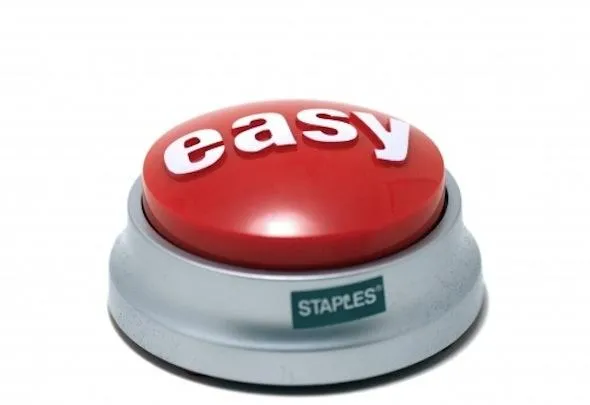
Staples Easy Button

When you reflect on your area of expertise or specialty, do you feel it has become pretty routine? I bet you do. And I bet a lot of your skills have become effortless.

How do you perceive your ability? If you’ve been doing it for a while, I bet you start feeling anyone can do it.

If so, do you feel it’s become easy? Or is it simple?

Ignore what your dictionary says for a moment…

Let’s define easy as achieved without effort. And simple as anyone can do it.

So, where am I going with this?

I was working with a client on her pricing structure today and realized a profound theme: most people think what they find easy isn’t worth charging for.

“How could I charge money for this, it’s simple?”

I’ve heard it many times before. People who are good at something will naturally feel it’s simple. But is it simple? Or has it, over time, become easy?

Think back to when you were first learning your specialty. You had no idea how to do it. We’ve all had a challenge: tying our shoes, driving a car, speaking in front of a crowd and so on… just remember back to the days before you didn’t know how to do it, was it easy then? Probably not. Instead, what makes something easy is your learned ability.

If you provide a service that sometimes from your point of view seems anyone can do it, most likely it’s not. And unfortunately, if you start to think your offering is simple, you’re bound to lose your edge, your tenacity and your drive to help others.

Remember, just as tying your shoes is now a no-brainer, your specialty may seem easy. But keep in mind that while it seems effortless for you, other’s still need your help.

People want your talent. Don’t be afraid to charge for it.

The Secret Behind David Ogilvy's Brilliant Headline Copywriting

“On the average, five times as many people read the headline as read the body copy. When you have written your headline, you have spent eighty cents out of your dollar.”

~ David Ogilvy

David Ogilvy is one of the greatest ad men ever. His contributions to the marketing industry are incalculable. And anyone in advertising couldn’t imagine a world without his iconic ads.

In his day, marketing budgets were spread amongst the traditional marketing outlets; magazines, newspapers and commercials, for example. But as we have transitioned into the digital age, what could we possibly learn from this classical ad man? Turns out, a lot.

Appealing to Your Audience

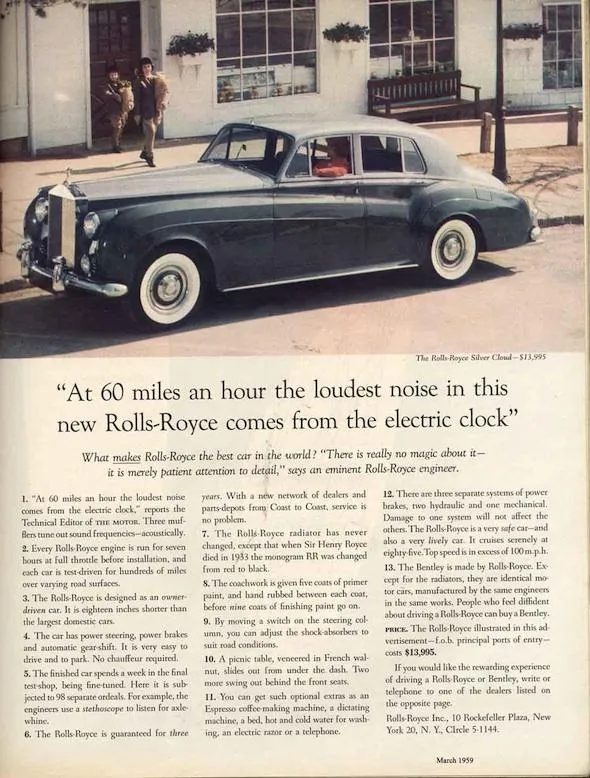
david-ogilvy-rolls-royce-silver-cloud-ad-1958

The above ad contains what is arguably considered the most famous headline of all time. But why is this? To answer that, we must think critically about the underlying message here and what Ogilvy is attempting to convey to readers.

“I don’t know the rules of grammar. If you’re trying to persuade people to do something, or buy something, it seems to me you should use their language.”

~ David Ogilvy

Imagine this scenario: It’s 1958, Americans have been living in a prosperous post-war era for years, and the automobile is the ultimate rolling status symbol. The folks at Rolls-Royce approach Ogilvy for promotion.

What could David possibly do to persuade buyers towards a Rolls-Royce versus the slew of other luxury options? In essence, a luxury car is just a luxury car, right? They all claim to be quick, comfortable and classy.

Ogilvy recognized the similarities between all the luxury automobile offerings and searched for a remarkable trait. A benefit that spoke to the audience. But what benefit would the upper-elite crave the most? The ad man knew an escape from the impoverished world is something the upper-class notoriously desire. Or in other words, they longed for peace and quiet. So by simply pulling a quote from the Technical Editor’s write-up in The Motor, he had his headline:

“At 60 miles an hour the loudest noise in this new Rolls-Royce comes from the electric clock.”

Eureka! He had struck advertising gold. And the rich and famous finally had an option to escape the average, everyday lower-class world while driving from mansion to beach-home.

Lesson: His headline spoke the language of the intended audience.

The Modern Day Challenge

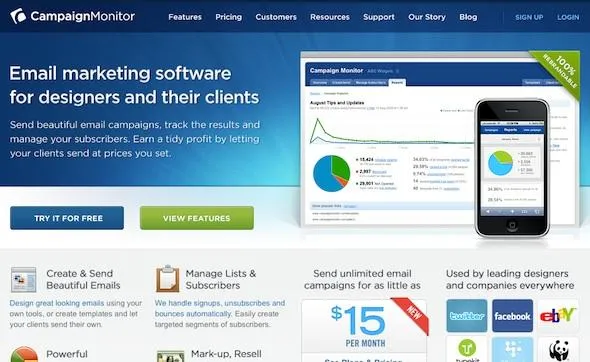
campaign-monitor

You may be thinking, what does this have to do with Internet marketing? Well actually, everything. From landing page design to blog posts, the headline is vital. But first, we have to rethink the headline.

In web marketing, the modern day headline isn’t simply the start of your ad copy. But rather, it’s the link that must demand a click in Google’s SERP’s, the only thing a Twitter user reads next to a shortened URL, the bold headline font of a landing page, the clickable link in a Facebook share, the list goes on and on.

With the endless other distractions on the Internet, how can you attract their attention for longer than a split-second?

Thus, the challenge for modern day copywriting comes in when attempting to capture an audience’s attention while speaking to them in engaging yet understandable language.

The question I pose to you:

How can you craft a headline that speaks to your intended audience while staying relevant in all of these different modern day mediums?

12 Usability Resources to Improve Website Conversions

A usable, high-conversion website. It’s the goal of any Internet marketing campaign, but how do we do it?

While we all strive for a better converting website, we may find ourselves confused by all the different points-of-views of graphic designers basing answers on so-called design trends. Worse yet, our graphic designer may value a pretty website over a functional website.

So before you accept your next website design, take a look at these usability and conversion optimization articles and resources:

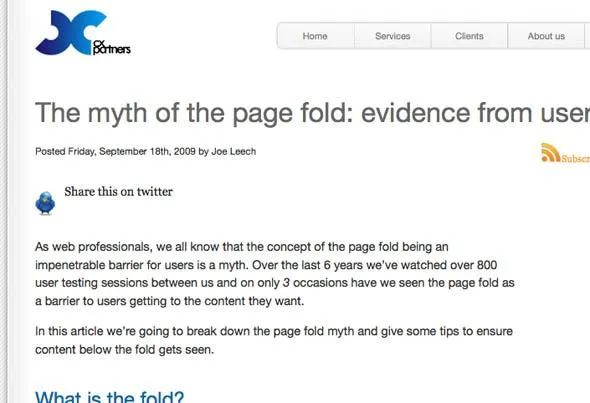
The Myth of the Page Fold

Page Fold Myth

Summary: This article is a thorough write-up & images of what user’s look at on a website. Most importantly, they conclude that when the site is designed correctly, the content below the “fold” of your website still has a chance of being seen.

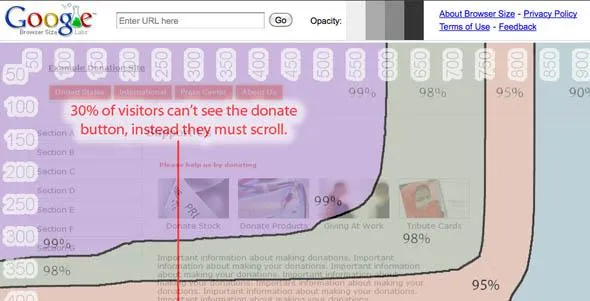
Google Labs: Browser Size

Google Browser Size

Summary: Input your website’s address and see what it looks like to the majority of users. But I would recommend those with centered website designs to shrink your browser to it’s smallest size without a horizontal scroll bar.

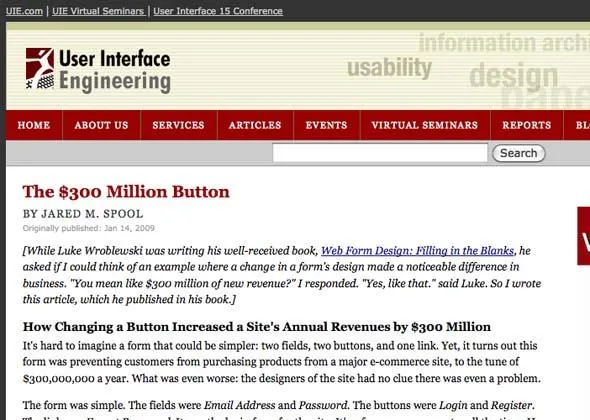
The $300 Million Button

300 Million Dollar Button

Summary: By changing only one button, a company saw an increase of $300 million in sales in one year.

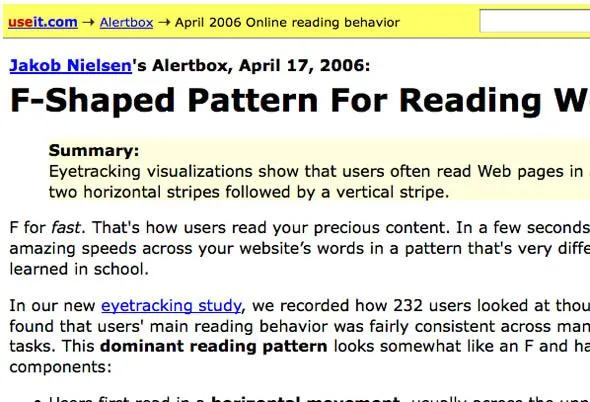
F-Shape Pattern for Reading Web Content

F-Shape Pattern for Reading Web Content

Summary: The long-running authority in usability, Jakob Nielsen conducted a study on what users looked at on websites.

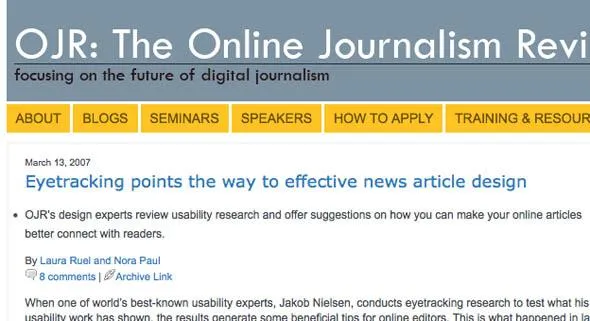
Eye Tracking Results for Article Design

Eye Tracking for Articles

Summary: My favorite article of this list. They describe how changing the styling of an article can increase the chances of it being read to the bottom.

10 Useful Usability Findings and Guidelines

10 Usability Findings

Summary: A great list of usability findings. Read it, trust me you’ll learn something.

15 Standard Screen Patterns

12 Screen Patterns

Summary: A huge collection of patterns to use when creating a highly usable framework for your design.

”Mad Libs” Style Forms Increase Conversions

Mad Libs Forms

Summary: An interesting take on form design. Instead of the usual table form, they present a more functional method for designing your next form.

Stop Using CAPTCHA’s

Stop Using Captchas

Summary: The title says it all: Please stop using CAPTCHA’s! The article gives examples of alternatives to use instead of the annoying letter guessing game.

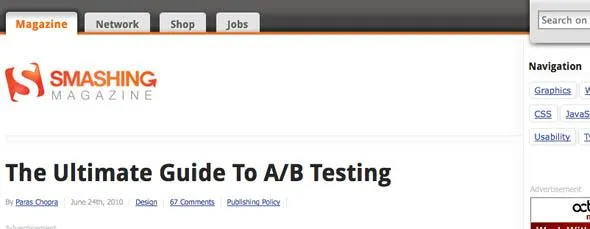
The Ultimate Guide for A/B Split Testing

The Ultimate Guide to AB Split Testing

Summary: Once you have a strong design (or couple designs), you will want to test their effectiveness. For those already in the Internet marketing industry you may already know about this. But for those just getting their feet wet, this article is a very extensive resource.

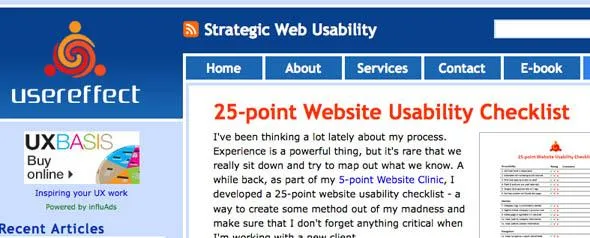
25-Point Usability Checklist

25 Point Website Usability Checklist

Summary: A great checklist to download. Make sure you don’t overlook anything in your design.

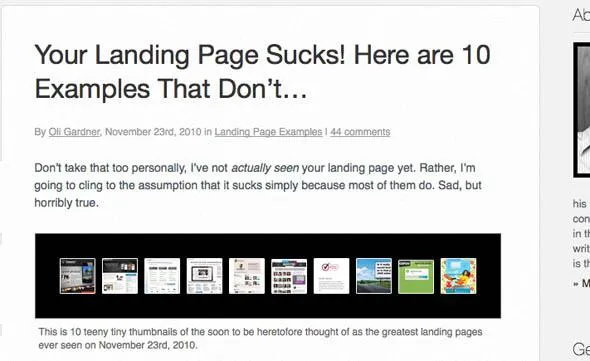
10 Examples of Effective Landing Pages

Your Landing Page Sucks

Summary: A little landing page inspiration from the geniuses over at Unbounce.

Conclusion

I hope this list of valuable resources helps you with your next web design. And if you enjoyed this list, please share it!

Good luck with your design!

2010

Is This The Future Of TV Commercials?

With the ever evolving use of DVR’s and online video, it is only a matter of time before we see a drastic change in how advertisers market their products on TV.

As we all probably know by now, a growing number of shows and movies have started integrating products into the script. While some shows pull off the placement well, others fail horribly. Case in point:

If this is the future of product placement, I’m selling my TV.

Could you imagine someone doing this in real life? It would be ridiculous:

https://www.youtube.com/watch?v=BhIIPbO_6xg&feature=emb_imp_woyt&ab_channel=JamesGabriel

Rethinking Follow Friday on Twitter #FF

I dread Twitter on Fridays. Absolutely dread it. Because my entire follow stream and @ replies are filled with string after string of Follow Friday recommendations.

For those of you wondering what I’m talking about, Follow Friday or hashtag FF, is a ritual where tweeters send out tweets listing users who they feel should be followed by their follow-base. For example see pic above ^

The Flaw in Follow Friday

The fundamental flaw in this annoying habit is these tweets provide absolutely no value to anyone.

Who are these people? Why should I follow these people? And now that I’m thinking about it, who are you & why should I trust you with this random recommendation?

And don’t get me started on those who RT the #FF saying thanks, therefore sending the same message to the half dozen people again.

Put in other words, when you string together a bunch of random twitter usernames, no one knows why they should follow these strangers.

My Cure to the Follow Friday Addiction

Instead of listing tweeters in such an ambiguous manner, take a step back and look at what you’re trying to accomplish. You would like your followers to follow a few tweeters who you adore. And you want to spread the love through this #FF ritual.

So why not take the first 120 characters of the tweet to say why anyone would want to follow one user, then list their username and the FF hastag. And if you have five or six people you’d like to share, split them up into five or six tweets.

For example:

You see the difference between this tweet and the tweet up top?

To Summarize

If you want to participate in the Follow Friday ritual, please, please, please, please, please, please, please add value!

How Mannequins Boost Inventory Turnover at Retail Clothing Stores

Have you ever gone clothes shopping and find yourself standing in the middle of a store in utter confusion? What the heck should I buy? Everything looks nice!

I’ve done it. Especially in stores like Banana Republic, J Crew and Express. Their selection is amazing.

For the fashion illiterate (like me), the huge selection makes for a difficult time deciding what shirts go with what ties. And what sweaters go with what pants. So I often look for inspiration throughout the stores , usually by checking out the stylish mannequins.

But with that said, I am beginning to see a trend. The wardrobes on the mannequins are usually sold out. And not just one or two items. Almost every time I see a well-dressed mannequin in a store, all of the pieces are unavailable.

So what does this tell us?

It tells us that if retail store managers are serious about moving product. They must be aware of what is available in their inventory in comparison to the mannequins. If they are displaying a wardrobe that is no longer available, they’ll clearly not achieve their revenue goals.

What do you think? Have you noticed this trend in your favorite stores?

The Cost of Convenience

I was in the beverage aisle of Target today and I noticed something interesting:\

The packs of RedBull were on sale. But with a non-congruent pricing structure. The two choices on sale were 4 packs and 12 packs, priced at $5.99 and $18.99 respectfully. This got me thinking… how many people fall for this trick? $1.02 more for the convenience of buying one box, instead of 3? Do people not know math anymore?

Illogically Logical

This pricing structure is genius. Target must make a ton of extra cash on people’s inherent laziness to logically think situations like this through. And I’m willing to bet this strategy is carried throughout the store and undoubtedly the bulk of shoppers will not catch this price difference. (note: I’ve seen this gimmick many times in other stores as well)

Symbolically, this has many underlying themes applicable to your business. As you are pricing your service or products, think about what you could do to cash in on laziness. Or how a little convenience may be consciously or subconsciously worth extra to them. And most importantly, always remember:

Most buyers do not think logically.

The New Dork's Phone System

The guys and gals at Grasshopper have struck online viral marketing gold with the spoof of Jay-Z & Alicia Keys’ song Empire State of Mind. If you’re not one of the million plus views and you’re an entrepreneur, in marketing or a Jay-Z fan, you must watch it. Funny and awesome at the same time:

https://www.youtube.com/watch?v=exmwSxv7XJI&feature=emb_imp_woyt&ab_channel=RhymeCombinator

At first, the song seems to have no correlation to phone systems. Until you realize that Grasshopper is the self-proclaimed “phone system for entrepreneurs.” Now this seemingly random song carries all sorts of marketing win for the company.

To elaborate, if you or someone you know is an entrepreneur, undoubtedly the video will eventually be seen and shared. They’ll tweet it, email it and even write articles about it , just as I am here. And what does every entrepreneur that is constantly on the run and is technologically advanced need that Grasshopper just happens to provide… you get the picture. It’s genius.

With that said, creating a viral marketing campaign is not easy. Not at all. But when an idea like this song comes along. And is pulled off correctly. You can certainly prepare for a flood of new business.

Hopes this inspires you to go create something remarkable. Good luck!

All-Inclusive Resorts: Perfection of the Value-Add Business Model?

A few months back, I had the fortunate opportunity to be invited to an all-inclusive resort in Cancun with one of my old college buddies. Not one to say no, I took him up on the offer. To summarize the experience in one word: amazing.

While it was nice to be there and partake in all the events, I couldn’t help but be entranced by their business model. Within 12 hours of my arrival I had already eaten many plates of sushi, drank countless blended drinks and pretty much cleaned out the pre-stocked fridge in our room. How can a business sustain this clear over indulgence of someone like me? I’m assuming amazing budgeting and math skills as well as a strong understanding of consumer psychology. But is that it?

Demand for Inclusivity

The most remarkable concept of the all-inclusive model is how effectively the value-add entices guests. Through conversing with fellow guests, people generally enjoyed not caring about what they did or what it cost. They loved that everything on the trip was included with that little wristband.

This was analogous to other freebies I’ve seen people go through hell and high water to receive, e.g. free lunches for training seminars, free pens and t-shirts during product launches, etc.

How I Suspect That Resort Makes Money

No different than an all-you-can-eat buffet but on a much larger scale, the money is made through the relatively high percentage of guests who do not consume their fair share of the free stuff. For example, a group of 6 (3 guys 3 girls) checks in for 5 days. Of the six, not everyone will have more than small meals, a few drinks and not much more. Even with those who order more than they can consume, the hotel is still better off. Put in gambling terms, the house always wins.

Ultimately, an all-inclusive resort boils down to the fact guests are unknowingly and indirectly paying an obsessive amount for each meal and drink. But the remarkable reality is that it doesn’t matter if they realize it. From my observations the majority of guests did not consider or care that they were not fully capitalizing or consuming their rightful share of the included pie.

What is your take on their mindset?

Reinforcement of the Value-Add

Knowing that this model is oftentimes sustainable and profitable, it greatly reinforces the value-add business model. Not only does it clearly illustrate the demand for “free stuff.” But it displays the importance of adopting some form of value-add into your product or service offering.

Put in other words, throwing in a bunch of items at no-charge can help you raise your rates while directly adding a warm and fuzzy feeling to your customers and clients.

What’s your take on this?

4 Reasons Your Brand Will Never Succeed on Twitter (and How To Prevent It)

I’ve been hearing a lot of folks saying, “I created an account, but no one is following me!” and “I’m not seeing any benefits of Twitter.”

(The high frequency of these statements is probably directly related to my recent attendance of networking events in North-Central Wisconsin , which are similar to time-traveling back a few years, social media-wise.)

But at any rate, I am here to dispel some commonalities of bad tweeters by listing the top 4 reasons most people will fail at Twitter:

1. Not Active Enough

Logging in and posting a status update once in a blue moon will not help you gain a following. Most people follow a ton of other folks. So your occasional update will probably get lost in the mix. Not every post is seen by every one of your followers.

Without keeping up a healthy presence on Twitter, your brand will never gain the brand recognition and support you’re likely hoping to achieve.

If I take the time to follow you and in return you auto-send me a spammy direct message, how am I supposed to take you seriously. I don’t care if you have a proven system to gain 5-figures a month. Don’t spam me. Period.

3. Push, Push, Push…

I believe strongly in sharing links and other information. But don’t expect to gain a strong audience by only pushing out links. The first step is to start following interesting people both inside and outside your industry. However, be sure to become involved with your follow-base. Comment on their posts. Maybe you could retweet other’s messages that you feel continue the conversation with your following. Ultimately, just be social. After all, social media is called social networking for a reason.

4. Self-Centered

The most important reason you will fail at Twitter? Constantly talking about yourself. No one cares if you are having a long day. Or that you just ate a burrito and it’s giving you heartburn.

In order to be successful on Twitter, you must talk to others. Add to their conversation. And become generally interested in your followers. (Successfully listening to your audience often requires you to follow your followers back, so be prepared to create a bunch of lists)

Put in other words, showing interest into the lives and happenings of your following is vitally important. And will be the ultimate catalyst for an extremely loyal audience.

With that said, stop complaining that Twitter isn’t working…

5 Feel-Good Benefits of Owning a Business

On the fence about starting a business? That’s completely understandable. It can be intimidating. But before you make your decision, read the following. I’ve listed my top 5 favorite benefits of owning a profitable business. Enjoy!

1. Eat What You Wish When Going Out

Never having to worry too much about the price of dishes in a restaurant is an amazing feeling. And since the majority of restaurant tabs are tax-deductible, order away! Add sautéed mushrooms for two bucks more? No problem… Another glass of wine? Sure, why not!

2. Do What You Want During The Week

Besides the occasional meeting, the self-employed choose their hours. There are no too weak, I mean two weeks, vacation time RFP’s. Daughter’s Afternoon Music Recital? Sit in the front row… Case of the Mondays? Go golfing and catch up on work a little later.

3. Forget Paying Personal Expenses

Since most personal expenses (cell phone, car & gas, etc.) can become a business deduction, your personal-life stress level will plummet. Not worrying about paying bills is an excellent feel-good benefit of entrepreneurism. And most business related products, such as technology, fall under this category. Do you want that new iPhone/iPad/iAnything? Just buy it.

4. Travel the World with Pre-Tax Dollars

With an expert tax-strategist and ethical business intentions, traveling becomes much cheaper and easier. Looking at investing in a REIT somewhere warm? Go for it and be sure to fly first class… Want to boost office morale by scheduling the company’s annual retreat in Hawaii? Your staff (and you) will love it!

5. Support the Less Fortunate

The ultimate feel-good! Donating to your favorite charities is an excellent way to increase your mood and self-esteem. Besides, whom would you want to give your hard earned money to anyway… The government? Or a group who truly deserves and needs the money? I choose the latter.

Conclusion

If you’re still contemplating whether or not you should start a business. Let me help you out… DO IT NOW!

Price Anchoring: The Power of Comparison Pricing Tables on a Subconscious Level

Buyers are a fickle bunch. Most consumers shop around. And nowadays the web has made every shopper, a savvy shopper. They can easily find coupons by checking out sites like Slickdeals. And they can compare prices of similar products and services relatively quickly.

As marketers, how do we convert these price conscious shoppers into happy purchasers?

Assuming you have a somewhat unique offering through a differentiation strategy, you must reshape their subconscious price bias.

There is an interesting concept in Neuro-Linguistic Programming (NLP) called anchoring. In short, people can become attached to a certain concept and retain that bias when making future decisions. This has huge implications for your offerings and pricing. And should be taken seriously when looking to successfully compete in your industry.

When a potential buyer becomes anchored to a price, breaking their preconceived price notions is difficult. Which is why you must create your own anchor. While this is easier said than done, it is possible.

The initial rule of thumb is the buyer will generally not choose the cheapest or most expensive offering. But rather they’ll choose the middle ground. The safe bet.

For example, the next time you head to a fine restaurant, watch an amateur wine enthusiast order wine. (background story: I worked one summer as a bartender in a classy restaurant) I bet they will pick the second cheapest wine. No matter what the price. Whether the glass costs $4 or $40, the lowest priced wine has anchored their bias. Thus making the second cheapest wine a good choice.

***Apple and AT&T pull off anchoring amazingly well when offering 3G service for the iPad. They have two options. The base (anchor) is a pitiful 250mb priced at a reasonable $15. AT&T isn’t dumb. They know that anyone buying an iPad will require much more data usage than 250mb per month. But the anchor has been set. For only an additional $15 a month, your iPad will now have unlimited data usage… what a deal! Put in other words, AT&T realizes that the consumer has no other offerings to help compare these services. So by creating the feeble base offering, the iPad buyer becomes anchored to a minimum monthly price of $15. Therefore the slightly more expensive but hugely more valuable plan looks like a steal.\


Price Tables

A price table is a very effective method for creating an anchor.

Knowing that website users read in an F-shape pattern. That buyers cannot easily compare your unique offerings to other companies. And that anyone can be swayed of previous biases. A pricing table is a great marketing strategy. But they must be constructed properly to be effective:

  • Highlight the differences not the similarities in offerings

  • List highest to lowest prices from left to right or top to bottom

  • Create a middle-of-the-road, best deal offering

  • The cheapest offering should be decent but not overly attractive

A few excellent examples of anchoring in price tables:

Basecamp

Form Stack

Harvest

Wufoo

These price tables are from websites. But you can definitely apply these same concepts to any print marketing collateral as well. Be sure to illustrate what makes your offering better than anyone else. And that your first price creates a subconscious anchor.

Conclusion

With some research and common sense, you can create a pricing structure based on anchoring. When pulled off correctly, you will see your sales grow and your higher priced offerings will become much more popular. I look forward to hearing your success stories! Good Luck!

Networking 101: What To Do with Those Business Cards After an Event

Expos, chamber gatherings and other networking events will certainly leave you with pockets full of business cards. And I am assuming you cherish the business cards from the important contacts you met. But what about all of the cards from folks you may never intend on speaking to again? (i.e. an unrelated industry worker) What should a smart networker do with these contact cards?

Most people fail to do anything with seemingly undesirable business cards. Some may throw them away. While most others probably toss them in a drawer, only to throw them away five years later. And so it seems that most people never recognize the golden opportunity presented with all business cards: building a network. Shocking revelation, huh? Since this was your original intention of going to the networking event anyway, might as well do it correctly. Here’s my advice:

Google Their Name

You’d be amazed at what you can find by Googling a seemingly average person. If they have their stuff together, they may have a great online presence and impressive career track record. And will instantly become a higher-value contact. If the only thing listed for them is a second place softball tourney write-up five years ago, they may not be worth a whole lot of your time. But in either case continue onto the next step:

The networking capabilities of LinkedIn are amazing. From validating someone’s career path to keeping in contact with professional acquaintances, LinkedIn is the place. If you decide to add them as a connection, be sure to write a personalized message reminding them where you met and that you’d appreciate staying in touch. If you send the pre-written generic message, they may ignore your connection or worse, click “I don’t know this person.”

And if they don’t show up in a Google or LinkedIn search? Well, use your best judgment of their value.

Email Them

If you are serious about connecting with them in the future, emailing within 24 hours is a must. It will set you apart from everyone else at the networking event, as I guarantee no one else does this , at least that quickly. This is where an email-capable phone takes an advantage. Shoot them a short, friendly email thanking them for talking with you. Also, ensure your contact info (and link to your website) is in your signature.

Do not automatically add them to any email list you may have! This happens to me all the time, I’ll give out my card and two weeks later I receive their monthly newsletter. Hey man, I didn’t sign up for this and I never gave you permission to spam me! GRRR!!!!

Put in other words, reach out with a friendly hello and leave the conversation open for follow-up talks. And don’t spam them!

Digitally Archive Their Info

Finally, enter their information into your contact manager. This is vital. Before you can put the card to its final resting place, be sure to digitally archive their contact information. Also, include any notes of where you met them and what you talked about.

I personally use and recommend Highrise from 37 Signals. Salesforce’s CRM is pretty nice too. Whatever contact manager you use, do not forget this step. It is much easier to do a quick search in the CRM for a contact, than digging in a drawer for the physical card.

Conclusion

If you take the time to complete the above tasks, you’ll be amazed how quickly your network of contacts will grow. Good luck!

Death of the Resume

Job Seekers: Do you have a resume? If so, please do something for me: delete the file and burn any hard copies.

Done? Cool, welcome to the new decade.

Resumes are boring and filled with fluff. They’re unbiased and only highlight a few carefully crafted bullet-point details about a career. And it is absolutely impossible to learn about someone from a single piece of paper. Instead, employers will now perform a 2 second name search in Google, shedding extraordinary light on potential hires.

The Attraction of Expertise

Compare a typical resume toting 15-year veteran to an industry-specific, high-traffic blogger a year out of college. Who will look more desirable? I’d put my money on the blogger. The college kid has tangible proof of their knowledge. And both colleagues and clients will put increased trust into the new hire with obvious, proven expertise.

Those who can demonstrate they are a source of quality insight into their field will instantly (and subconsciously) be accepted as higher value. And I’m not just talking about 9-5’ers; anyone looking for work will benefit, i.e. consultants, freelancers and other hands for hire. I’m also not saying everyone should start a blog. But a few industry syndicated articles or some well-publicized case studies will do wonders for boosting your name online.

What to do next? Give Yourself an Online Audit

Google or Bing (is Bing a verb?) your name. What do you find? Would you hire yourself if the only mention of you is a second place trophy from a softball tourney two years ago? Probably not.

So register a .com and a install blog. Or at least a landing page with links to your social media usernames. Complete your LinkedIn profile and get active in the community. And regularly join discussions in your industry-specific blogs and forums.

Conclusion: You Must Outshine the Masses

Since this economy has created an almost endless supply of job applicants, consultants and freelancers, anyone looking for work must go above and beyond. In other words, get your name out there and show ‘em what you’re truly made of!

Updated: I found a great website that posts creative resumes.

6 Reasons to Start Your Company Without a Business Loan

“I can’t start a business, I don’t have any money!” I’d currently be on Forbes’ Rich List if I got a nickel for every time I’ve heard this limiting belief. My response? “Great, you’re in an excellent position to become extremely successful!”

The misconception that a business needs a loan to start-up is the old way of thinking. Here are 6 reasons why you should structure a bootstrapping business model:

Reason 1 , Because it’s Possible to Start Without a Loan

Some people say you need money to make money. This is 100% false. The era of needing millions of dollars to finance the equipment in a factory are no more. These days a factory can simply be a computer, Internet connection, cell phone and a strong passion.

Do you have a specialty? Start consulting. Are you handy or analytical? Create a repair business. Have a way with words and something to say? Blog it, gain an audience then sell something to them… The business options are literally endless these days.

Reason 2 , Less Stress

Worrying if you’ll make enough money to cover the next installment will keep you awake at night. The bank doesn’t care about you; they care about their bottom line. The same goes for VC’s… unless you think you have the next sensation, stay away from sharing a portion of your business in turn for a quick buck.

Reason 3 , Keep Your Friends and Family, Happy Friends and Family

It may be easy to call your rich uncle for start-up capital. But it will be extremely difficult to re-call him 6 months later to announce that you chose to go another route in life and the business will be closing.

Reason 4 , Creative Advertising

Marketing your business can be expensive or it can be extremely cheap. And surprisingly, the low-cost marketing methods may be remarkably effective. A blog, Facebook page, business cards and a little creativity will take your business much farther in the beginning than say TV/newspaper ads and a billboard.

Reason 5 , Materialistic Wants are Not Needed

Fancy office chairs, state-of-the-art laptops and a Starbucks-esque espresso machine in a prime-location office may be nice but they are not necessary to start. Some of the largest companies in the world have been started in someone’s basement with recycled equipment. Additionally, the lack of this unnecessary stuff in the beginning will give you something to strive for. And (trust me on this one) buying that comfy Aeron chair will be much more rewarding when paying with those hard earned profits.

Reason 6 , Exit Strategy

I hate to say it, but not all business ideas will be successful. And a failed business with a pile of debt creates two scenarios for you: scramble for money from personal sources or declare bankruptcy. Neither choice sounds enjoyable!

To Summarize

You don’t need money to make money!!!

Stop Complaining and Strive to Stand Out

Is your brand not performing as expected? Before you start blaming the economy, your clients, your employees or anything else. Realize that this so-called less-bad economy is the new normal. And unfortunately, the problem is with your brand. So it’s time to do something extraordinary. Create something different, something new, something remarkable. And stop complaining. The world has changed, and so must you. Luckily, it has never been easier to gain an audience, target your business model and dominate your market. But you must recognize the needs of the new world.

The Death of Normal

This new world has completely reshaped our perspectives while banishing anything mediocre. For instance, Amazon used their innovative business and marketing structure to all but eliminate most unremarkable online stores selling everyday unremarkable stuff. More astonishing is the fact that a blog (in the eyes of its loyal readers) can carry more authority than a billion dollar news corporation. Or that a steady stream of above-average (and far cheaper) remote workers from around the world can be found on Elance. This changing world has ensured that your employees, prospects and/or audience will rarely reside in one geographic area. Are you a retailer? Whether you sell TV’s or hand-knitted sweaters, you’re business is now competing globally. And service providers? Your expertise and reputation can be quickly assessed with a simple Google search of your name. Put in other words, your audience has evolved and good enough is no longer acceptable. Your brand must become sensational. And the marketplace is begging for brands that offer uniqueness, expertise and influence.

Before you ask why your brand is failing you, recognize that the world has changed. And while the choice is yours, please stop complaining and strive to stand out.

5 TED Talks Every Entrepreneur Needs To Watch

Where can you spend countless hours watching the world’s smartest people give passionate speeches, at no charge? TED.com, that’s where. TED is amazing. Seriously. And below is a collection of my 5 favorite TED talks every entrepreneur should watch. Enjoy!

Tony Robbins Asks Why We Do What We Do

Seth Godin on Standing Out

Rory Sutherland: Life Lessons from an Ad Man

Malcolm Gladwell on Spaghetti Sauce

Alexis Ohanian: How to Make a Splash in Social Media

There you go! Five great TED talks to inspire, motivate and further develop yourself as an extraordinary entrepreneur. I hope you enjoyed these videos!

The Ultimate Entrepreneur's List of Lists

The Best Lists for Entrepreneurs

There is a ton of information out there for entrepreneurs. And I love using StumbleUpon to find the latest and greatest articles. Every now and again I find a great list filled with links and other resources for various subjects. Below are some of the best lists for entrepreneurs I have recently bookmarked. Enjoy!

Technology & Automation

65 Indispensable Websites for Business Owners

The Entrepreneur’s Guide to Web 2.0: Top 25 Applications to Grow Your Business

71 Technologies & Resources to Help Simplify An Entrepreneur’s Life

101 Useful Resources for Online Entrepreneurs

25 Free Mac Apps That Will Boost Your Productivity

100 Financial Calculators Every Entrepreneur Needs

40 Social Networking Sites Specifically for Small Business, Entrepreneurs, and Startups

20 Places to Find a Top Notch Virtual Assistant

Entrepreneurial & Personal Development

Yes! 50 Scientifically Proven Ways to Be Persuasive

85 Absolutely Free Online Business Classes

Top 100 Personal Development Blogs

50 Free Resources That Will Improve Your Writing Skills

50+ Free Resources for Writers, Bloggers, And Other Freelancers

Top 100+ Personal Finance Blogs

100 Ways to Be a Better Entrepreneur

25 Things I Learned About Business from “It’s Always Sunny in Philadelphia”

42 Questions Every Freelancer Should Ask Their Clients

The Top Entrepreneurs of the Last 100 Years

Marketing

160 Creative and Inspiring Print Ads

100+ Internet Marketing Resources for Entrepreneurs

30+ Places To Find Creative Commons Media

14 Tools to Legally Spy On Your Competition

Top 100 Fonts

Cool Business Card Designs Part 1 | Part 2 | Part 3

Lifestyle

50 Things Everyone Should Know How To Do

100 Geeks You Should Be Following On Twitter

The 90 Best Lifehacks of 2009: The Year in Review

30+ Pieces of Inspiring, Funny and Interesting Advice

Top 100 List: Health Websites You Can Trust

18 Great Cooking Resources

80+ Green Sites: Green Living Toolbox

100 Ways to Save The Environment

There you have it! A huge list of lists. I hope you find a ton of helpful information to further your lifestyle as an entrepreneur. If there are other lists you think should be on this post let me know in the comment section… And if you enjoyed this list, please share it with your friends and colleagues. Have a great day!

Poor vs. Broke

As I talk with others about investing or starting a business, I very often hear, “I don’t have any money to do that, I’m poor.” And other times they say, “not right now, I’m broke.” These are interesting statements to me as the dictionary defines broke and poor similarly. However, subconsciously the two words set off strongly opposing implications.

Broke is a scenario. Nothing more than a temporary setback. A broke person is simply someone that is low on funds. But they can change their financial situation. Poor, on the other hand, is a lifestyle. These people actively chose to pursue a poor life. And can be identified as the moneyless folks that love the couch, do not care about education and are not willing to change. They’ve been poor, they’re currently poor and they’ll always be poor.

The next time you are low on funds, how are you going to explain your situation? Are you poor? Or just broke?

What's the Problem with Starbucks Refreshing their Brand?

The online world this week has been in an uproar. Why? Is it because of child starvation? Unfortunately, not really. Unjust wars? Nope, not this either. Global warming?

No, people have gone crazy because Starbucks announced a redesigned logo. I know, it’s preposterous, how could they change it? It’s iconic…

Are you kidding me? What’s the big deal?

We all know people don’t like change. Look at the constant rabble of Facebook users when change happens. Ok, bad example I don’t like most of Facebook’s changes either. How about the Gap Logo? Oh, I am not batting 1.000 with these.

But seriously, Starbucks has a legitimate reason for dropping coffee from its logo. They are looking towards the future. Without “Starbucks Coffee” circling the mermaid, they can branch out from coffee. The brand is powerful and known for its fast, quality service. Why not launch additional products and services around the Starbucks name? Makes sense to me.

Is the customer always right?

When a company proposes changes that don’t directly affect the end user, should they worry too much about what others think?

Most opponents to change do so under ignorance. They rarely know a slice of the story, let alone the whole pie. Or worse, they follow false pretenses. Take for instance the “Ground Zero Mosque.” If there hasn’t been more false information about a proposal I’d be shocked. It’s a seemingly wonderful project. But the opposition has taken a few sound bites amplified by their ingrown prejudices and completely blew the whole scenario out of proportion.

The Takeaway?

While the contention to the Starbucks logo hasn’t gotten to the point of rallies and riots, it has shown an important reality. As your brand grows and inevitable change happens, you will have people that don’t agree with your plans. But you have to consider the silent majority.

The silent majority are those who love your stuff but also have lives. They could be sitting on websites and forums all day talking about the decisions of your company but that little thing called a job and family gets in the way.

When planning for changes in your brand, remember these are the people that truly matter. They embrace change and understand that any decision was probably made with good reasoning.

2009

What Is The True Dollar Per Hour Value Of An Employee's Income?

Most employees are liars.

Bold statement? Yes. The truth? You bet. The reason being is their thoughts on income are flat wrong. Even those who remember to calculate take home as their actual income are not 100% correct. Thus, each time a worker figures their hourly rate, they are lying to themselves and every person they tell. Here’s why:

Scenario: Paul, a single man, is hired as the new network admin of a medium sized business in Illinois. He signs the contract at the agreed upon $60,000 a year salary plus benefits, paid biweekly. Which is $28.85/hour on a promised standard 40-hour workweek. Great! Or is it? Let’s see what happens to that money by the end of the day:

Taxes; The Instant Income Killer

  • Federal , the biggest hit to a paycheck. The fact that most people willingly give away 10% to 35% of their money without ever seeing it is simply amazing.

  • State and Local , varies by location but yet again another hit to one’s take home pay.

  • FICA , I’d imagine that most employees don’t think too much about this one. It’s just another amount the company has to take out. However, the employer has to match your expense. The number, therefore, should be doubled; as this is money your employer cannot pay you.

Thanks to these taxes, Paul’s $60k is in trouble! He is now taking home around $1,650 a paycheck or $44,000 a year. That’s $16,000 a year less than the amount on his contract! (And this doesn’t include the implicit $4500 a year for FICA his company is required to match)

His hourly rate has dropped to about $21 an hour with his 40-hour workweek. Being conditioned to paying taxes, it’s still pretty decent he thinks. Not so!

Unexpected Work

Once in a blue moon, the network requires additional maintenance. This, on average, adds about 10 hours of extra work a pay period. Paul’s pay has now dropped to $18 to $19 an hour. But wait, there’s more…

The Forgotten Variables

  • The Commute:

    • Travel Time = 1.25 hours round trip

    • Cost = $10 a day

  • The Pre-work Prep:

    • Getting ready for work (outside of normal morning routines) = 30 minutes
  • Lunch:

    • Too busy to bring a meal from home and too far to drive home, Paul is forced daily to eat out or order in = 45 minutes

    • Cost = $10 a day

  • The Post-work work:

    • Arriving home Paul has more on his to-do list, including training for certifications, catching up on emails, preparing presentations = 1.5 hours

Without thinking too much into it, Paul is adding 5 hours onto his work schedule… a day! This creates a final calculated hourly rate of around $10.50! Ten dollars and fifty cents! He voluntarily gives away $18 an hour.

What is Paul to do?

My overly simplified suggestion: If Paul created a small IT consulting business (with a proper tax strategy & minimal additional expenses) he could charge his $28.85/hour rate and work for almost a third of the time while making the same amount of money as his current full time job. Furthermore, he could hire more admins, a sales force and a manager as well as some outsourced workers… quickly allowing for a life of financial freedom. Now that sounds like a plan!

What’s your plan?

One Word Can Change Your Life: The Importance Of When, Not If

An entrepreneur’s mindset is one of the most important factors in success. However, since the brain controls most thoughts and aspirations subconsciously it becomes very difficult to stay positive on the bumpy, uncertain road to early retirement. That is unless you consciously train your brain. While the topic of visualizations and affirmations is a complex and broad subject, there is a very simple method to begin the reshaping of your thought process. Replace the word If in your vocabulary with the term When or any synonym there of.

The Downfall Of If

What sounds better? “If I had this.” or “When I have this.” I’m guessing you picked the latter, since the former gives a negative connotation of something unattainable. In other words, the term If has always been associated with negative feelings as we grew up in a society saying “If only…” But why does this work so well? It works because our brain , however far it may be conditioned to think otherwise , wants to be positive. As your innermost desires become subconsciously attainable, you will begin to positively reinforce these thoughts. And no longer will the future seem bleak, but rather as a blank canvas in which anything is possible.

Caution

While saying When is a subconscious motivator, your desires will not magically happen. You must have a plan of attack for your dreams. For example, the statement, “when I have a billion dollars” will not create some sort of self-fulfilling prophecy. However, if you follow that statement (vocally or mentally) with “by continuing to build my business and investing in assets” or something of that nature, you will begin to relate your aspirations with a road map to obtain them.

Getting Started

Changing one word in your vocabulary is a simple process, however, from time to time you will forget. Don’t worry, when you catch yourself saying If, repeat the sentence with When. With this continued positive reinforcement, you will begin to see outlooks in a brighter light.

To conclude, by scratching If from your word bank and replacing it with When you will start becoming more optimistic about the future. Give it a try and see what happens, it worked for me and I know it will work for you. Good luck!

Beware Advisors: Seek Mentors

As you begin your lifestyle as an entrepreneur, everyone will have an opinion. Critics might tell you to instead look for a new job or that your system simply won’t work. Worst yet, there will be a huge influx of people giving advice. With a flood of conflicting views and information, whom do you trust? Answer: No one. Or to be more accurate, no one who has yet to walk in your shoes , AKA advisors.

Advisors will have suggestions usually directly related to their experiences. Employees who advise you know the business of working for someone. Small business owners understand the freedom of entrepreneurship but their advice comes from a life usually surrounded by too much work and not enough time. And then there are the well-off heirs with little concept of creating cash flows from nothing. They grew up with money and have most likely never been without it for long periods of time.

So whom do you turn to for solid advice?

Mentors. Mentors can talk the talk because they have walked the walk. A good mentor will understand your business aspirations and should have had similar experiences in their business creation history. Moreover, great mentors will have created business systems from scratch and have probably started out with little to no money.

Find mentors and beware advisors.

Sound easy? Well, it isn’t. The world is filled with unqualified advisors. And with a scarce quantity of valued mentors, the chance that you receive constant good advice is rare. Furthermore, as bad advice is constantly at the forefront of your everyday conversations, your subconscious mind will be overloaded to the point of believing the advisors. To combat this onslaught of bad advice, try what I do. Listen to advisors and explore their brain. Ask questions and find out what makes them tick. However, think critically. And always keep in mind that advisors are not coming from your frame of view. Keep your dream and modify it accordingly. Critically analyze the advice received from all sources. To summarize, seek mentors.

Build a Successful Business By Delaying Gratification

“Entrepreneurship is living a few years of your life like most people won’t, so that you can spend the rest of your life like most people can’t.”

~ Unknown

The majority of the world’s employees will never take the leap into entrepreneurship due to an unfortunate reality; they have grown accustomed to a paycheck. When the thought of exchanging work for a steady income becomes one’s mindset, the prospect of starting a business fades exponentially each pay period. While not as powerful an addiction as drugs or gambling (or as with my addiction, golf), this craving for safe and recurring pay psychologically destroys all but a slim chance of breaking the cycle and building a business.

You’re on the Right Road

Seeing as you’re reading this, you either understand the benefits of entrepreneurship or have already joined the club. If your business concept is in its infancy the probability of launching will be directly correlated with how well you answer this question: can you work for weeks, sometimes months on end in lieu of little to no pay without any guarantee of success?

If you are already entrenched in building a business, you know all to well how accurate the question summarizes the start-up process and that the only acceptable answer is yes.

Don’t Stop

Delaying gratification does not end when money starts rolling in. I have heard stories of people who start a business, stumble upon ok success and subsequently earn a modest profit. In turn, they spend all of their new money on relatively useless personal items; ultimately leading their business to its demise by leaving them with little to no money to reinvest in the company.

Roadmap I Used to Help Delay Gratification

The main step in delaying gratification is ensuring that you live within your means, thus no more personal credit card debt and definitely limit the useless purchases that do not benefit your business. The inability to carry out a more frugal lifestyle for a short period will doom your business. However, if you are serious about becoming an entrepreneur, cautious spending should generally be the easiest of the start-up steps.

Rule of thumb: when pondering if a purchase is necessary, do what I do; ask yourself if the purchase will directly or indirectly help your business grow and by how much. Then analytically determine if the purchase is worthy of your hard earned money.

Once unnecessary spending is out of the picture, more resources can be allocated to your venture. Keep in mind that you are not ditching gratification but rather delaying it for a more appropriate time.

To Summarize

The more you start to implement this strategy, the easier it will become to stay consistent. Ask yourself, “If I don’t buy this useless product now, how many useful alternatives will I be able to buy down the road?”